| about us |
what's new
|
unit studies
|
unit study helps |
fiar resources
|
indexes | lapbooking |
Chemistry Unit Study
created by Wende

Multi-Age Chemistry Unit and Lap-n-Note™
Unit Study by Jimmie, Debbie, and Wende
TEACHER’S GUIDE
Print the Student Guide Here
Getting Started
This unit can be completed over a period of a few weeks or a few months. It is to be completed by a student independently; the student should therefore be a fluent reader. The parent should have everything printed and ready to go, and have supplies on hand. This unit is designed to be a Lap-n-Note™, including both lapbook components and notebooking pages. It is recommended that each student has a three ring binder, 10 or so sheets of cardstock, glue sticks, stapler, colored pencils, and some basic chemistry supplies such as a test tube, beaker, eye dropper, litmus paper, etc. While containers you have around the house will be sufficient for the experiments, special supplies will add excitement to the unit. You should also discuss general safety rules with your child:
1. Read all instructions carefully before beginning any experiment, and follow them in order.
2. Do not mix any chemicals together that you are not familiar with.
3. Do not touch, taste, or smell any chemicals unless told to by a parent.
4. Always wear an apron or smock to protect your clothes.
5. Be careful not to get any chemicals in your eyes. Wearing safety goggles is suggested.
6. Always wash your hands before and after performing experiments.
Preparations List and Experiment Objectives
1. The Scientific Method
Gather:
I’d Like to Be a Chemist (book/tape set by Twin Sisters) - “An Educated Guess!” page 5
A box with an object in it, wrapped or taped shut. Don’t let your child know what is in the box!
Print:
Objective:
Student will use all their senses to better understand how to come to a hypothesis and make a prediction.
2. Scientist Study (Thomas Edison)
Gather:
Book(s) about Edison. Possibilities include:
Thomas Alva Edison, Young Inventor by Louis Sabin
Thomas A. Edison, Young Inventor by Sue Guthridge (there are printables for this book at HSS.)
Print:
Edison Quotes for Copywork
(choose at least two)
Download:
Free Audio Download "Thomas Alva Edison" by Margaret Cousins
3. What is Chemistry?
Gather:
I’d Like to Be a Chemist – “It’s Called Chemistry” pg 4
Print:
“A Big Subject” excerpted from The Wonders of Scientific Discovery by Charles R. Gibson
Branches of Science and Chemistry Components
4. What is Matter?
Gather:
10 different items made of various materials.
Print:
Properties of Matter Mini Books
Matter Properties Experiment Chart
Objective:
Student will conclude that the properties of an object will be the same as the properties of the matter that makes up the object.
5. Scientist Study (Archimedes)
Gather:
Glass, five marbles, water, masking tape
Print:
Eureka! by James Baldwin
Objective:
Student will conclude that two forms of matter can’t occupy the same place at the same time.
6. What are the States of Matter?
Gather:
I’d Like to Be a Chemist –“Water is Like Magic” pg 11
½ box of cornstarch, ½ cup of water
Print:
Objective:
Student will differentiate characteristics of solids and liquids, concluding that the Blob is a liquid.
7. Sizing Up Matter –
Gather:
What's Smaller Than a Pygmy Shrew? By Robert E. Wells
Print:
Gather:
What Are Atoms? (Rookie Read-About Science) by Lisa Trumbauer
I’d Like to Be a Chemist – “What is the Smallest Part?” pg 6
Print:
9. Elements –
I’d Like to Be a Chemist – “Is it Sugar, or is it Salt?” pg 8
Print:
10. Scientist Study (Antoine-Laurent Lavoisier)
Gather:
Candle and a glass that will fit over it; matches
Print:
Objective:
Student will discover that a fire needs oxygen to burn, and that the fire will consume the oxygen in a given space, causing it to extinguish.
11. Periodic Table –
Gather:
The Mystery of the Periodic Table by Benjamin D. Wiker (ages 10+)
Print:
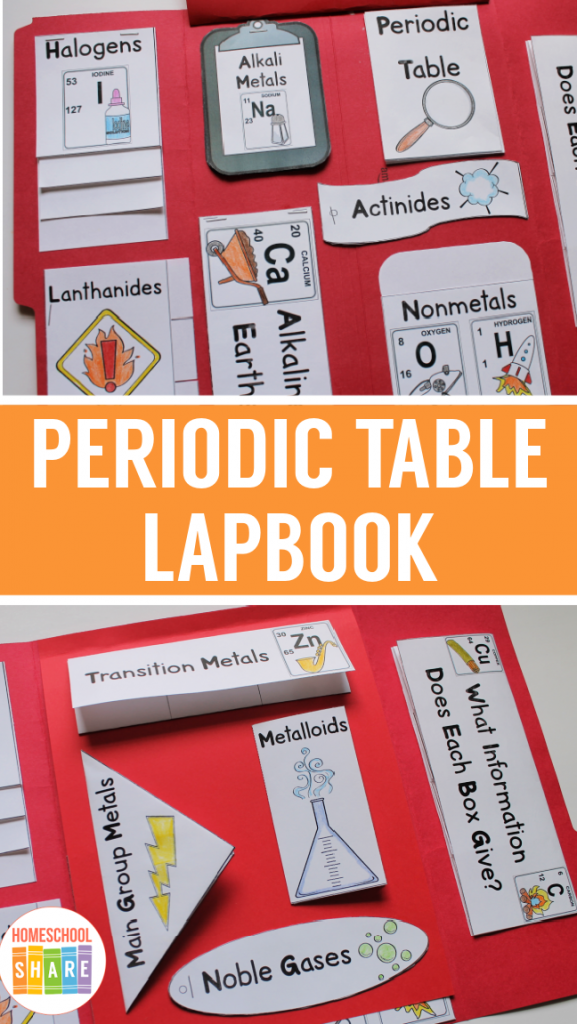
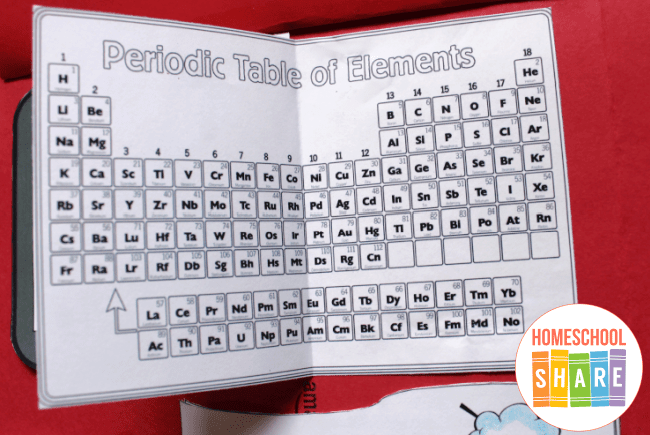
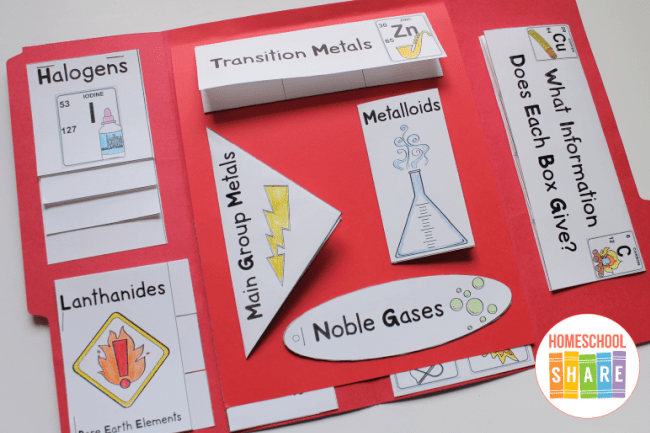
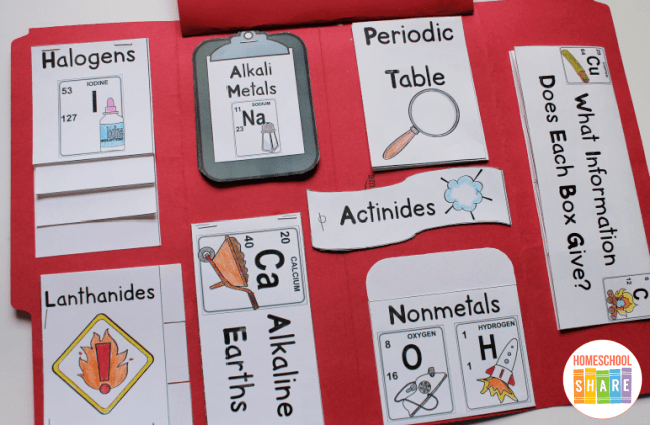
Boxes on Periodic Table Mini Books
Printable Periodic Table Board Game
12. Scientist Study (Dmitri Ivanovich Mendeleev)
Print:
13. Alkali Metals
Gather:
Element samples (possibilities include salt, baking soda, borax, glass, fertilizer)
Print:
14. Scientist Study (Sir Humphry Davy)
Print:
15. Alkaline Earths
Gather:
Element samples (possibilities include teeth or bones, vitamins, mag wheel)
Print:
16. Scientist Study (Marie Curie)
Gather:
Book(s) about Marie Curie. Possibilities include:
Marie Curie, Brave Scientist by Keith Brandt
Marie Curie and the Discovery of Radium by Ann E. Steinkefor
Online Biography (includes printable study sheets, puzzles, and worksheets)
Print:
Curie Cursive Copywork (choose at least two)
17. Transition Metals
Gather:
Element Samples (possibilities include gold or silver jewelry, copper wire, mercury thermometer)
Print:
18.Basic Metals
Gather:
Element Samples (possibilities include aluminum and/or lead items)
Print:
19.Metalloids
Gather:
Element samples (possibilities include computer chips with silicon)
Print:
20. Scientist Study (Joseph Priestley)
Print:
Priestley Quotes Copywork (choose at least 2)
21. Nonmetals
Gather:
Element samples (possibilities include oxygen, nitrogen, matches, fireworks, fertilizer, etc.)
Print:
22. Halogens
Gather:
Element samples (possibilities include chlorine, fluoride toothpaste, iodine)
Print:
23. Noble Gases
Gather:
Hydrogen and the Noble Gases – A True Book
Element samples (possibilities include helium balloon, neon sign, mig welder)
Print:
24. Scientist Study (Sir William Ramsay)
Print:
25. Lanthanides
Print:
26. Actinides
Print:
27. Mechanical Mixtures
Gather:
I’d Like to Be a Chemist – “Compounds and Mixtures” pg 10
I’d Like to Be a Chemist – “Let’s Learn About Mixtures” on page 15.
Ex. 1 - Sand, salt, spoon, magnifying glass, jar, shallow dish;
Ex. 2 - ½ cup of iron fortified cereal, plastic zip bag, bowl, water, bar magnet, piece of white paper, and a magnifying glass.
Print:
Objective:
Student will discover that the contents of a cereal mixture will retain their own properties, as he draws the iron out of the cereal with a magnet.
28. Solutions –
Gather:
I’d Like to Be a Chemist – “Let’s Learn About Solutions” pg 18
Ex. 1 - 3 small clear glasses, measuring cup, ¼ t measuring spoon, hot water, ice water, room temperature water, pack of powdered drink mix;
Ex. 2 - Glass, water, salt
Print:
Solution Characteristics Simple Fold
Objective:
Student will conclude that in a solution of salt water, the salt fills in spaces around the globular particles of water, until all the spaces are filled up.
29. Chemical Compounds –
Gather:
I’d Like to Be a Chemist – “Compounds and Mixtures” pg 10
Ex. 1 - Vinegar, baking soda, sand and gravel, small plastic bottle, red food coloring, large tray, funnel;
Ex. 2 - Pan, sugar;
Print:
Objective:
Student will conclude that sugar is a chemical compound that can be broken down by heat, eventually changing it to a carbon dust, with the oxygen and hydrogen being burnt up.
30. Scientist Study (Louis Pasteur)
Gather:
Book about Louis Pasteur (possibilities include Louis Pasteur, Young Scientist by Francene Sabin)
Print:
31. Molecules–
Gather:
I’d Like to Be a Chemist – “They’re Building Blocks” pg 7
Four colors of gumdrops (or play dough balls), toothpicks
Print:
32. Physical Changes –
Print:
33. Chemical Changes –
Print:
(included in lesson 32 matchbooks)
34. Chemical Reactions –
Gather:
¼ cup Borax, 2 cups water, 1 tablespoon white glue
35. Acids, Bases, and Salts –
Gather:
I’d Like to Be a Chemist – “Let’s Learn About Iron” pg 22
Ex. 1 - 3 clear glasses, 2 cups strong tea, canned or bottled orange, pineapple, and cranberry juice;
Ex. 2 - 2 cups chopped red cabbage, boiling water, 6 small glass containers, 6 household solutions to test such as vinegar, lemon juice, baking soda, ammonia, cream of tartar, muriatic acid, seltzer water, Tums, saliva, etc.
Ex. 3 - post-1982 pennies, muriatic acid, glass jar, baking soda, water
Print:
Penny Experiment Cards and Pocket
PH Trifold
Objective Experiment 2:
Student will create an indicator out of cabbage juice and use it to find the pH level of various household items. PH will vary from brand to brand, but generally the most acidic will be muriatic acid (1), lemon juice (2), vinegar (2.5), apple (3.5), and a tomato (4). The most basic will be drain cleaner (14), ammonia (12), baking soda (9), and antacids (7.5). Distilled water will be neutral.
Objective Experiment 3:
Student will discover the powers of acid, as it dissolves the zinc inside a penny, leaving you with a hollow copper coating.
36. Famous Chemists –
Gather:
World Atlas
Print: