Affiliate Disclaimer
We sometimes use affiliate links in our content. This won’t cost you anything, but it helps us to keep the site running. Thanks for your support.
What do you call a rhino without a horn? Quiet!
What do you with a blue rhino? Tell him jokes to cheer him up.
Yes, this Rhinoceros Lapbook includes jokes. I promise, though, that it also includes lots of facts and interesting information about the mighty rhino.
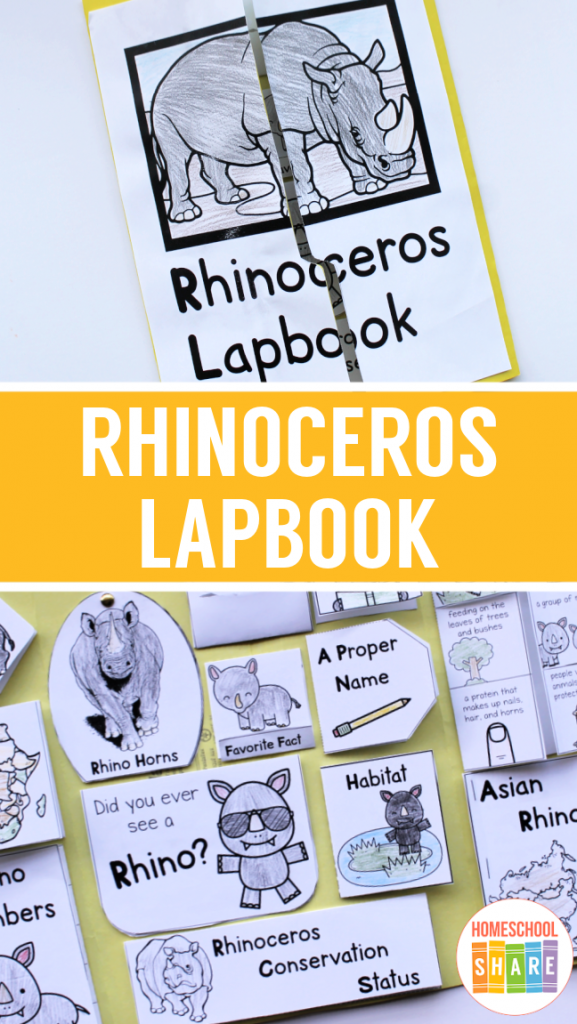
Thanks to Debbie Palmer for submitting the research for this animal lapbook.
Rhinoceros Lapbook Information
Here are some sample lessons from the Rhinoceros Lapbook:
Rhinoceros Vocabulary
Herbivore-eats plants
Browser-feeding on the leaves of trees and bushes
Keratin- a protein that makes up hair, nails, and horns
Poachers- to hunt an animal that is protected by law
Crash- a group of rhinos
Territorial- making claim to a certain area
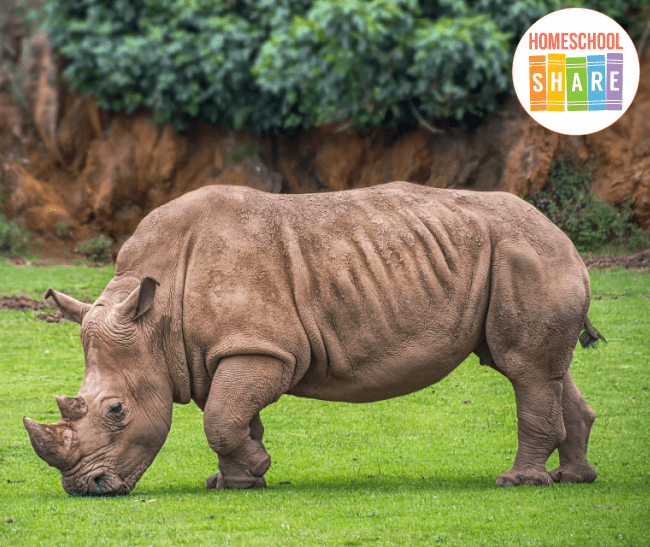
Physical Characteristics: Rhinos are large with a thick, grayish protective skin. The Asian rhinos have so much skin that it gives the illusion of armored plating. The white rhino is the 2nd largest land mammal (the elephant being the first). They range in weight from 750 lbs. to 2 ½ tons and can be four to six feet tall! They have either one or two horns depending on species. Rhinos have poor eyesight, but a good sense of smell and hearing. Because of their poor eyesight, they can be easily startled and then will charge.
Social Behavior & Families:
Rhinos are normally solitary creatures only coming together to mate. Sometimes females or juveniles will form small groups. Males are very territorial and will mark their territories. Babies will stay with their mothers for 18 months up to three years depending on the species. A male is called a bull, a female is a cow, a baby is called a calf. The name for a group of rhinos is called a “crash.”
Rhino Horns
The horns are made from a substance called keratin (which also makes up human hair and fingernails). The horns are used for protection and for fighting for territory and for females. Rhinos can sharpen their horns on other objects such as rocks and trees. Both African species and the Sumatran rhinos have two horns. The Indian and Javan rhinos have only one. The African species have the longest horns. The white and black rhinos’ front horn can reach 4 ½ ft. in length. Over the years, rhinos have been killed by poachers for their horns. Rhino horns are used in traditional Asian medicine and for dagger handles in Yemen and Oman. A rhino’s horn can be removed under anesthetic which will increase its chances of survival from poachers.
If you need additional research, try National Geographic Kids.
You can grab a copy of the entire Rhinoceros Lapbook in an easy-to-print file at the end of this post.
Rhinoceros Lapbook Printables
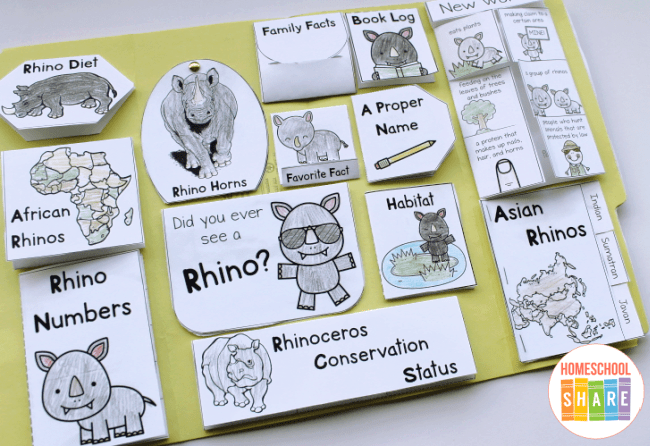
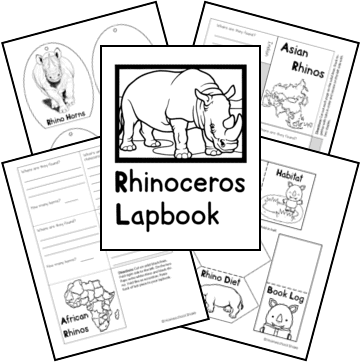
In addition to the research and lessons, the Rhinoceros Lapbook includes these mini-books:
- New Words Shutterflap Book
- Rhino Horns Shape Book
- Rhino Family Facts Envelope
- Rhino Numbers Flap Book
- Asian Rhinos Map Tab Book
- African Rhinos Accordion Flap Book
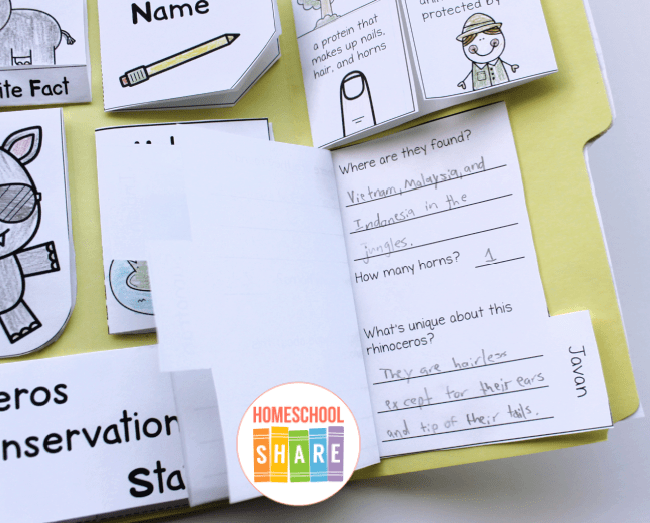
- Rhino Habitat Simple Fold
- Rhino Diet Simple Fold
- Book Log Simple Fold
- Rhinoceros Conservation Status Flap Book
- Did You Ever See a Rhino? Anatomy Simple Fold
- Favorite Fact Matchbook
- A Proper Name Mini-book
- Rhinoceros Coloring Image
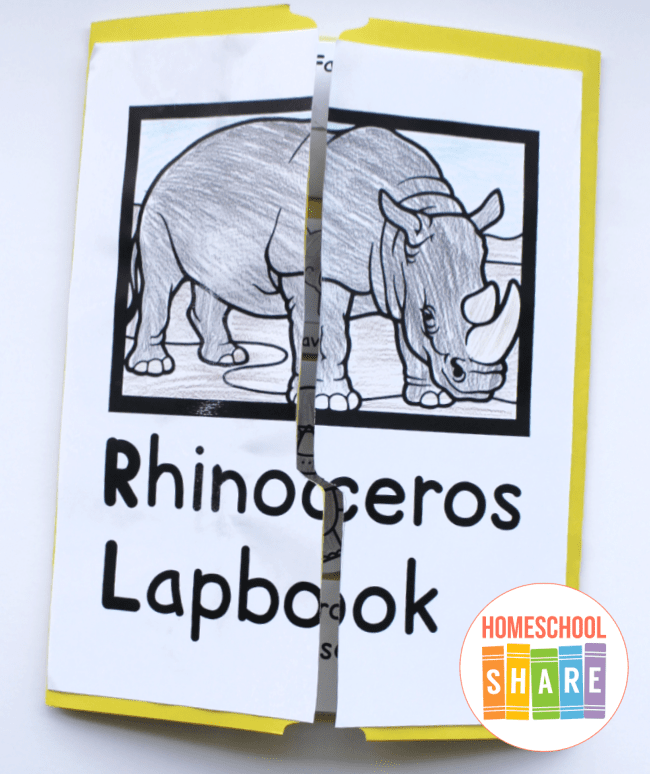
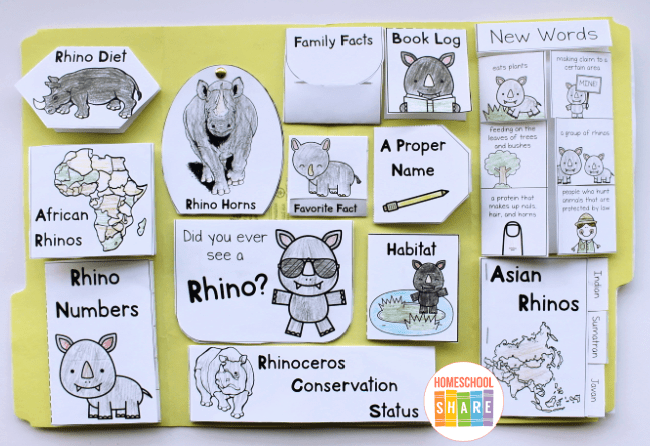
Rhino Lapbook Example
This lapbook was made with one file folder. If you are new to lapbooking, Check out this How to Make a Lapbook guide.
How to Get Started with Your Rhinoceros Lapbook
Follow these simple instructions to get started with the Rhinoceros Lapbook.
- If you want, go to your local library and check out books about rhinos.
- Print the Rhinoceros Lapbook.
- Choose and prepare the mini-books you want to use with your student.
- Enjoy a week of reading and learning all about rhinos!
Download Your Rhinoceros Lapbook
Simply click on the image below to access your free Rhinoceros Lapbook.
Explore Our Other Animal Lapbooks
We have dozens of animal lapbooks at Homeschool Share. Here are a few:
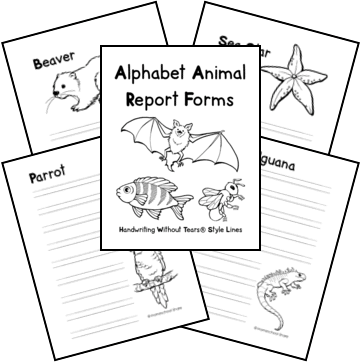
You may also want to check out our Alphabet Animal Report Forms.