Affiliate Disclaimer
We sometimes use affiliate links in our content. This won’t cost you anything, but it helps us to keep the site running. Thanks for your support.
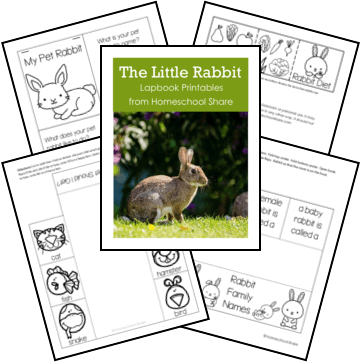
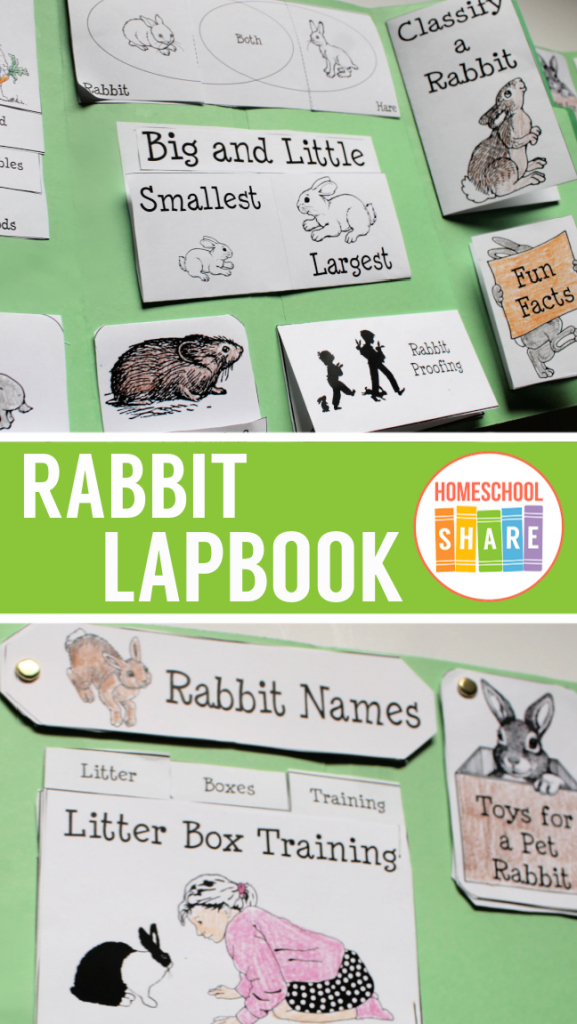
Hop to it! It’s time to learn all about rabbits with our free Rabbits Lapbook.
Rabbit Lapbook Information
Here are some sample lessons from the Rabbit Lapbook:
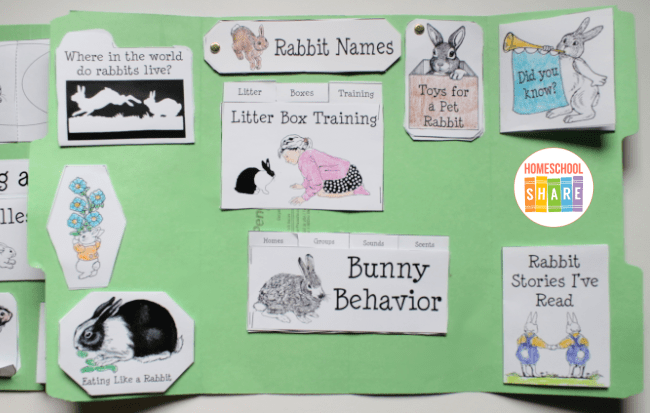
Rabbit Range
Where do rabbits live? Rabbits live on mountains, in deserts, wetlands and generally most everywhere. They live in Europe, Central and South Africa, India, Sumatra, Japan and the middle latitudes of the Americas.
Rabbit Behavior
Some rabbit species make burrows and live underground. Many burrows connected together form a warren. While others live in surface nests called forms.
In Europe, rabbits can live in groups with as many as 20 rabbits. But other species are mainly solitary and only form family groups.
Rabbits don’t make many sounds. They will make a scream like a baby’s cry when they are caught by predators. They will growl when threatened. And they make a purring sound by grinding their teeth when they are happy. Rabbits communicate mostly through scents. They will mark their territory through spraying or rubbing. These marks communicate information about sex, age, social and reproductive status, or territory ownership.
Rabbit Hierarchy
Rabbits who live with other rabbits will develop into a hierarchy. There will often be a “leader” rabbit who will claim authority over the other rabbits. The king rabbit often does not like other male rabbits in his territory. The queen rabbit will insist that she get the first pick of all the treats given out. The subjects are the subordinate rabbits who get bullied around by the other rabbits. Sometimes these rabbits are just more laid back and sometimes they have low self-esteem.
This Rabbits Lapbook also includes an entire section dedicated to Pet Rabbits. You can grab a copy of the entire Rabbit Lapbook in an easy-to-print file at the end of this post.
Rabbit Lapbook Printables
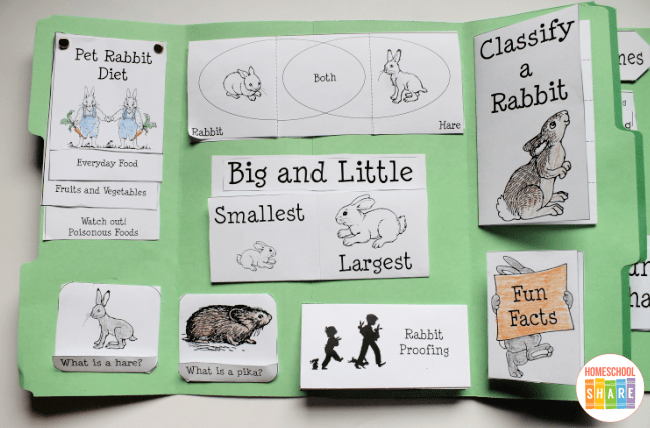
In addition to the lessons and research, the following mini-books are included in your free Rabbit Lapbook:
- Smallest vs. Largest Rabbit Flap Book
- Rabbit Royalty Tab Book
- Rabbit Names Fan
- Rabbit Range File Folder Book
- Rabbit Fun Facts Accordion
- Rabbit Stories I’ve Read Mini-Book
- Did You Know? Tri-fold Book
- Classify a Rabbit Flap Book
- Bunny Behavior Tab Book
- Rabbit vs. Hare Venn Diagram
- Rabbit Relatives Matchbooks
- Pet Rabbit Diet Layer Book
- Rabbit Proofing Your House for a Pet Rabbit Envelope Fold
- Toys for a Pet Rabbit
- Litter Box Training (Pet Rabbit) Tab Book
Rabbit Lapbook Example
Here is a sample Rabbit Lapbook using some of the mini-books and two file folders.
How to Get Started with Your Rabbit Lapbook
Follow these simple instructions to get started with the Rabbit Lapbook.
- If you want, go to your local library and check out books about rabbits.
- Print the Rabbit Lapbook.
- Choose and prepare the mini-books you want to use with your student.
- Enjoy a week of hopping and learning all about rabbits.
Download Your Rabbit Lapbook
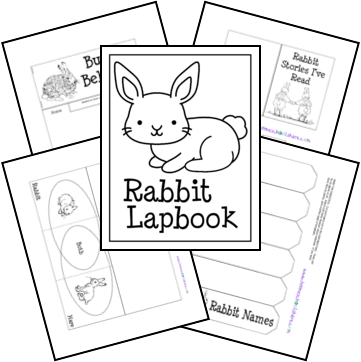
Simply click on the image below to access your free Rabbit Lapbook.
Explore More Rabbit Resources