Google
 
Free Elephant Unit Study & Lapbook

Elephants Unit and Lapbook
Research by Pamela Johnson
Templates by Pamela Johnson and Ami


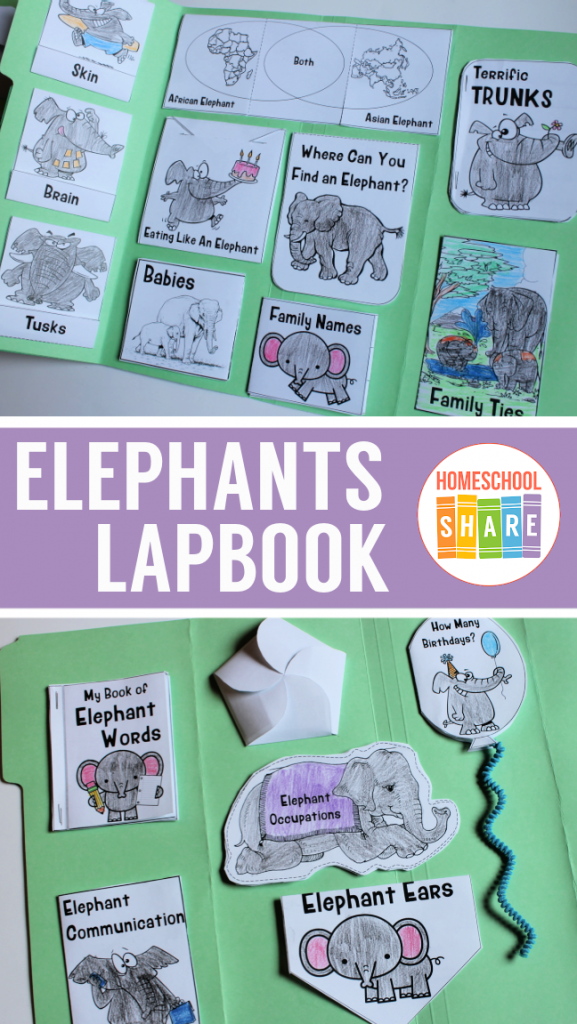
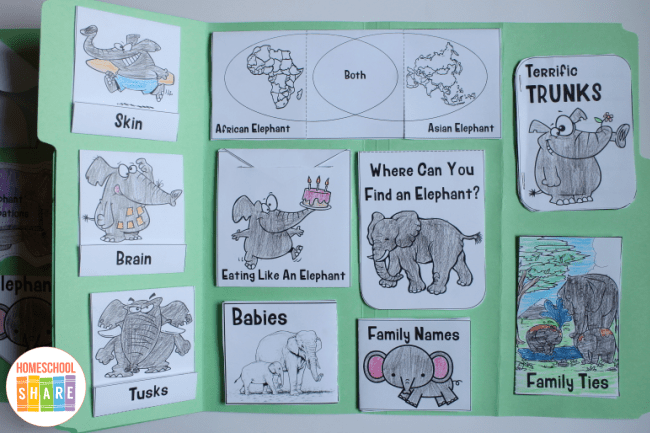
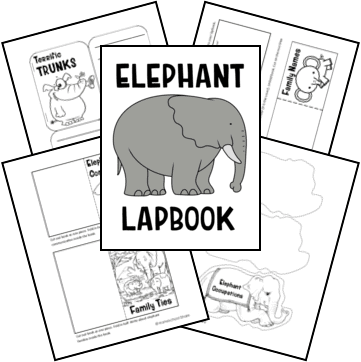
Lapbook Templates

Mammal Checklist
 
Size Concept Map
 
Endangered Interlock
 
Mammal Parts (older)
 
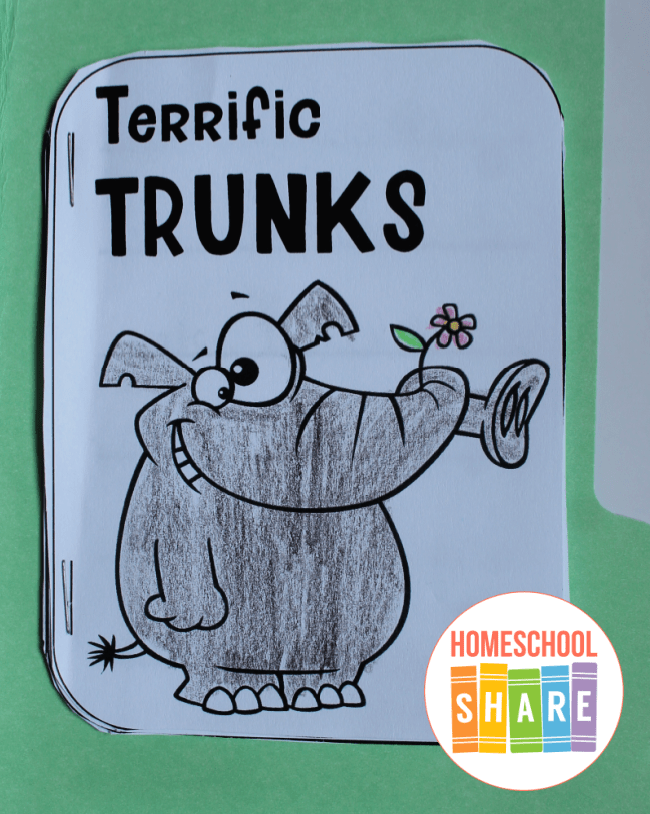
Terrific Trunk Accordion
 
Diet & Habitat
 

Classification Layer
 

Trunk Trivia Book (lined)
 
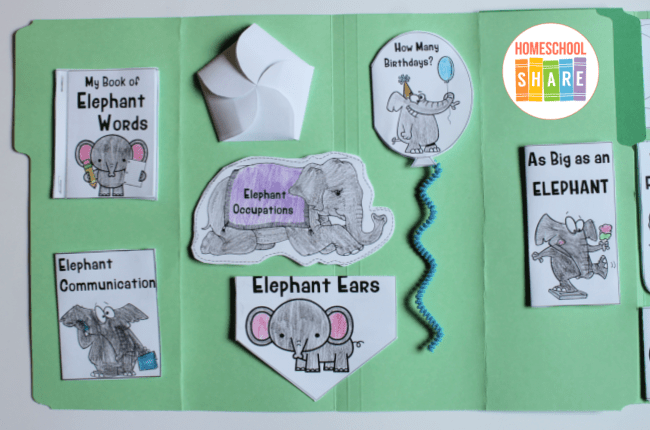
Elephant Occupations
 

Relatives (older)
 

Trunk Trivia Book (unlined)
 
Addition Cards
 
Relatives (younger)
 
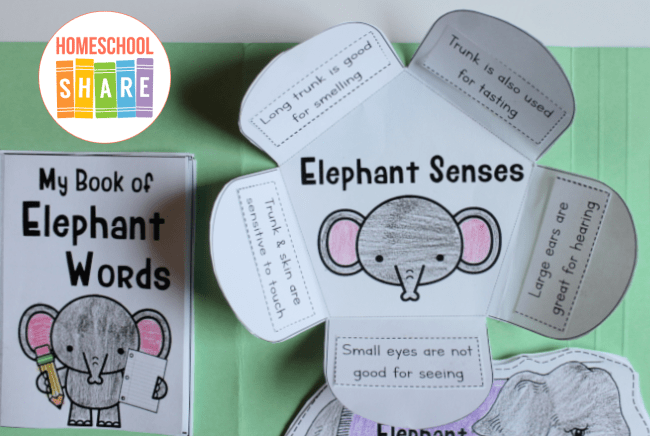
Senses Petal Book
 
Size Graph
 
Elephant Olympics
 
How Many Birthdays? & Ears
 
Measurement Cards
 
Fun Facts Bound Book
 
African vs. Asian Venn Diagram
 
Dominoes (older)
 
Book Log Fan
 
Baby Accordion & Family Names Flap
 
Dominoes (younger)
 
Anatomy Matchbooks
 
Elephant Families & Communication
 
Domino Pocket
 
Cover Page
 
Vocabulary Flaps (younger)
 
Adjectives/Synonyms
 
Coloring Page
 
Vocabulary Cards & Pocket (older)
 
Adjectives (older)
 
Hannibal Shutterflap
 
Prefixes, Roots, Suffixes
 
Horton Flap Book
 
Book Log 2 Shape Book (blank) ~use as desired  


Library List
Eyewitness: Elephant by Ian Redman
Elephant: Watch Me Grow by DK Publishing
Elephants (True Books) by Melissa Stewart
Elephant Families by Arthur Dorros
African Elephant (Early Bird Nature Books) by Roland Smith
In the Forest with the Elephants by Roland Smith
Little Big Ears: The Story of Ely by Cynthia Moss
Echo of the Elephants: The Story of an Elephant Family by Cynthia Moss
Elephants: A Book for Children by Steve Bloom
Elephants (Zoobooks) by John Wexo
Elephants by Beverly Randell
An Elephant Grows Up by Anastasia Suen
Project Elephant by Susan Ring
African Elephant by Shannon Knudson
Elephants by Paul May
Elephants by Gloria Schlaepfer
Hansa (A True Story) by Meeker, Feltner, and the Woodland Park Zoo
Horton Hatches an Egg by Dr. Seuss
Horton Hears a Who by Dr. Seuss
The Story of Babar by Jean de Brunhoff

Record the books you read in one of these:  Book Log Fan,
Book Log 2


SCIENCE


Anatomy

Read all about Harry the Elephant

~Brain
There is a saying, “An elephant never forgets!” This may have come from the fact that the elephant’s brain at 13 pounds weighs about 4 times more than the human brain! This huge brain contains a greater amount of creases in the temporal lobe than the human brain, suggesting that the memory of an elephant may be colossal! Elephant caretakers who have nurtured orphaned babies before returning them to the wild have been surprised to see “their baby” return years later to introduce their babies to the caretakers!
 
~Ears
1 - Elephants have great hearing with their huge ears. Researchers believe they can hear sounds 5 miles away, and hear sounds that other animals cannot hear. Because elephant eyes are tiny and have reduced vision, their sense of hearing is enlarged.
2 - Since elephants do not have sweat glands, their ears help cool them down. The huge fan ears cool several blood vessels while the elephant is flapping them causing the flowing blood to cool and circulate though the body.
3 - Scientists observe the unique veins in elephant ears to help identify them.
4 - Elephants hold out their ears to make them look even bigger to any creature that may be threatening them.
 
~Skin
To help prevent sunburn, elephants turn over in sticky mud and dirt to “apply” a natural sun block. Mother elephants try to protect their children from sunburn and heat by standing over them to provide shade.
The dirt also works as an insect repellent for their very deep, solid, thick skin. The skin is creased and wrinkly, gray-brown, and contains only small amounts of thin hair, but it is very sensitive. Swatting with their bushy tails is another way to brush away the insects.
Some people refer to an elephant as a pachyderm, which means “thick skinned”. Rhinoceros and hippopotamus are also thick-skinned ungulates (mammals such as elephant, horse, cattle, and deer that have hoofed feet) that are considered pachyderms.
 
~Tusks
An elephant’s tusks are his upper incisor teeth (sharp front teeth used for biting and gnawing). They can be used for digging and scratching the earth, defending themselves in a fight, scraping bark from trees, or even tearing down plants and bushes. See African / Asian Comparison for other tusk information. The tusks are made up of ivory that is a hard, white material like teeth.
 
~Trunk
pictures of trunk differences.
 
About the Trunk
A trunk may give elephants one of the strongest senses of smell than any other land animal.  Their senses of taste and touch are also amplified because of their wonderful trunks!  The trunk can hold about 4 liters of water.  It is able to lift 4.5 % of its body weight with its trunk.   It contains 6 key groups of muscles that make up 100,000 muscle parts (compare to human body 639).  Prehensile or grasping “fingers” or “lips” are at the tip of the trunk to pick up things.  An elephant can communicate with it (If an elephant charges toward you with its trunk held up, it is just a warning, but if it has its trunk down, beware!).   Elephants use trunks and tails to make an elephant chain when traveling, especially with the babies  for safety when crossing over water. It is the most tender part of body.
 
Uses for trunks –
to scratch, to warn, to throw, to snorkel, to explore, to eat, to drink, to play, to smell, to grab, to hold, to store, to dust, to clean, to cool, to move, to dig, to hose, to communicate, to pat, to breathe, to bathe, to grasp, to touch, to show affection
With an older student, you may want to use the words above to introduce or review verbs! 
 
Elephant Senses
Hearing –great hearing because of large ears
Sight – poor sight with small eyes
Smell – strong smelling with long trunk
Taste – increased from trunk
Touch –trunk is very sensitive as is their thick skin
 
Size
Elephants are one of the largest land mammals to walk the earth. An adult can be 8 (Asian) to 13 (African) feet high at his shoulder, and weigh around 4 (female) to 6 tons (male)! Calves can be about 200 pounds at birth. Males are generally larger than females.  See math lessons for an extension of this lesson.
 
Elephant Sizes – size activities for younger kids

Minit books for this section
Anatomy Matchbooks
Size Concept Map
Terrific Trunk Accordion
Trunk Trivia Book (lined)
Trunk Trivia Book (unlined)
Senses Petal Book
Ears Simple Fold


Diet
Their trunks and tusks are used to help them collect and eat food. Elephants are herbivores – they eat only plants such as grains, grass, shrubs, bark, roots, leaves, and fruit. Bulls eat between 300-600 pounds of plants per day. 30 gallons of water or more per day is needed for these large mammals. Although they can grow up to 6 sets of molars (teeth with a wide top used for grinding and chewing, usually located in the back of the mouth) in their lifetime, their diet is hard on the teeth and wears them down. After the last set is gone, an elephant cannot chew his food, and may not be able to eat enough to live.

Diet Minit Book


Elephants are Mammals
~Give birth to live baby
~Hair on body
~Mother feeds milk to the baby with her body
~Warm blooded animal – body temperature stays fairly consistant although outside temperature changes
~Use lungs to breathe – rib cage expands – diaphragm muscles contract and relax for air movement
~Vertebrate -a backbone; an animal with an internal skeleton consisting of bones or cartilage
~Well-developed brain – able to think and learn
~Four-chamber heart – right /left atriums receive in, right/left ventricles pump out; the right atrium receives de-oxygenated blood, the right ventricle pumps blood to the lungs; the left atrium receives oxygenated blood, the left ventricle pumps blood to the body.

Mammal Checklist
Mammal Parts (older student)


African and Asian Elephants

African Asian
lives in central Africa lives in India, Malaysia, Sri Lanka, etc.
2 “fingers” or “lips” at end of trunk 1 “finger” or “lip” on trunk
larger than Asian – 9-13 feet tall smaller than African – 8-10 feet tall
both male & female have tusks only some males have tusks
tusks 6-8 feet long & 50-100 pounds tusks 5 feet long & 70 pounds
most are wild most domesticated – used for work
light gray dark gray
flat forehead globular forehead
back slightly swayed  rounded back
ears are longer and larger ears are shorter and smaller
uses trunk to pick things up uses trunk to scoop things up

Which elephant is which?  One way to remember is the ears!   The word Asia is shorter and smaller than the word Africa (larger and longer!). 

Minit Book- Venn Diagram

Extra Links
African Elephant Reading Comprehension
African Elephant Printout
Asian Elephant Printout
Both Together


Habitat
A habitat is a  place where plants and animals grow or live in the wild.  Elephants can be found in Sub-Saharan Africa, Equatorial Forests of Central Africa, Savannas of South Africa, Dry Woodlands, Mountains, and Tropical Rainforests. 

Habitat Simple Fold


Life Span
60 – 80 years

How Many Birthdays Minit Book


Communication
Elephants are able to converse with each other with a variety of rumbles, growls, bellows, moans and blasting trumpeting! A few of these low-pitched sounds journey up to a mile or more.

Communication Simple Fold


Elephant Families

Family  Names
Mom – cow
Dad – bull
Baby – calf
 
Elephants live in herds (a family group of creatures that migrate, hunt for food, and live together in nature of about 10 adults and their calves. The strongest and most elderly female elephant, the matriarch, leads the group in searching for food and migrating. The matriarch will guide her family far distances to locate food. Teenage males either live solitary lives or in fraternities (groups of single male elephants).
 
Elephants are faithful to all their family members. Families of elephants have been seen waiting for elderly relatives and calves to catch up in their travels. Like humans, they comfort and console dying family members, and appear to have a deep sense of loss.
 
Baby Calves
Elephants are placental mammals. The cow’s gestation period (the time of development of a mammal baby inside the mother’s womb) is for 22 months before giving birth. This is the longest time of any animal. The baby can be 3 feet long and weigh between 200-250 pounds at birth. It can walk only a short time after being born! The mother nurses the baby for 2-4 years, but the baby can also feed itself using its trunk at about 4 weeks old. Mama elephants like to protect their children by keeping them close by for several years in order to teach and show them the way. They can breed at ten years old and have a single calf every four years.

Minit Books
Baby Elephants & Family Names Flap
Elephant Families


Endangered
There are two main reasons elephants are an endangered species. They hardly have any natural enemies, so unfortunately, humans originated problems that could cause their extinction.

1.  Habitats – increased loss of their homes due to ranches, village building, logging, and other industries make hard living conditions.

2.  Humans – Poachers hunt elephants for their beautiful ivory tusks regardless of harsh penalties.  Elephant skin is used to make leather for shoes and other items. Some elephants are even hunted for their meat. Others are killed to keep them from destroying harvests and structures. Because of these poachers, the elephant population in Africa went down from 1,300,000 to 750,000 during a ten-year period in the 1980’s. There are at present an estimated 29,000 to 40,000 Asian elephants left in the wild, and they are now regarded as endangered throughout most of their natural habitat.

Protection – An international ban has been placed on the ivory trade cutting down the amount of poaching. Conservation efforts have been set up at reserves throughout the continent to protect and monitor the elephants.

Endangered Interlock Book

Vocabulary to Know:
Endangered Species - plants and animals that may perish if protective actions are not taken.
Extinct – a plant or animal that is no longer living on Earth.
Conservation - protection and careful use of wildlife and natural resources.
Poaching - hunting animals or fishing illegally on another’s property.
Reserve – a section of land kept back or set aside to be used to protect animals.


Extinct Relatives

Mastadon Woolly Mammoth Elephant
lived in cold weather lived in cold weather lives in warm weather
warm, insulating fur long, black, shaggy fur little hair, tough skin
tusks for digging food and protection tusks for digging food and protection tusks for several things
tusks shorter than Woolly Mammoth, longer than elephant tusks up to 17 feet long tusks 5-8 feet long
7-10 feet tall 9-15 feet tall 8-13 feet tall
narrow head wide head  
  small ears (keep in heat) large ears (reduce heat)

Extinct Relatives (younger)
Comparing Relatives (older)


Elephant Classification

Kingdom: Animalia (animals)
Phylum: Chordata (having a notochord)
Class: Mammalia (mammals)
Order: Proboscidae
Family: Elephantidae (mammoths and modern elephants)
Genera and species: Loxodonta Africana (African savanna elephants)
    Loxodonta cyclotis (African forest elephants)
    Elephas maximus (Asian elephants)

Classification Layer Book


SOCIAL STUDIES


Elephants as Community Helpers (Elephant Occupations)

Architects & Ecologists - Elephants' herbivorous (plant eating) diet and migration patterns (moving from one location to another out of habit usually to search for food or breed) assist the ecosystem (a community consisting of plants, animals, and physical features living and working together) of the land by clearing bush and plants from spreading too far. They can consume upper leafs off the trees so sunlight shines on the lower foliage. By digging roots and turning over the soil, they help plants recultivate. Other animals are then able to enjoy a diet from the remaining grasslands.
 
Gardener - Elephant droppings help to fertilize the grasslands, provide vituals (food provisions) for birds and bugs, and help to scatter seeds.
 
Plumbers - By digging deep into waterless waterholes, they help their fellow creatures to find fresh water.

Road Construction / Firefighters – Elephant trails are created as long lines of elephants roam from place to place. Paths are made for smaller creatures to walk upon. Some of these trails develop into rainwater aqueducts and fire barricades.

Entertainer - Elephants are very intelligent and easy to be trained for many purposes. One way we can observe this behavior is at a circus, like the famous “Jumbo” who worked at the Barnum Circus! Elephants can learn many tricks and are natural performers.
 
Lumberjack - Like living bulldozers, they are taught to help people by pushing bushes down and hauling logs from forests.
 
Mover – Their gigantic strength enables them to move and carry heavy loads from one place to another.
 
Transit Operator – People have ridden elephants for transportation for centuries!
 
Soldier – Elephants were brought to Europe by Alexander the Great after his Asian invasions. Romans used them in their gladiator games, and Hannibal used them in the Punic War (see article and picture below). Elephants were used to move military equipment through difficult terrain during World War II and many other times. Let your older student research the famous adventure of Hannibal and his war elephants.   Record information about Hannibal in this minit book.

Minit Book:  Elephant Occupations

Character: Bible Connection
How can you be a helper to your community and home?
Helpfulness Character Lapbook


Geography Connection
Your older student may want to learn more about Africa or Asia.
Here is a country lapbook to get him started. 


MATH CONNECTIONS


Counting / Addition / Subtraction
My 1st grader is going to be using little foam elephants that I found inexpensively at a craft store to practice basic math problems. They can be stored in a pocket in his lapbook.  You could use stickers on index cards, too.   You could also use these elephant addition cards.


Measurement & Graphing Activity
Measure and mark 10 feet (the average height of an elephant) on a sidewalk or driveway. Chalk works well and washes away. Measure your height from
the same starting point, mark your height. Measure and mark heights of other people or objects to compare with an elephant’s height. This activity can also be done on a graph. Which things that you measured are taller than an elephant? Which are smaller? Are there any the same height?

Chart for Lapbook


Word Problems
Use these charts to help with the following problems.  You can also play dominoes to reinforce the various measurements.
Dominoes Older
Dominoes Younger
Dominoes Pocket

A bull elephant weighs 6 tons and a cow weighs 4 tons. How many more tons is the bull? How many more pounds is he? How many less ounces is she?

An adult elephant weighing 6 tons is how many pounds? How many ounces?

If a calf weighs 200 pounds at birth, how many ounces does he weigh?

A bull eats a lot! If he ate 450 pounds every day, how many quarter pound (1/4 lb.) veggie burgers could he eat?

An adult elephant 9 feet tall is how many yards tall? How many inches tall?

A bull’s height can reach 13 feet high. His son is ½ his height. What is the son’s height in feet? Inches? His daughter is ¼ his height. What is the daughter’s height in feet? Inches?

Elephants can drink over 30 gallons of water each day. How many glasses of water would that be for us? (If each glass contained 1 cup of water)

If a baby calf only drank 10 gallons of water per day, what fraction is that of his mother (30 gallons)? How many times more water does the mother drink each day?

An elephant can walk 5 miles per hour. How many miles can he walk in 4 hours? 10 hours? 24 hours? 50 hours?

If an elephant has walked 75 miles at 5 miles per hour, how many hours has she walked?

If an elephant walked for 6 ½ hours at 3 miles per hour, how many miles did it walk? How many yards? How many feet?

The elephant population in Africa went down from 1,300,000 to 750,000 over a decade. How many elephants were lost total? What is the average loss per year?


LANGUAGE ARTS


Vocabulary
anatomy – parts of a plant or animal put together
conservation - protection and careful use of wildlife and natural resources
domestic – a tamed animal able to be around humans
ecosystem - a community consisting of plants, animals, and physical features living and working together
gestation – the time of development of a mammal baby inside the mother’s womb
habitat – a place where plants and animals grow or live in the wild
herbivore – animal that eats only plants; grasses, leaves, trees
herd – a family group of creatures that migrate, hunt for food, and live together in nature
incisor - sharp front teeth used for biting and gnawing
ivory –hard, white material like teeth which constructs the tusks of elephants
mammal – a warm-blooded animal with a backbone, well-developed brain, four-chamber heart, and
usually body hair. The females feed their children with milk from mammary glands.
matriarch – a grandmotherly female who is a leader of a family
migrate - moving from one location to another out of habit usually to search for food or breed
molars - teeth with a wide top used for grinding and chewing; usually located in the back of the mouth
pachyderm - huge thick-skinned animals such as elephant, rhinoceros, and hippopotamus
placental mammals –mammals whose young are born at a relatively advanced stage; before birth, the young are nourished through a placenta.
poaching - hunting animals or fishing illegally on another’s property
prehensile – grasping
proboscidea – an order of enormous mammals with lengthy muscular noses, called trunks
quadruped – a four-footed animal
reserve – a section of land kept back or set aside to be used to protect animals
trunk – the long, flexible hose-like extension of a nose and lips found on elephants
tusk – an extended upper incisor that grows outside the mouth of some animals
ungulate - a mammal such as an elephant, horse, cattle, deer that has hoofed feet
vertebrate - animal with internal skeleton consisting of bones or cartilage; a backbone
victuals - food, provisions, chow

Options
Vocabulary Flaps (7 words or less)
Vocabulary Cards & Pocket


Adjective Forms

Adjectives are words that describe a noun (person, place, thing, or idea). Think of and write down words to describe an elephant. There are many words you could choose: big, large, gray, brown, tall, nice, mean, young, old, clean, strong, wild, smart, gentle, friendly, etc.   It would be great to read the poem, "The Blind Men and the Elephant" as an extension to this lesson.  Have your student pick out the elephant adjectives in the poem.

It was six men of Indostan
To learning much inclined,
Who went to see the Elephant
(Though all of them were blind),
That each by observation
Might satisfy his mind

The First approached the Elephant,
And happening to fall
Against his broad and sturdy side,
At once began to bawl:
"God bless me! but the Elephant
Is very like a wall!"

The Second, feeling of the tusk,
Cried, "Ho! what have we here
So very round and smooth and sharp?
To me 'tis mighty clear
This wonder of an Elephant
Is very like a spear!"

The Third approached the animal,
And happening to take
The squirming trunk within his hands,
Thus boldly up and spake:
"I see," quoth he, "the Elephant
Is very like a snake!"

The Fourth reached out an eager hand,
And felt about the knee.
"What most this wondrous beast is like
Is mighty plain," quoth he;
" 'Tis clear enough the Elephant
Is very like a tree!"

The Fifth, who chanced to touch the ear,
Said: "E'en the blindest man
Can tell what this resembles most;
Deny the fact who can
This marvel of an Elephant
Is very like a fan!"

The Sixth no sooner had begun
About the beast to grope,
Than, seizing on the swinging tail
That fell within his scope,
"I see," quoth he, "the Elephant
Is very like a rope!"

And so these men of Indostan
Disputed loud and long,
Each in his own opinion
Exceeding stiff and strong,
Though each was partly in the right,
And all were in the wrong!

Younger student (combine with synonym lesson)-- A synonym is a word that means almost the same thing as another word. Use your adjective lists and try to think of related words. Use a thesaurus if you wish.

Older student - continue with lesson below on comparitive and superlative adjectives

If we wanted to compare two or more elephants, we would have to change the form of an adjective slightly for it to sound right. There are many rules to changing adjectives from one form to another.
 
When there is one of something, we use what is called the positive form of an adjective
.Ex – The elephant is big. (one – no comparison)
 
When we compare two of something, we use what is called the comparitive form of an adjective.
Ex – The African elephant is bigger than the Asian elephant. (comparing two types of elephants)
 
When we compare more than two of something, we use what is called the superlative form on an adjective.
Ex - The biggest animal that lives on the land is an elephant. (comparing elephants with all animals)
 
2 - When changing most adjectives, just add –er to compare two things, and add –est to compare more than two things. Use these rules to fill in chart 2. You can add your own at the bottom.
Ex – positive – strong
comparative – strong + er = stronger
Superlative – strong + est = strongest
 
3 – (Older kids) When changing a one-syllable, short vowel word that ends with one consonant,
double the last consonant and add the suffix –er to compare two things, and add the suffix –est to
compare more than two things. Fill in chart 3.
Ex – positive - big
comparative – big + g + er = bigger
superlative – big + g + est = biggest
 
4 – (Older kids) When changing a two or more syllable adjective, add ‘more’ to compare two things,
and add ‘most’ to compare more than two things. Fill in chart 4.
Ex - positive – gentle
comparative – more gentle
superlative – most gentle
 
5 – (Older kids) When changing a two-syllable adjective that ends in y, change the y to an i and add
the suffix. Fill in chart 5.
Ex – positive – busy
comparative – busy (change the y to an i) busi + er = busier
superlative – busy (change the y to an i) busi + est = busiest


Prefixes, Roots, and Suffixes
Matching Game Cards –cut out cards, use first two columns matching game, or try to match three. Cards can also be used for flashcards.
 
ele –arch
phant -huge
elephant – “huge arch”

pakhus (pachy) – thick
derm – skin
pachyderm – “thick skinned”; one of many thick-skinned hoofed animal such as the elephant,
rhinoceros, and hippopotamus

matri – mother
arch – chief, leader, ruler
matriarch – a female (mother or grandmother) who is the head of a family or social group
 
herb – plant
-vore – one that eats
herbivore – plant eater
 
-aceous - made up of or resembling
herbaceous – characteristic of herb or green leaf, not a woody plant
 
quadr – four
ped – foot
quadruped – a four footed animal
 
re – back
servare – to keep, save, preserve, protect
reserve – to “keep back” or “save back”; a section of land kept back or set aside to be used to
protect animals


BIBLE

Two of my favorite Dr. Seuss books are about the loveable Horton the Elephant! He displays faithful, caring, patient, compassionate, and diligent characteristics.  Here are some quotes that demonstrate Horton's good character. 

“I’ll stay and be faithful. I mean what I say.”
“I meant what I said, and I said what I meant…An elephant’s faithful one hundred percent!”
“Then carefully, tenderly, gently he crept up the trunk to the nest where the little egg slept.”
“Horton stayed on that nest!”
~From Horton Hatches the Egg by Dr. Seuss

“So, gently, and using the greatest of care, The elephant stretched his great trunk through the air…”
“Believe me,” said Horton. “I tell you sincerely, My ears are quite keen and I heard him quite clearly.”
“I’ve got to protect them. I’m bigger than they.”
“You’re safe now. Don’t worry. I won’t let you down.”
“I’ll stick by you small folks through thin and through thick!”
“I shall find my friends on my small speck of dust!” And clover, by clover, by clover with care he picked up and searched them..….till he found them at last! On the three millionth flower!”
~From Horton Hears a Who! by Dr. Seuss

Even though it was hard, boring, raining, and freezing - he stayed on that nest and cared for the Whos!
Even though his friends made fun of him, and hunters captured him – he stayed on that nest and cared for the Whos!
Even though he was taken from his home, sold to the circus, and humiliated – he stayed on that nest and cared for the Whos!
Even though he had to search near and far, he was hurt and tied up – he stayed on that nest and cared for the Whos!

I sure hope I can have that much diligence and compassion when God asks me to do something!
What Bible verses can train and encourage us to be cheerful, diligent, compassionate, helpful, kind, attentive, and dependable?

Minit Book: Horton Character Quality Flap

Character Lapbooks
Faithfulness and Diligence are both included


ART

Humans were alive at the same time as mammoths. We have proof of this because paintings have been located in caves in the countries of France and Spain. Draw a woolly mammoth! Consider what materials the ancient artists would have used in their paintings? What is a possible reason for
writing on the walls of caves? Were they just pictures, or do you think the pictures told a story? Make up a story about mammoths and humans and illustrate your story.
 
How to Draw an Elephant (Jan Brett Video)
A Painting Elephant


RESOURCES

Websites

Elephants at Enchanted Learning
Free Elephant Curriculum
The Elecam
Fantastic Elephant Photos!
Animal Planet Elephants
Elephant Notebook Page

 
Just for Fun

Elephant Olympics!
What event(s) can an elephant participate in?

Track - An elephant is a soft, slow moving creature unable to win a track event at 4-5 miles per hour, but if he gets scared or mad his speed can increase up to 25 miles per hour!

Long Jump – Don’t hold your breath on this one. All other mammals can jump, but the poor elephant is unable to hop or hurdle.

Tightrope walking!?! – Um, not quite! But despite its size, it actually has a sturdy feeling of balance and is able to glide along charmingly with poise! Their hefty feet with broad soles spread the weight evenly and comfortably providing a soft cushion to walk upon. The toes also assist with balance when moving.

Swimming – Now we have a gold medal champion! Elephants are terrific swimmers both above and below the water. They love to play and squirt each other in the water.

Elephant Olympics Minit Book

Kid Olympics!
~Track Event: Running – mark out 100 yards (or whatever distance your parents suggest), and have someone time you from start to finish. Write down your time on a graph or notebook. Run several trials (one day or over several days) and compare your times. What was your fastest time? Slowest time? What was your average time? Did you increase or decrease your speed each time you ran?
~Track Event: Long Jump – mark a starting line, jump as far as you can, measure and record the distance. Jump several time and compare your results.
~Tightrope or Balance Beam -- put a long flat board or a jump rope on the ground. Try to walk on it without falling or stepping off. Is it easier to balance walking on four knees, on two flat feet, or on your tippy toes? Why? Try walking straight with a book on top of your head. (Models do this to practice walking gracefully!) Try not to let it fall  .Did you think of ways to keep your the book up? What could you do to make it easier to keep your balance?
~Make up some other silly olympics events to try.

Video of elephants playing in the snow!
Videos of elephants playing soccer!
Video of elephants playing basketball!
Video of elephant playing harmonica and dancing!
Make a Book of Elephant Jokes!
Elephant Puzzle