Google
 
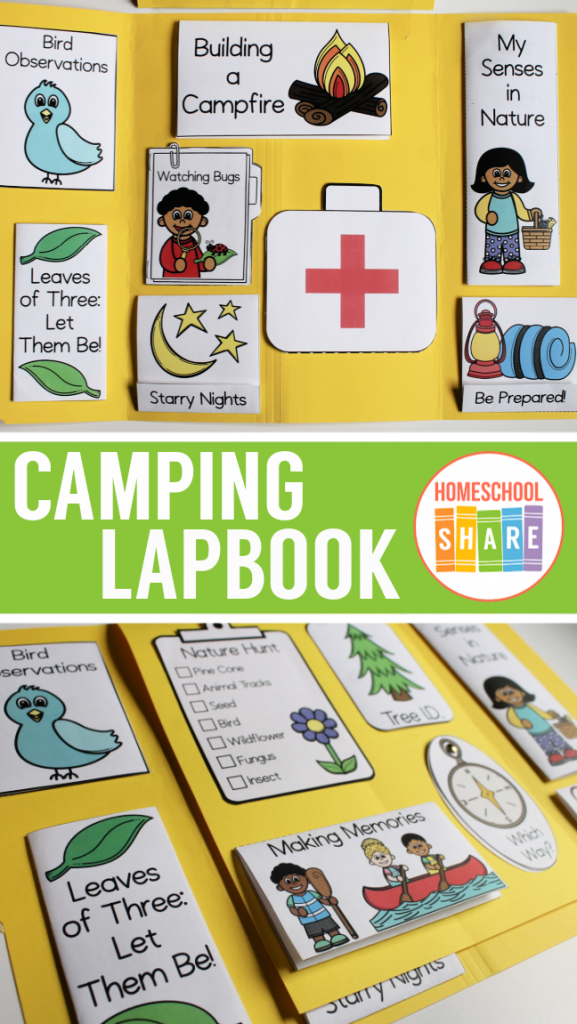
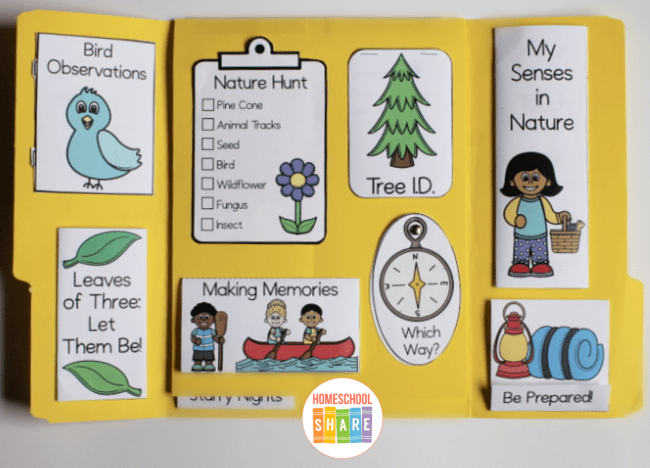
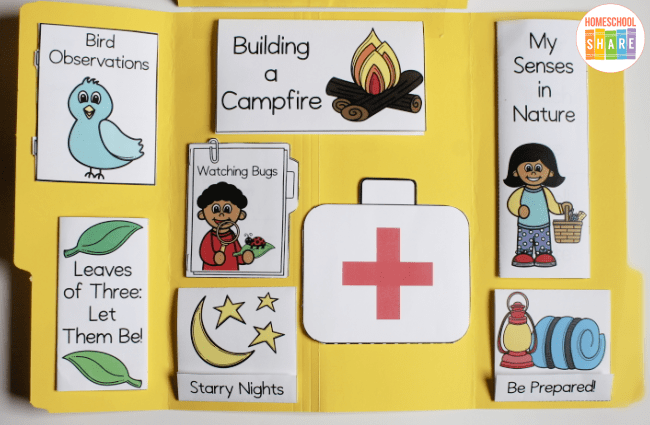
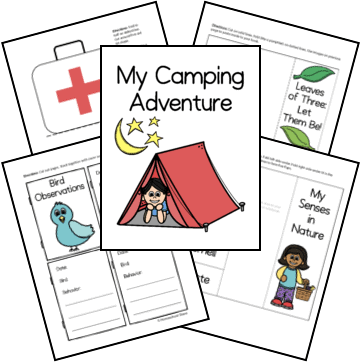
FREE Camping Lapbook

Camping Adventure Lapbook

Created by Tammy Maddox

Cover Page
 
Recipe Pocket
 
Directions Side by Side
 
First Aid Kit Shape
 
Campfire Tab Book
 
Nature Hunt Pocket and Clipboard
 
Be Prepared!
 
Bird Watching 1
 
Trash Hunt Pull Tab
 
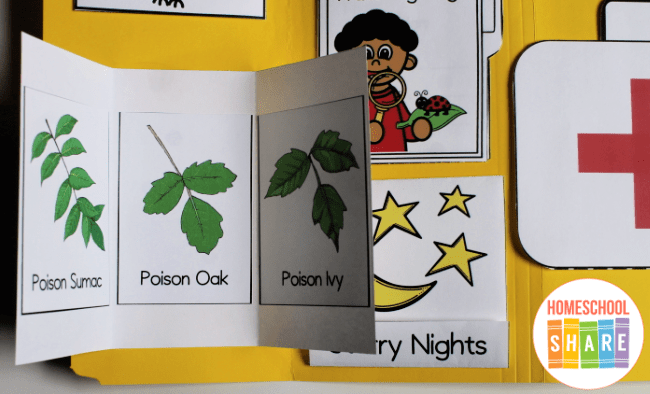
Leaves of Three Tri-fold
 
Bird Watching 2
 
Starry Nights Simple Fold
 
Making Memories Accordion
 
Tent Peek-a-boo
 
Psalm 19:1 Simple Fold
 
Five Senses Flap Tree I.D. Hiking Supplies


Lessons and Information

This unit was created to make camping a fun, educational, and memorable family time. It is intended for tent camping but can easily be adapted for other uses. There are many helpful books on this subject; these are a few I have found most useful.

Cooking on a Stick: Campfire Recipes for Kids by Linda White & Fran Lee
Cooking in a Can: More Campfire Recipes for Kids by Kate White and Debra Dixon
Sleeping in a Sack: Camping Activities for Kids by Linda White & Fran Lee
Trekking on a Trail by Linda White & Fran Lee
Wishing on a Star: Constellation Stories and Stargazing Activities for Kids by Fran Lee
Fishing in a Brook: Angling Activities for Kids by Fran Lee
Backyard Birding for Kids by Fran Lee
Kids Camp!  Activities for the Backyard or Wilderness by Laurie Carlson

If your child has never been camping you should be able to find some fun camping stories to read before you go. Some of the information in this unit study is intended to be done before you leave, some you will do while you are camping. It may help to have the minit books cut out and put in a zip lock bag along with the supplies you will need, such as a pencil, crayons or colored pencils, and some 4x6 cards.

First Aid/Safety
Camping is a wonderful way to appreciate and enjoy the beauty of the great outdoors. It is also a time to learn about safety and being prepared for scrapes, bruises, bugs and the sun.  Before you leave, discuss basic first aid with your child and put together a kit that you will take with you camping. Discuss what things you will take and why you might need them. Your library and the Red Cross have excellent resources for this.  

Be sure to include a  whistle; it is very important to have in case you get lost or badly hurt and can not walk back. A whistle is much louder than your voice and is easier to use. Blow three short bursts then wait a few minutes before blowing again. This should only be used for emergencies not as a toy! It is a good idea to have a “traveling” first aid kit also. This would be smaller than the one you would keep at the campsite and would include items you may need when you are out on the trail or in the boat etc. We find it convenient to use a belt pack for our traveling kit. It includes smaller versions of our larger kit. I have found that film canisters are great to hold smaller amounts of sunscreen, petroleum jelly, etc. You can also purchase travel size bug spray to put in your pack. Use the “first aid” minit book to have your child cut and paste items that need to go in a first aid kit.  This is not an exhaustive list, you may want to encourage your child to draw or write in other items that should be included.

Be Prepared
It takes a lot of supplies to go camping; you will be living outdoors and will not be able to run back to the house to grab something. Once you decide where you will be camping and for how long you will stay, you will be able to start making your supply list. This is a great opportunity to teach your child about list making and responsibility (you don’t want to get to the campsite to discover the cooler wasn’t put in the car!).  Of course you will need a tent, sleeping bags, changes of clothes (clothes that can be “layered” work well), first aid kit and medicines, whistle, food and cooking supplies, towels and toiletries, matches, flashlight and batteries, and maps. There are many other items you may not readily think of such as a compass, plastic bags, etc. We find it useful to have a master packing list (slid into a sheet protector, you can check it off as you pack, then erase it to use for the next time) that we add to as we begin to pack and we note things we should have brought that we put on our master list for the next time (i.e. clothesline and clothespins). There are many great books to help you pack what you need without over-packing; Sleeping in a Sack has a through list of needed supplies. Use the Be Prepared! minit book to cut and past some of the supplies you will need to bring. Perhaps your child can circle the supplies he is responsible for and can mark them off when they are in the vehicle.

Leaves of Three
Use this minit book to teach your child to identify poisonous plants.

Making Memories:
Use the enclosed “making memories” minit book to scrapbook some of your favorite memories. If there is an experience that your weren’t able to get a photo of, encourage your child to draw and/or write down the memory.

My Five Senses and Nature
God has given us a beautiful world. Encourage your child to explore it with all five senses. However, unless you are an expert on what is safe to eat in the wild, taste should be limited to only the foods you have at the camp. Be creative!  What does the mud feel like squeezing through your toes? Is moss wet or dry? Can you hear the different animals; can you identify some of them? The sound of rushing water is very peaceful. The smell of a crackling of a campfire or the dampness of the morning air.  What do you see? Evidence that an animal has been near, the bright open night sky, a waterfall, how about little sister trying to catch a tadpole?  Use the minit book to record what your child discovers.

Recipes
Nothing tastes quite like food cooked over an open campfire. There are many ways to cook while you camp, popular ones being on a stick, foil wrapped foods cooked directly on the coals, or using a Dutch oven. Again, there are many helpful books on this subject; Cooking on a Stick has many kid friendly recipes. Some of our favorites include: Hobo dinners, kabobs and of course, roasted marshmallow. For a yummy Hobo dinner take a piece of heavy duty foil lay a cabbage leaf on it (this adds a great flavor and helps to keep food from burning if left on the coals for too long) then add meatballs and your favorite cutup vegetables and some seasonings. Wrap the food tightly and cook directly on the coals for about 20-25 minutes. Use long-handled tongs to remove. You can make this recipe with any meat. Kabobs on a stick (again any meat, vegetable, and pineapple) make for a fun and yummy dinner. If you happen to be cooking over charcoal as opposed to wood, your food will cook much faster so be careful! Don’t forget leftovers. If you have a large pot or Dutch oven and find you have some meat and vegetables to use up, throw them in the Dutch oven with some water and seasoning, let it simmer and enjoy a tasty soup. Write your child’s favorite recipes on 4x6 cards and place them in the “Camp Style Cooking” pocket

Building a Campfire
The campfire is like the kitchen, it is where everyone gathers. Take the time to teach your child both how to build a fire and how to be safe around one. Your campsite will probable have a fire ring, if not, create one by clearing an area of ground (about three feet in diameter).  Place small stones in the bottom and make a circle around it with larger stones. You will need to bring or gather three types of wood. Note: due to insect infestation some campgrounds require that you purchase special wood or buy it from them. Also, most parks do not permit you to burn logs found at the campsite, check first and be prepared. You will need three types of fuel: tinder, kindling, and larger logs. Tender is used to start the fire and will give immediate burn; this could be dry leaves or grass, bark, dryer lint, wood shaving, small twigs etc. Kindling is small sticks usually about one inch around or so. You will also need logs which are your main source of fuel once your fire is lit. Once your pit is ready and your supplies are gathered, be sure to have a bucket of water nearby to put out the fire. Begin by putting a small mound of tinder in the middle of the pit then teepee style, place kindling around it being sure to leave “air holes” for circulation. Then you can build either a teepee style fire with your logs around the kindling (this is good for a quick hot fire to cook over) or a cabin fire (good for a longer “night-time” fires) by placing your logs in a cabin fashion around the kindling. Proceed to light the kindling and enjoy! Be sure to teach and/or remind your child to stay back from the fire and to never play near it or run around it for their safety and to always completely put out the fire before leaving the area even for a short time.  You can use the included minit book to either teach your child how to build a fire or to reinforce what they already know. You may want to visit the Smoky Bear website to learn more about fires and safety.

Birds I Saw
Use one or both of the bird minit books to record the birds that you spot as you are camping.
Bird Watching 1
Bird Watching 2

Tent Peek-A-Boo
Use this fun minit book to put your child’s picture in.

Tree I.D.
Use this minit book to write the name of trees you have identified and draw a picture of it or make a bark rubbing. If you keep a nature journal at home, you may want to take a left to do a rubbing of when you return.

Directions
Camping is a great time to learn about directions and what to do if you become lost. Knowing how to use a compass, map, and the sun (when really in a pinch) are great skills to have. When you arrive at your destination, you will want to orientate your child with where your campsite is in relation to landmarks, natural or manmade. Each camper should have their own whistle (see first aid section). 

Maps: Most DNRs and other camping areas will have maps of the grounds.  Please ask for one; they can be invaluable. If not, make your own with your child using signs and symbols your child will recognize. When you are hiking through unmarked areas you will want to bring pen and paper to create a map, this is a great lesson to do with your child.  Make sure they are able to orientate the map to figure out the cardinal directions (North, South, East, and West) and what landmarks to look for when coming from different areas. *Tip: If you become lost or disoriented climb to a higher area to get a good look around to help locate familiar landmarks or other people.

Compass: Show your child a compass and spend time practicing how to use it (again be sure they know the cardinal directions and where the campsite is in relation). You can practice using the compass as you hike together.  

Sun: This is the trickiest way to tell directions but it is a good skill to acquire.
Day time: find a stick about 3 feet tall and place in a flat open piece of ground. Mark the end of its shadow with a rock or another smaller stick. Wait about thirty minutes and mark the tip of the shadow again. Connect the line and it will run from West to East with the first marking indicating west.
Evening: Th
e direction the sun is going down is west. Once you figure out the direction you need to be traveling walk in a straight line. To help you do this, set your eye on a landmark and walk toward it. If you need to go around obstacles alternate going around them once on the left side, the next time of the right side, this will help you stay in a straight line.

You can use the included minit book in several ways; your child can dictate the advantages of each tool, the basic way to use each, etc.

Nature Hunt
Use the minit book to have a family nature hunt. You can do this together or break into teams for a fun competitive game.

Trash Hunt
Use the trash hunt minit book as you would the nature hunt. This is a good time to discuss our role of taking care of the earth and leaving things better than we found them. You can use the minit book to have your child pick up either before you set up camp if you are camping in a much used area or as you are packing to go home; use it as a check list to ensure that you are leaving the area well cleaned.

Starry Starry Night
Use the minit book to have your child dictate, write or draw what constellations you spotted while star gazing or to record a special story or memory you shared during this time.

Psalm 19:1
The heavens proclaim the glory of God. The skies display His craftsmanship”.
As a family, memorize this verse together. Use it for devotional time to attempt to discern how awesome our God is.  He and only He could create the glory of the skies and of the earth. You may want to use Genesis and creation as your devotions for this week and focus on how wonderful God is. Use the minit book to write in the Bible verse or to describe God and his greatness.

Hiking Supplies
Hiking is a great way to spend the day; there is so much to explore!  Be prepared, before you leave make sure you have: a whistle (see first aid), if you are not going to be using a marked trail bring, or make as you go, a map of the area, water bottle, traveling first aid kit, a healthy snack, and your camera and/or journal to record what you see and experience. Use the minit book to help your child discern what they will need.