Affiliate Disclaimer
We sometimes use affiliate links in our content. This won’t cost you anything, but it helps us to keep the site running. Thanks for your support.
Did you know a jellyfish’s body is about 95% water? Did you know the smallest jellyfish is about the size of your fingernail? Learn all about these fascinating sea creatures with our free Jellyfish Lapbook.
Jellyfish Lapbook Lessons
Here are some sample lessons from the Jellyfish Lapbook.
Jellyfish Anatomy
Jellyfish are simple creatures that come in a variety of shapes, sizes, and colors. A jellyfish is little more than a stomach surrounded by a bell-shaped body. They have no bones, ears, eyes, hearts or brains! And because they are invertebrates, which means they’re animals that lack backbones, their bodies are like jelly. That’s how they got their name!
They also don’t have any lungs or gills. They absorb oxygen through their skins instead.
Fast fact: some Jellyfish have light sensors called eye spots. These sense sunlight coming through the water’s surface. They help jellyfish determine which direction is up!
Its mouth is located at the center of the bell’s underside.
Some jellyfish may have four to eight frilly oral arms. These surround a jellyfish’s mouth and digestive tube which look like a short tube hanging down from the center of its body.
Some also have tentacles, which hang down from their bells.
Jellyfish Life Cycle
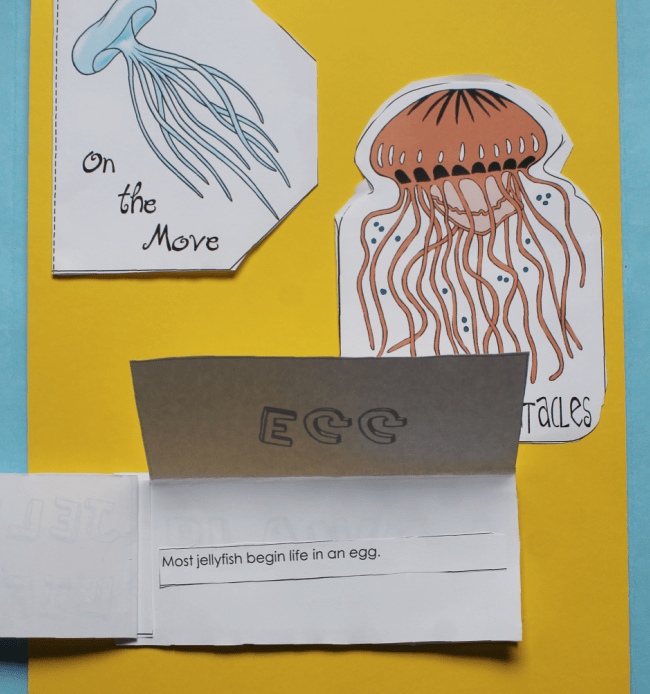
Jellyfish have a complicated life cycle and go through several stages before becoming adults. Most jellyfish begin life in an egg. After a few days, the egg develops into a tiny animal called a planula. It looks like a worm and is transparent. It can swim but mostly just floats. After a few days or weeks, the planula changes into a tube-like creature called a polyp and sinks to the bottom of the water. A polyp has a mouth and tentacles but cannot swim. It’s stuck to the ocean floor. It eats by stinging animals that swim nearby. Small saucer-shaped disks begin to grow from the polyp. After a few weeks or months, a polyp has many disks which eventually break off. The disks float around for about a week. By the end of the week, each disk becomes a medusa, which is another name for an adult jellyfish.
To access all of the lessons in this Jellyfish Lapbook, subscribe to Homeschool Share’s email list using the form in this post.
Jellyfish Lapbook Printables
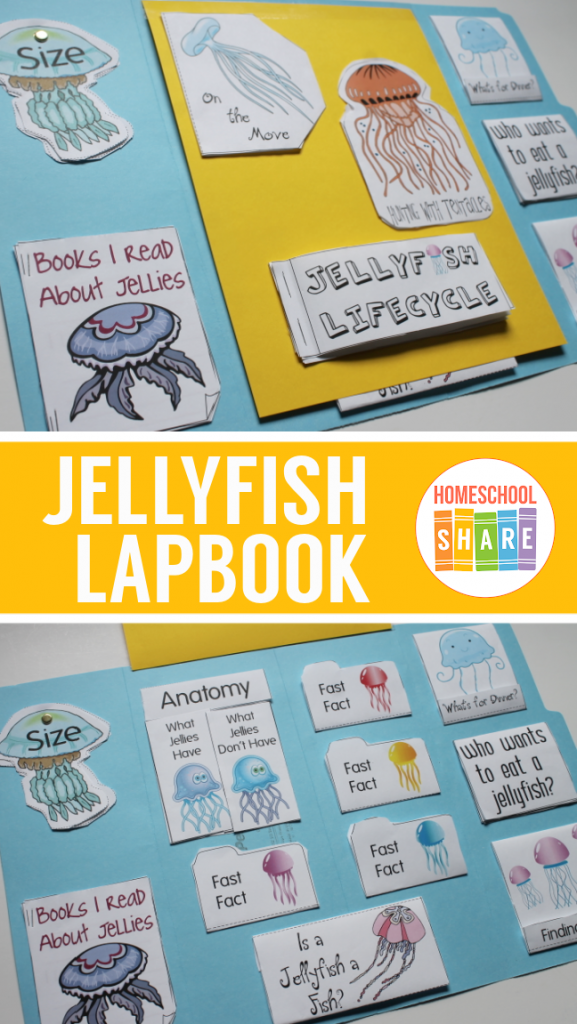
In addition to the research lessons, the file includes these mini-books for your student to create a Jellyfish Lapbook:
- Finding Jellies Matchbook
- What’s for Dinner? Matchbook
- Is a Jellyfish a Fish? Twice Folded Book
- Jellyfish Anatomy Shutterfold Book
- Size Shape Book
- Hunting with Tentacles Simple Fold Book
- Protection from Predators Tri-fold Book
- On the Move Simple Fold Book
- Fast Fact File Folders
- Who Wants to Eat a Jellyfish? T-book
- Books I Read About Jellies
- Vocabulary Lotto Game
- Jellyfish Life Cycle Strip Book
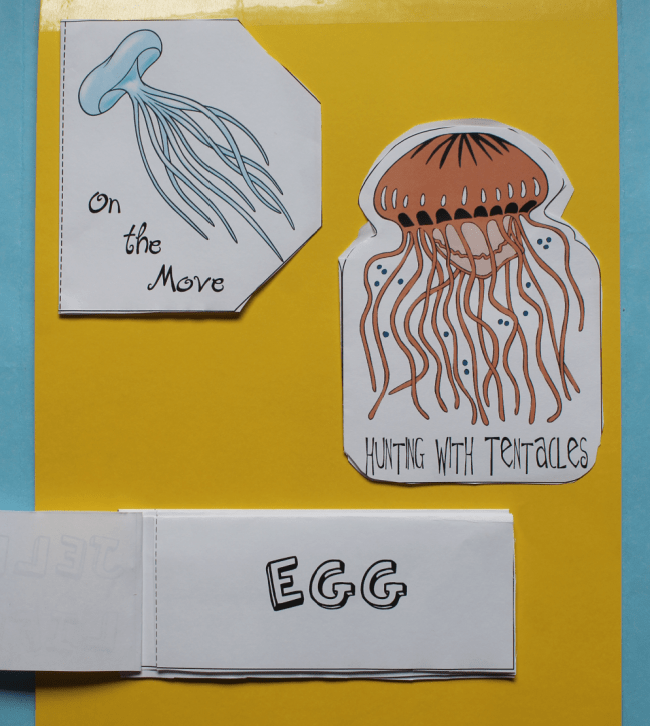
The life cycle strip book is unique. This is what the first page under the cover looks like (opened and closed).
How to Get Started with Your Jellyfish Lapbook
Follow these simple instructions to get started with the Jellyfish Lapbook.
- If you want, go to your local library and check out books about jellyfish (also known as jellies).
- Print the Jellyfish Lapbook.
- Choose and prepare the mini-books you want to use with your student.
- Enjoy a week of reading and learning all about Jellyfish.
Lapbook Example
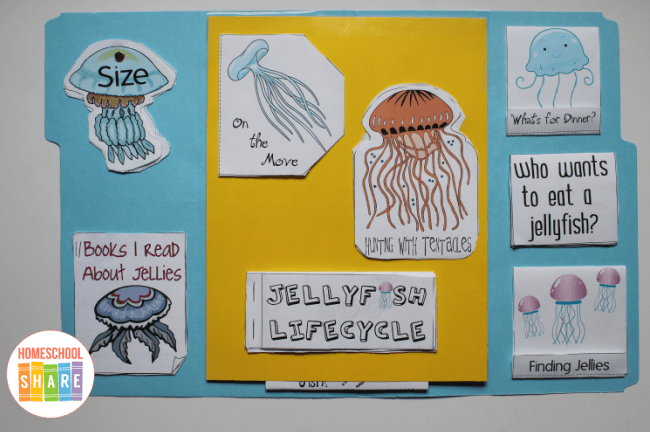
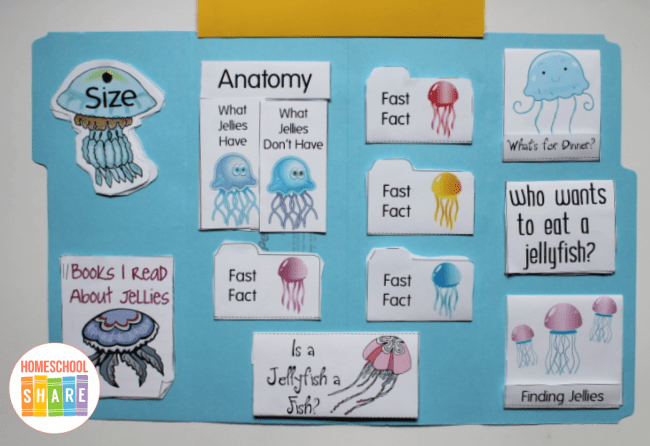
This sample lapbook was made with a file folder and a center extension. The center extension was created by taping a piece of cardstock to the center of the lapbook.
If you need more directions about how to make a lapbook, check out this post.
Download Your Free Jellyfish Lapbook
Use the form below to subscribe to the newsletter. Once you confirm, you’ll receive an email with the link to the lapbook. If you are already confirmed, simply enter your name and email address below, and you will receive an email with the link.
Explore Our Other Ocean Animal Resources
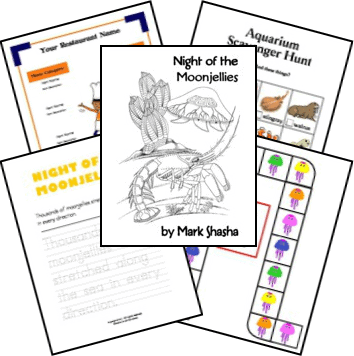
Learn more about jellyfish with these printables based on the book, Night of the Moonjellies by Mark Shasa.
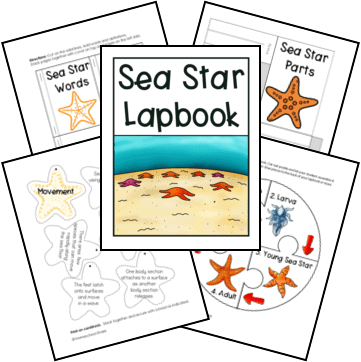
Learn all about sea stars with our Sea Star Lapbook.
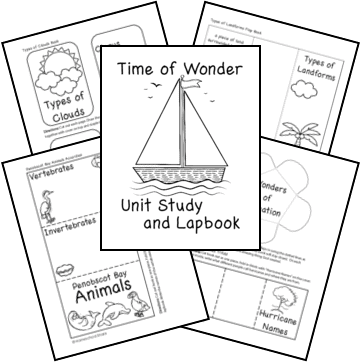
Grab our Time of Wonder study and learn more about oceans and ocean life.