| HSS Forum HSS Blog Ami's Blog - Walking By The Way HSS on Facebook | ||||||
| about us |
what's new
|
unit studies | unit study helps |
fiar resources
|
indexes | lapbooking |
Hedgehogs

Research by
Debbie Palmer
Minit books by Ami Brainerd
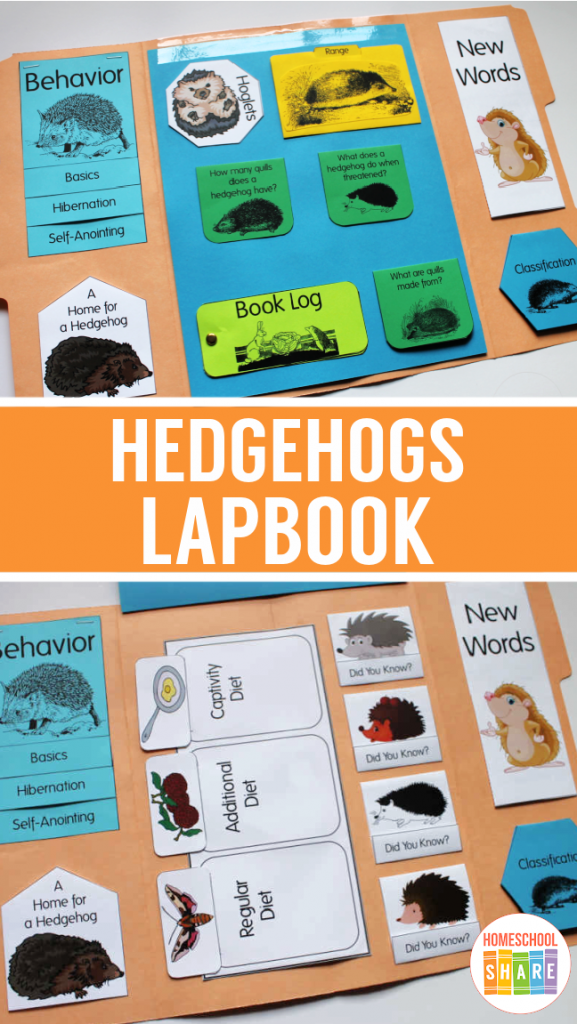
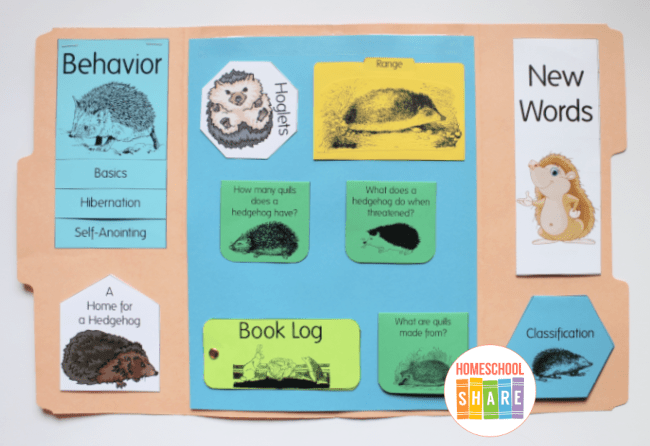
Templates
|
Vocabulary Flap
(write in words) |
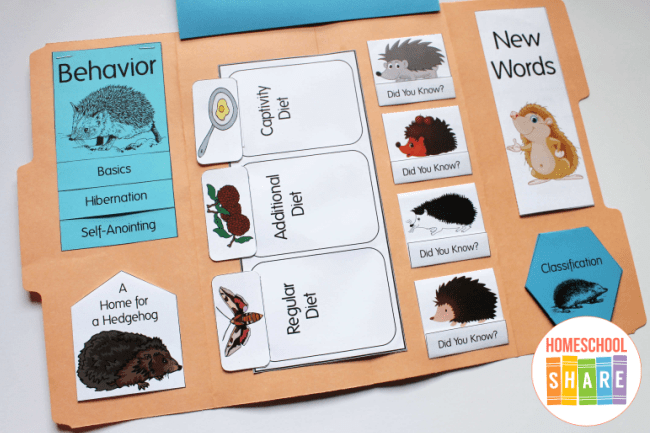
Diet Pull-tabs |
Defense/Quills Simple Folds |
|
Vocabulary Flap (write in
definitions) |
Behavior Layer |
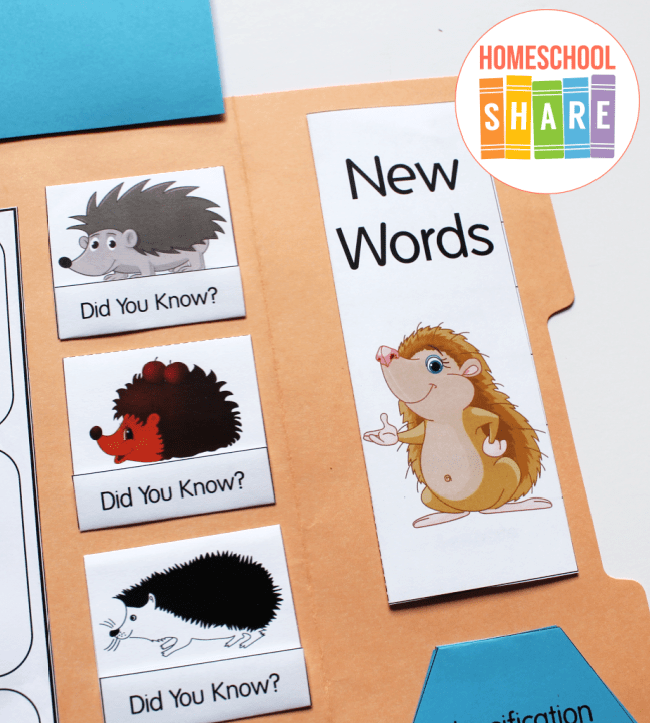
Did You Know Matchbooks |
|
Book Log |
Behavior Layer with
lines |
Range File Folder |
| Classification Accordion | Hedgehog Home & Hoglets Tri-fold | Cover Page |
Vocabulary
Nocturnal- active at night
Solitary- likes to be alone
Keratin-a protein found in hair, claws, nails, horns and hooves
Insectivores-mainly eats insects
Omnivores-eating both meat and vegetation
Hibernate-to pass the winter in a dormant (sleep-like) state
Aestivate-to
pass the summer in a dormant state
| Vocabulary Flap (write in words) |
| Vocabulary Flap (write in definitions) |
Book List and Hedgehogs in Literature
The Mitten by Jan Brett
The Hat by Jan Brett
Hedgie’s Surprise by Jan Brett
Hedgie Blasts Off! by Jan Brett
The Tale of Mrs. Tiggy-Winkle by
Beatrix Potter
One Winter's Day by M. Christina Butler
Snow Friends by M. Christina Butler
One Snowy Night by M. Christina Butler
Hedgehog for Breakfast by Ann Turner
Durry Quill is a hedgehog in the Redwall series by Brian Jacques. There are also other hedgehogs in the series. This series is for older kids.
General
Information Hedgehogs are small, spiny animals. Their name comes from Middle
English: “heyg meaning hedge because it frequents hedgerows” and “hog” because
of its snout. Hedgehogs are insectivores (they mainly eat insects). They
aren’t related to porcupines even though they may have a similar appearance.
They are related however, to shrews, moles and tenrecs. Hedgehogs have large
eyes, but poor eyesight. They do possess a keen sense of smell. They have
quills that are soft at birth and harden after birth. Most hedgehogs have
around 5,000 quills/spines.
Did You Know Matchbooks
Classification
Kingdom Animalia
Phylum Chordata
Class Mammalia
Order Insectivora
There are four
classifications (genera) of hedgehogs: Eurasian and European hedgehogs, African
hedgehogs, desert hedgehogs, and Long-eared hedgehogs. There are a total of 14
different species.
Classification Accordion
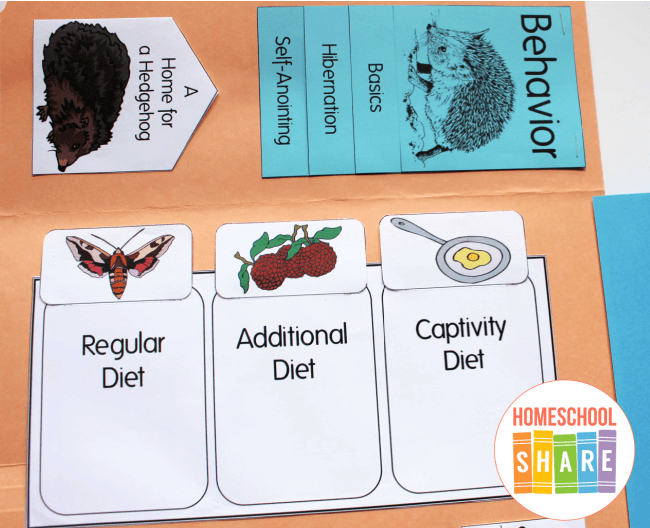
Diet Their diet in the wild consists of beetles, ants, termites, grasshoppers, moths, centipedes, and earthworms. Although they are classified as insectivores…they can be omnivores eating also grass and berries. If they live in captivity they can eat dry cat food, ferret food, cooked poultry and cooked egg. Diet Pull-tabs
Range Hedgehogs are native to the British Isles, Asia, Africa and Europe. They have been introduced into New Zealand. Hedgehogs that are kept as pets are normally the African White-bellied Hedgehog. Range File Folder
Defenses (quills) A hedgehog’s main defense are its quills (or spines) which are actually hairs that are made stiff with keratin. Each animal has about 5, 000 quills. Unlike the quills of porcupines, hedgehog quills can’t be easily removed. However, spines normally come out when a baby sheds them and gets its adult spines. The quills are not solid, but rather hollow with air chambers inside.
When a hedgehog is threatened is will roll into a ball with its quills facing outward. If something touches the hedgehog, it will jump upward or charge forward a bit to stick its attacker with its quills. Hedgehogs will make a hissing or clicking sound when an attacker comes close. A hedgehog will put down its spines when it feels content. Hedgehogs in captivity can become so trusting that they allow their owners to hold them and they won’t raise their spines.
A hedgehog’s (depending on the species) predators are birds of prey, jackals, wolves, and wild dogs. The predators must be able to penetrate the quills which is highly unlikely. The hedgehog’s number one threat has become the car. Many are killed on roads. Defense/Quills Simple Folds
Behavior Hedgehogs are nocturnal and solitary. They tend to avoid each other at night while looking for food. They only come together during mating. Hedgehogs like dark, cool holes to sleep and raise their young. They don’t dig these holes, but rather use an abandoned hole of another animal or a shallow depression in the ground. The European species may hibernate in the winter and the African species may aestivate in the hot, dry season.
Hedgehogs have a
strange behavior called self-anointing. Scientists are not sure why they
do this. Self-anointing is when hedgehogs lick things with their tongues until
foam comes out of their mouths. Then they twist their heads around to smear the
foam on their spines.
| Behavior Layer |
| Behavior Layer with lines |
Reproduction and families
There are no separate names for the males and females. However, young hedgehogs are called hoglets or pups. Groups of hedgehogs are called herds, even though they don’t really live in herds. The female raises the pups. A female hedgehog’s pregnancy lasts about 35-58 days and she can have a litter up to 9 babies (four babies is the average). Babies are born with soft quills and closed eyes. The quills harden soon after birth. The eyes open in 14 to 16 days. Hedgehogs tend to live 4-6 years.
Hedgehogs in
Culture
Groundhog Day originated in ancient Rome as Hedgehog Day.
There are no native hedgehogs in the United States, so the early settlers chose
the groundhog as a substitute because their behavior is similar to the hedgehog.
Websites
Hedgehog printout
Hedgehog cookies
Make a Hedgie book
Hedgie Blasts Off
activity
Drawing hedgehogs
Spiky
Hedgehog cookies