Affiliate Disclaimer
We sometimes use affiliate links in our content. This won’t cost you anything, but it helps us to keep the site running. Thanks for your support.
Ants are fascinating creatures. Did you know a leafcutter ant makes its own antibiotics? Have you heard that some queen ants fake their deaths in order to kill a queen in another colony? Wow.
Grab our free Ant Lapbook and prepare to be amazed by these tiny yet mighty insects.
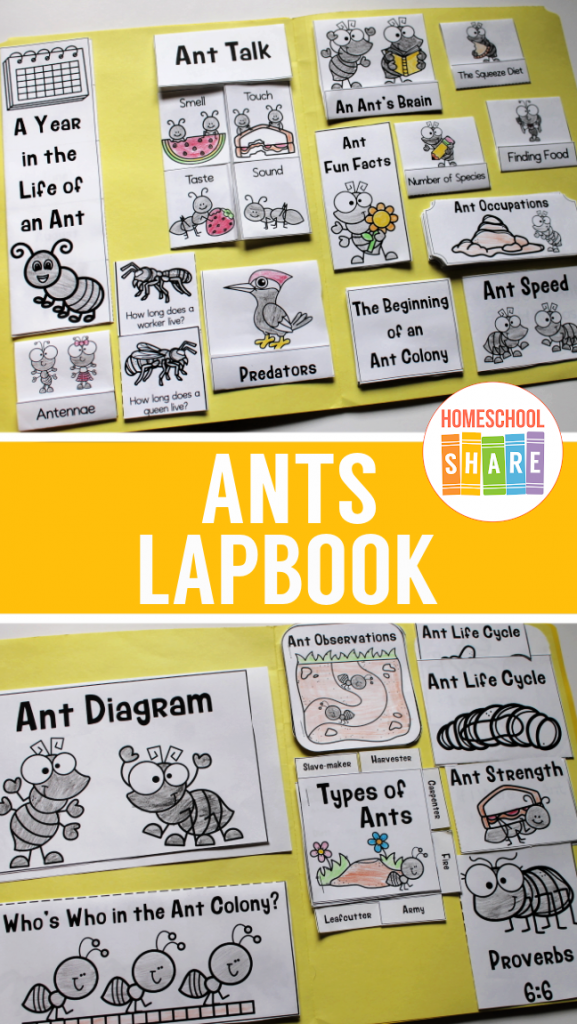
Thanks to Brandy Shutt and Lynn Pitts for creating this animal lapbook for Homeschool Share.
Ants Lapbook Lessons
Here are some sample lessons from the Ants Lapbook:
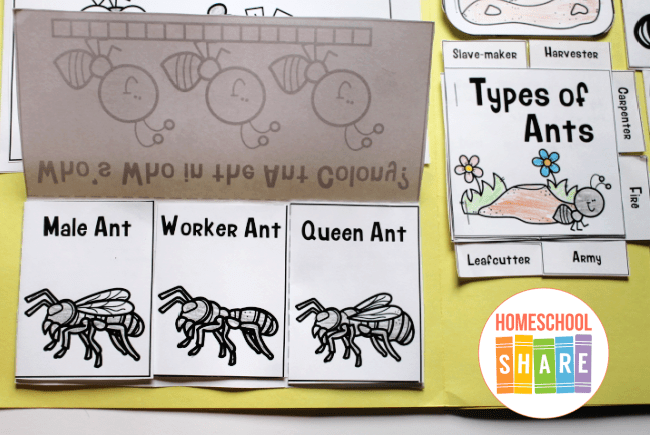
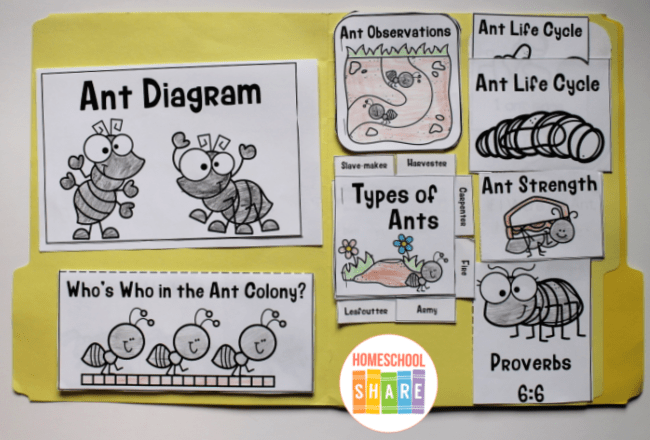
Who’s Who in the Ant Colony?
Queen Ant- Queen ant lays all the eggs and is the mother. Young queens have wings but old queens do not. All have large abdomens to produce eggs. Some can lay millions of eggs per year.
Male Ants- All males have wings and can be seen for only a few weeks in the summer. They mate with the queen and do no work in the colony.
Worker Ants- All female, but do not lay eggs. They are the smallest ants, they do all the chores: clean the nest, gather food, and defend the colony.|
Worker Jobs
Workers have many different jobs to do. They begin their work by cleaning themselves. A couple days later they start sharing food and licking each other.
Here are a some of the different jobs done by the worker ants.
Queen Tender: Young ants help the queen deliver her eggs by grabbing the eggs with their mandibles.
Nurse Ant: Young ants lick larvae so they do not dry out, and feed them so they grow.
Tunnel Diggers: Young ants dig tunnels for traffic and new chambers to store eggs and larvae and food.
Guard: These ants stand near the entrance of the nest, blocking strange ants from entering.
Foragers: The oldest ants search for food. Most foragers search within 50 feet of the nest, but if food is scarce, they may travel thousands of feet.
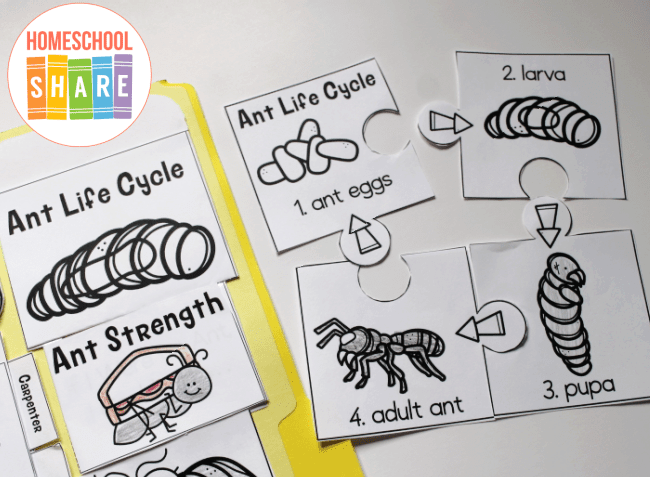
Life Cycle
Egg- queen ants lay tiny oval shaped eggs
Larva- worm like larva grow and grow causing their skin to shed; they don’t have eyes or legs
Pupa- once the larva reaches a certain size, it spins a cocoon and pupates; during the time in the cocoon, the ant’s body changes to adult form
Adult- the pupa emerges into an adult
Life Expectancy
A worker ant generally lives 45-60 days. However, the queen can live up to 10 or 20 years!
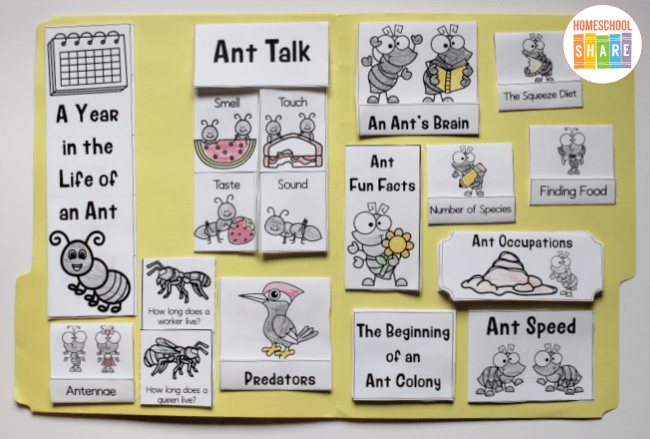
Ant Talk
Ants express themselves by using these senses.
TOUCH: Ants tap one another with their antennae to announce the discovery of food and to ask for food.
SMELL: They emit pheromones that other ants smell through their antennae. This warns them of danger, says hello, or helps others to work harder.
SOUND: When they are trapped, they rub the joint between their waist and abdomen to make a squeaky sound that other ants hear through their legs.
TASTE: They exchange food with other ants mouth to mouth. This sharing of nutrition and chemicals says, “We’re Family!”
To access all of the lessons in this Ants Lapbook, subscribe to Homeschool Share’s email list using the form in this post.
Ant Lapbook Printables
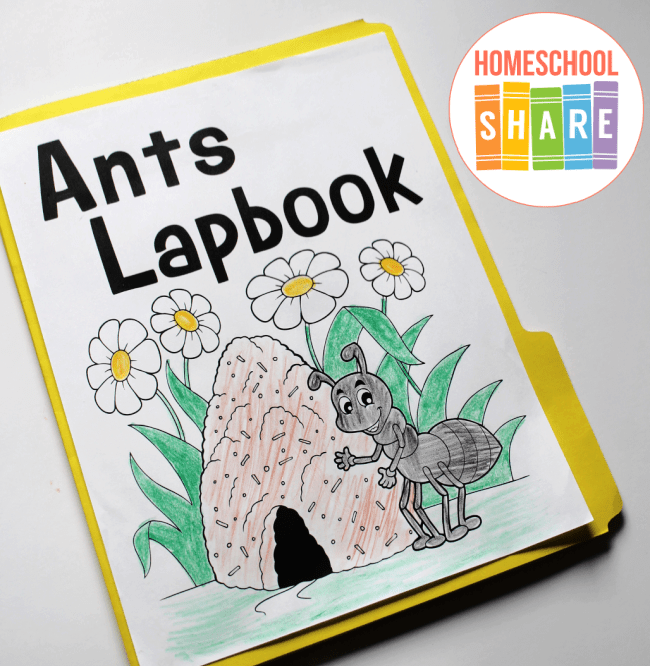
- Who’s Who in the Ant Colony? Side by Side Book
- Let’s Take a Ride Bird with Pocket
- Ant Speed 3/4 Book
- Ant Strength 3/4 Book
- Ant Occupations Accordion Book
- Ant Observations Mini-Book
- Ant Facts Tri-fold Book
- Ant Life Cycle Puzzle Pieces & Pocket
- Life Span Bi-fold Book
- Types of Ants Tab Book
- Proverbs 6:6 Copywork Simple Fold Book
- Ant Brain Matchbook
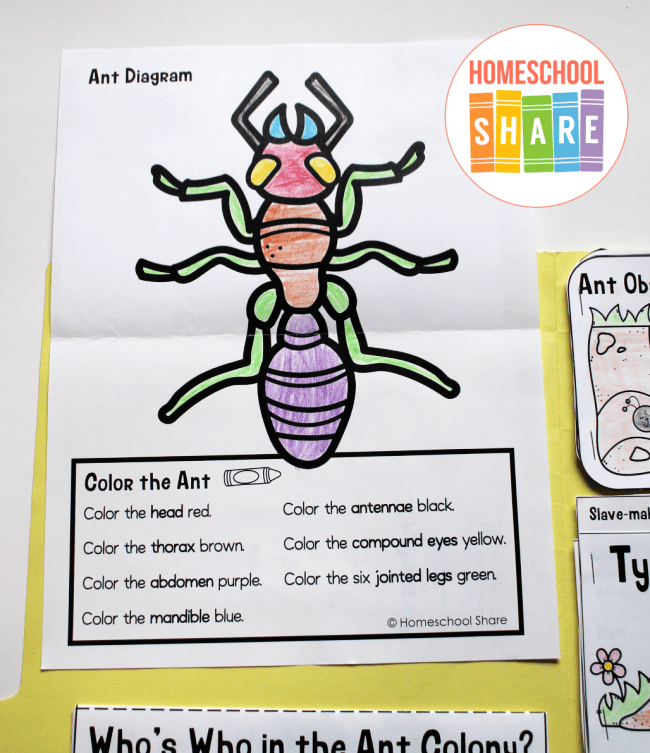
- Ant Diagram Simple Fold Book
- The Beginning of an Ant Colony T-book
- Ant Predators Simple Fold Book
- A Year in the Life of an Ant Flap Book
- Ant Talk Shutterflap Book
- Number of Ant Species Matchbook
- And more!
How to Get Started with Your Ants Lapbook
Follow these simple instructions to get started with the Ants Lapbook.
- If you want, go to your local library and check out books about ants. Read the books throughout your ant study.
- Print the Ants Lapbook.
- Choose and prepare the lapbook mini-books you want to use with your student.
- Enjoy a week of reading and learning all about ants.
Ant Lapbook Example
This ant lapbook was made in a different way. The student chose to not refold the file folders; she simple glued two file folders together.
If you need more information about how to make a lapbook, start here.
Download Your Free Ants Lapbook
Use the form below to subscribe to the newsletter. Once you confirm, you’ll receive an email with the link to the lapbook. If you are already confirmed, simply enter your name and email address below, and you will receive an email with the link.
More Insect Lapbooks
Are you looking for more insect lapbooks? Try these: