Google
 
Stellaluna Free Unit Study and Lapbook

Stellaluna

  Author:  Janell Cannon
ISBN: 0152802177
Literature Based Unit Study by:  Janee' Lowrance
Summary:  Stellaluna, a baby fruit bat is separated from her mother before she can fly. She is adopted by a family of birds who turn her world literally upside down and teach her the essence of friendship in humorous and touching ways.

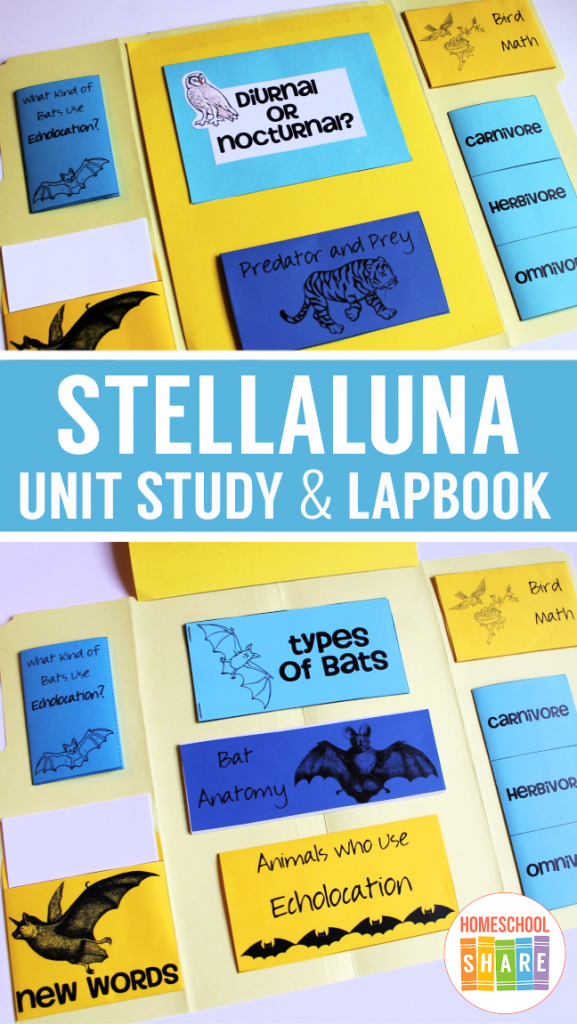
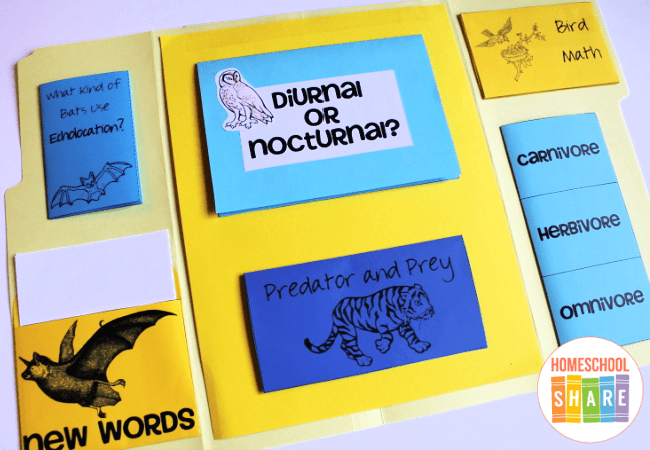
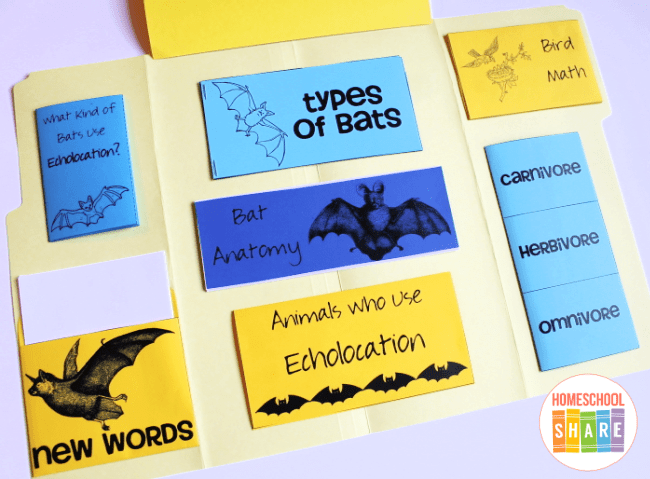
Lapbook

Vocabulary Cards
 
What Mammals use Echolocation? Side by Side Book
 
Finding Fruit Bats Book
 
Vocabulary Pocket
 
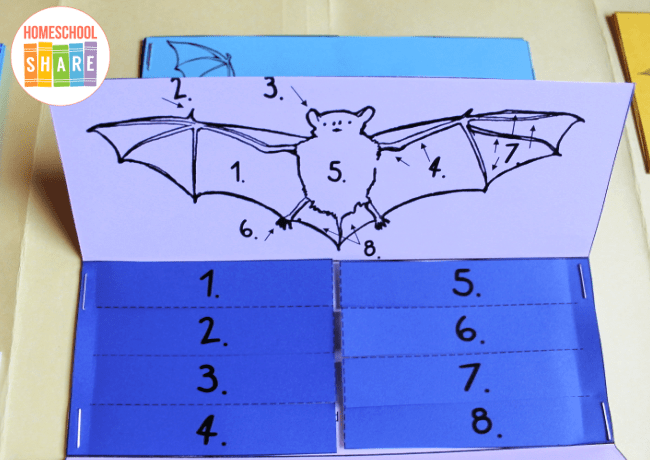
Bat Anatomy Minit Book
 
Bird Math 3/4 Book
 
Who's Who Flip-Flap Minit Book
 
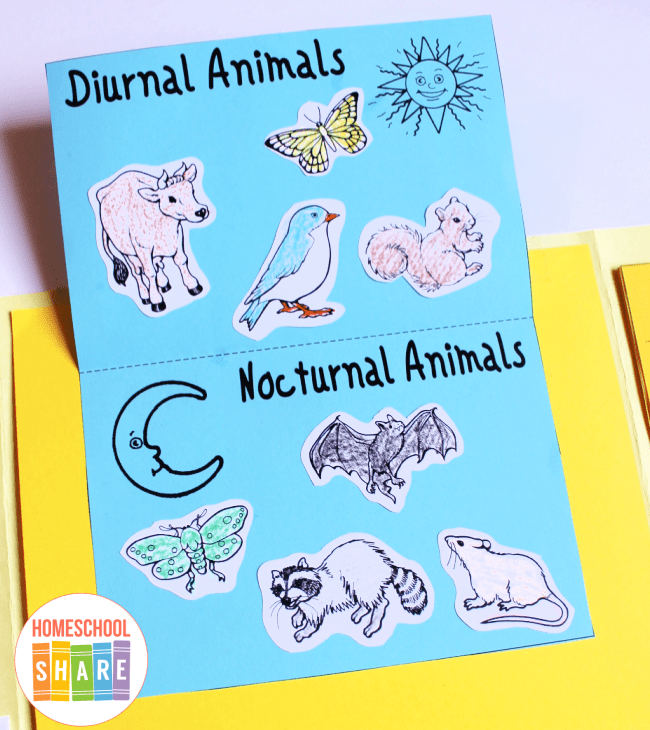
Diurnal and Nocturnal Animals
 
Predator and Prey
 
What Kind of Bats use Echolocation?
 
Types of Bats Tab Book
 
Bat Riddles
 

Extras (includes possible cover page for front and back as well as a "made by" tag and a few clip-arts to paste in any blank spaces of your book)


Language Arts:

                Vocabulary

                                Clutched- to hold on tightly

                                Downy- soft

                                Clambered- climbed

                                Anxious- worried

                                Peculiar- weird/strange

                                Perched- to sit at a high vantage point
               
                                Sultry- very hot and moist
                               
                                Limp- lacking strength or firmness
                               
                                Babble- excessive or meaningless talk
                               
                                Graceful- with ease of movement
                               
                                Clumsy- lacking in grace
                               
                                Muse- to ponder or meditate on (to think for a long time)

               
Vocabulary BINGO Game (contributed by Wende)
                Lapbook Component: 
Vocabulary Cards & Vocabulary Pocket                                 

                Simile
                The baby bat’s wings are described “as limp and useless as wet paper”. When we compare something
                using the words “like” or “as” it is called a simile. Try to think of some similes of your own.

                Onomatopoeia
                Point out that when the author adds sounds to his story that it is called onomatopoeia.  Listen for
                these in the story. "FLUMP!"  and "PLOP!" are both examples.

                Grammar
                I also used this book as an opportunity to discuss capitalization of names and other proper nouns. We
                learned the difference between a common and proper noun and when to capitalize. We also took a look at the    
                quotation marks through out the story and discussed what they are used for. We discussed indirect quotations
                and direct quotations and practiced writing each.

                Descriptive Language
                Re-read the first paragraph on page 4 that begins “The dark leafy tangle of branches”-
                notice the  descriptive words. Ask if they can “picture”  this scene in their mind. Have your students write a
                descriptive sentence ( or paragraph) describing a specific place  - your backyard, a favorite place, or a room in the
                house.


Math:

                Count all the bats.

                Count all the birds.

                Count all the stars on the night time pages.

                If you want, try estimating the amount of time Stellaluna was with the birds by reading up on how long it takes a
                baby bat (or birds) to mature to being able to fly.

                Story Problem (contributed by Denise Gregson):
On the page where the mother bird returns to find the birds sleeping by their feet,  it
                says she sees eight tiny feet gripping on the edge of the nest.  How many pairs is that?    How many feet would she have seen if she
                only had two baby birds along with Stellaluna?  Or, four birds plus Stellaluna?  How many feet are their in your family?

                Lapbook Component: Bird Math 3/4 Book


Social studies:

                Adapting
                “Stellaluna learned to be like the birds”
                We adapt to our surroundings. Babies born in China  learn to
                speak Chinese and eat Chinese  food. They learn the customs  and way of life of the people around them. You
                could use this time to discuss the Pilgrims leaving Holland to come to America for this very reason (or many other
                instances of this happening to people in the Bible. The Bible says  He who walks with the wise shall be wise and
                those who walk with fools will be fools. We need to choose carefully who we are around- we will learn to be like
                them.

                Obeying Rules
                Reread page 13. Mamma bird will not let Stellaluna back in the nest until she promised to obey
                all the rules.  Stellaluna promised and then she tried very hard to do just that. Why were following mamma birds
                rules important? What rules does your family have? Why do we have them. Notice how Stellaluna obeyed mother
                bird even when mamma bird wasn’t there watching.

                Feelings
                “ how embarrassing!”  Have you ever been embarrassed? When? What made you feel better?  Have
                you ever seen a friend get embarrassed? How did you help her to feel better?

                Also the birds felt out of place with the bats ( just as Stellaluna felt out of place with the birds). Have you ever felt
                out of place somewhere? When? What helped you to feel better? What should you do when you see someone
                who looks like they feel out of place?

                Geography/Science
                Where do bats live?  You will find bats all over the world!  Stellaluna and her mother are fruit bats.  Fruit bats are 
                found in Africa, Europe, Australia, and Asia.  Make a story disk (baby fruit bat and baby birds?) and place in the
                continent of your choice.    Lapbook Component: 
Finding Fruit Bats Book


Science:

                Sense of Smell
                The story says mother bat was following the scent of fresh fruit. Try blindfolding your student and having them
                smell different types of fruit to see if they can identify them. Some to try are cantaloupe, mangoes, oranges,
                lemons, and  peaches.   You can explain that all bats have a good sense of smell and Old World fruit bats rely
                upon their sense of smell to find their food.

                Predators
                What is a predator (hunter)? What is prey ( the hunted one) ?  Can you name some of each? Can you
                make a chain of who eats who? Start with an animal and name some of the things they eat, then what those
                things eat, and so on. This is called a food chain. The Magic school Bus series has a book on food chains as well
                called Magic School Bus Gets Eaten.  Here is some information I found on enchanted learning about how prey
                protects itself from predators:

                Animals are always in danger of being eaten and have developed many methods of protecting themselves from
                hungry animals.

          Hiding: Some animals simply hide from predators, concealing themselves in burrows, under rocks or leaves, in
    tree hollows, or in other niches where they are hard to find.

          Camouflage: Camouflage is another way of hiding, in which the animal blends into its environment. Many
    animals, like the "walking stick" insect and the Indian Leaf Butterfly (Kallima inachus) are camouflaged so well that
    they are virtually invisible when they are standing still. Sloths are covered with a greenish layer of algae which
    camouflages their fur in their arboreal environment. Sloths also move very slowly, making them even harder to spot.

          Scaring predators: Some animals try to convince predators that they are bigger and more fierce than they really
    are. For example, the larva of the lobster moth (Stauropus fagi) looks like a scorpion, but is in fact completely 
    defenseless. Many butterflies have large "eye" designs on their wings. This makes them look like the head of a
    very large animal instead of a harmless butterfly, and scares many predators away.

      Warning colors: Poisonous animals openly advertise their defense methods, usually with bright colors and flashy
      patterns. When a predator eats one member of the group, it will get sick.  This memory will stay with the predator,
      who will avoid that type of animal in the future. This method sacrifices a few individuals in order to protect the
      entire group. Examples of poisonous animals include the Monarch butterfly and the Queen Alexandra's Birdwing
      Butterfly.

          Running away: Fast animals can try to run from predators.
    Attacking: Some animals are equipped with sharp teeth, claws and/or horns that can be used to repel predators.

    Lapbook Component:
Predator and Prey
 

               Herbivores, Carnivores, and Omnivores
               While talking about food chains you also may want to discuss herbivores, carnivores, and omnivores.
               Herbivores-- plant eater
               Carnivores-- meat eater
               Omnivores-- eat plants and meat
               Use the prepared minit book to learn more about who's who in the animal kingdom.  Have your student cut the large rectangle book out
               and fold it in half.  Have him cut the three slits that serve as three peek-a-boo windows for the book.  Have your student cut out each of
               the animal pictures.  Using the information at the bottom of the second page, help your student learn which animals are herbivores,
               carnivores, and omnivores.  Your older student may want to skip the cutting/pasting and simply write the answers in the minit book; he
               may also think of some more animals to research (and he can record those in his book as well). 

             
Who's Who Flip-Flap Minit Book

               Bats-
                (contributed by Cate Proudfoot)

                There are around 1,000 different types of bats.
                -The biggest is the Giant Flying Fox. Its wingspan can be up to six feet long.
                -The smallest bat is the Kitti's Hog-nosed bat, also called the Bumble Bee bat. Its average wingspan is only four inches.
                -The big brown bat is the most common bat in North America. It has a wingspan of around fourteen inches.
                -The most famous bat is the Vampire bat. They are found in South America, Central America and Mexico. Blood is the only food they eat. To do this the bat
                makes a small cut in an animals skin and licks the blood with its tongue. The animal hardly feels the cut.

                Lapbook Components:
               
Types of Bats Tab Book
               
Bat Anatomy Minit Book

                A great book on bats is Bats in the Dark (a lets read and find out about science book). It discusses echolocation. 
               Here are some links from Enchanted Learning: 
All About Bats     All About FRUIT Bats    Bat Lifecycle Print-out

                Find more information- p. 96-99   Evan Moor's Giant Science Resource Book   (Label the parts of a bat, different kinds of bats, bat book)
                Ch. 5 (Stellaluna) More Science Through Children's Literature by Butzow

               Owls-  
               Owls are predators. Read a book on them from your library. You may want to revisit Owl Moon  (FIAR Volume II) or
               dissect owl pellets. Here is more on owl from enchanted learning: 
All About Owls

               Nocturnal Animals-
               You may want to discuss this idea with your child. Usborne has a good book on this in the Beginners series called
               Night Animals.  Make a list of nocturnal animals.  
                Lapbook Component:
Diurnal and Nocturnal Animals
                worksheet for younger child:  Daytime/Nighttime Animals Activity Sheet from Kizclub

                Animal Nurturing
                On page 1 it says “Oh how mother bat loved her soft tiny baby” . Do all animals love and nurture
                their babies? Research and make a list of the animals who take care of their young and of those have to fend for themselves.

Echolocation (contributed by Cate Proudfoot)
About 70% of all bat species use a navigation system called echolocation (a radar-like sense) to help them find their prey in the dark. Bats, dolphins, most whales and even some species of shrews use echolocation to navigate. By sending out sound waves, created by using their mouth or nose, these mammals can "see" in dark places. The sound goes out and hits an object and an echo is bounced back. Location, shape, size and even texture of an object can be identified by the sound of the echo. 

Fruit bats, like Stellaluna, rely on vision to see.  Microbats (bats who eat animals ~ at least for the most part!) "see" by using a echolocation.  Microbats depend on echolocation to help them hunt for food at night.  They send out the sound waves (high pitched sounds) and when the echoes bounce back, they are able to judge what objects (such as insects) are close by. 

Echo Experiment -
Gather 2 paper towel tubes and a clock that ticks.  Place one end of each tube at a slant (45 degree angle) against a wall. Put the ticking clock at one open end of a tube. Listen at the other open end of the opposite tube. You should be able to hear the ticking clearly through the tube. If the tubes are held correctly, the sound waves should bounce off the wall and shoot out through the second tube - just like an echo.

*Variation - use large wrapping paper tubes

Lapbook Components:
What Kind of Bats use Echolocation?
What Mammals use Echolocation? Side by Side Book


You may want to check-out the bat, owl, etc. report forms and copywork pages on Homeschool Share's Animal Forms page. 


Art:

                Medium
                Acrylics and prism color pencils were used. Notice the detail on each of the drawings. Are these
                illustrations realistic or cartoon-ish?  Notice how the author/illustrator chose to leave 1 full page for the illustration
                and one for the words. Did you notice the small pictures on the text pages? 

                Details
                See if your child can determine what parallel story the mini illustrations tell (answer- the mother bat's frantic search
                for Stellaluna);  artists can tell stories with pictures just as authors tell stories with words.  Your child may want to become
                the author for these mini illustrations and write words to go along with the parallel story.  (contributed by Denise Gregson)


Just for Fun: 

                Since fruit bats eat fruit, make a fruit salad!
               
                Read other Janell Cannon books and explore even more science topics.

                Check the
Reading Rainbow Schedule to find out when this book airs.

                Connect the Dots Bat

                Owl Crafts

                Bat Crafts


Resources

For more hands-on bat fun, try a BATS Learn N' Folder

In the Hands of a Child Bats Lapbook

Video Go-along--
The Magic School Bus Going Batty


Materials and information on this website belong to the original composers. It may be used for your own personal and school use. 

Material may not be used for resale© 2005-07 HSS