Affiliate Disclaimer
We sometimes use affiliate links in our content. This won’t cost you anything, but it helps us to keep the site running. Thanks for your support.
Little Gopher was smaller than the other young Indian boys of his Plains tribe, and although he tried hard, he could not do what the others did. The tribe’s wise shaman assures him, however, that he has a different gift.
This legend tells how the red, orange, and yellow flowers of the Indiana Paintbrush came to be. It is the base for lessons on legends, Plains Indians, painting, vocabulary, Wyoming, and more–all found in our The Legend of the Indian Paintbrush unit study and lapbook.
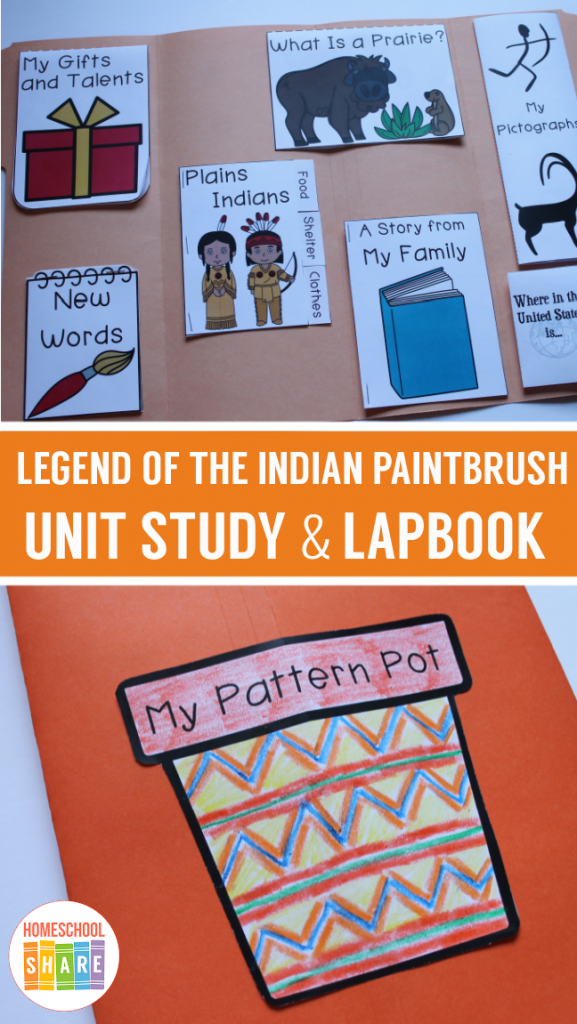
Thanks to Andrea Dean for writing the lessons for this The Legend of the Indian Paintbrush unit study.
The Legend of the Indian Paintbrush Activities and Lessons
This unit study includes lessons and printables based on the book The Legend of the Indian Paintbrush by Tomie dePaola.
Language Arts: Oral Storytelling
Discuss with your student that before there were many printed books, people who lived together in countries, tribes, settlements, nations, etc., usually had their own collection of stories. These stories were often called myths, legends, fairy tales, fables, folk tales or folk songs. These stories were passed on from the older group members to the younger by storytelling.
Not only were these stories entertaining, they also carried a message.
Ask your students what they think some of the messages are in The Legend of the Indian Paint Brush. Do you have any family stories that have been passed down orally? Share one with your student.
You may also want to spend some time reading other legends, fables, or fairy tales. As your read them, discuss the messages or morals contained in these stories.
Math: Patterns
Make some bead necklaces using a needle and thread (you can also use just yarn with the end wrapped in scotch tape) Use some various patterns (you may want to decide on some before you start: red, red, blue, blue, yellow, red, red, blue, blue, yellow). You also may want to string the beginning of a pattern and then let your student complete it. You can then reverse the roles by allowing your student to start the pattern to see if you can complete it.
Here are some sample lessons from the The Legend of the Indian Paintbrush Unit Study.
You can grab a copy of the entire The Legend of the Indian Paintbrush Unit Study and Lapbook in an easy-to-print file at the end of this post.
The Legend of the Indian Paintbrush Lapbook Activities
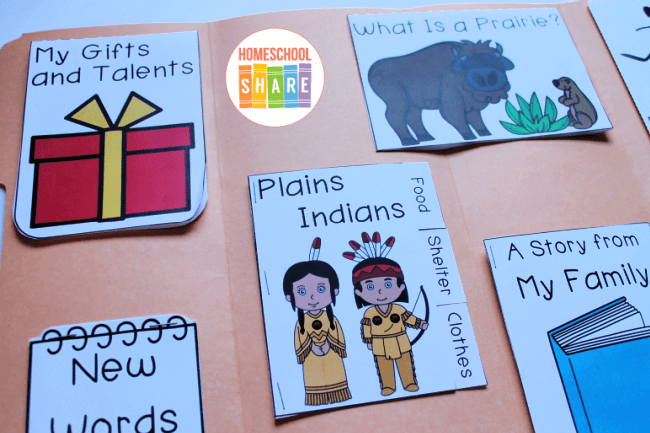
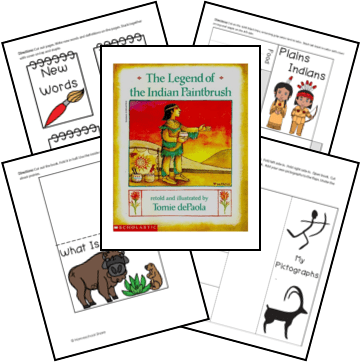
In addition to the unit study lessons, this file also includes mini-books to create a The Legend of the Indian Paintbrush lapbook.
- Plains Indians Tab Book
- My Gifts and Talents Simple Fold Book
- A Story from My Family Mini-book
- My Pictographs Flap Book
- New Words Mini-book
- What Is a Prairie? Simple Fold Book
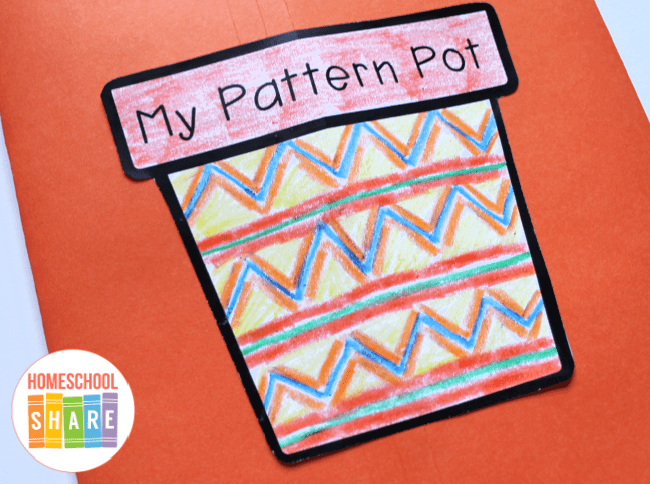
- My Pattern Pot Art Activity
- Wyoming Map Shutterfold Book
The Legend of the Indian Paintbrush Lapbook Example
This lapbook sample doesn’t include all of the mini-books provided. Please pick and choose the mini-books that are best suited for your student.
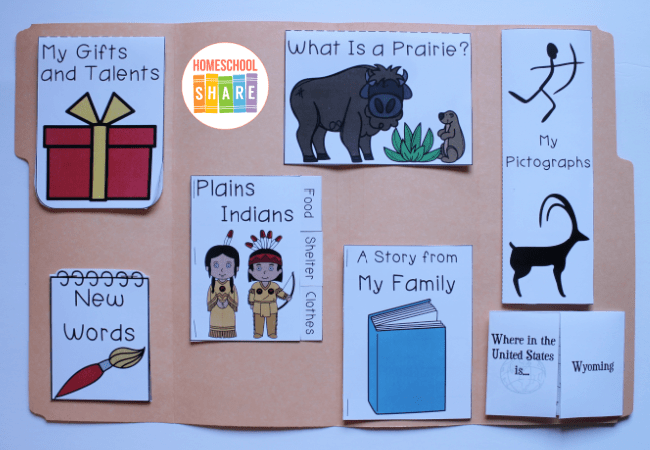
The lapbook was made with one file folder. The pot pattern activity was glued to the back of the lapbook. If desired, your student could add an illustration of Indian Paintbrush flowers to the pot.
How to Get Started with Your The Legend of the Indian Paintbrush Activities & Printables
Follow these simple instructions to get started with the The Legend of the Indian Paintbrush Unit Study and Lapbook:
- Buy a copy of the book, The Legend of the Indian Paintbrush, or borrow one from your local library.
- Print The Legend of the Indian Paintbrush unit study.
- Choose the lessons you want to use with your student (a highlighter works great for this).
- Choose and prepare the lapbook printables you want to use with your student.
- Enjoy reading and learning from a beautiful American Indian legend.
Get Your Free The Legend of the Indian Paintbrush Unit Study & Lapbook
Simply click on the image below to access your free The Legend of the Indian Paintbrush Unit Study and Lapbook.
Unit Study & Lapbook
More Unit Studies Based on Tomie dePaola’s Books
Learn More About American Indians
Learn more about American Indians with this set of super simple file folder reports.