| about us |
what's new
|
unit studies
|
unit study helps |
hss resources
|
fiar resources | indexes | lapbooking |

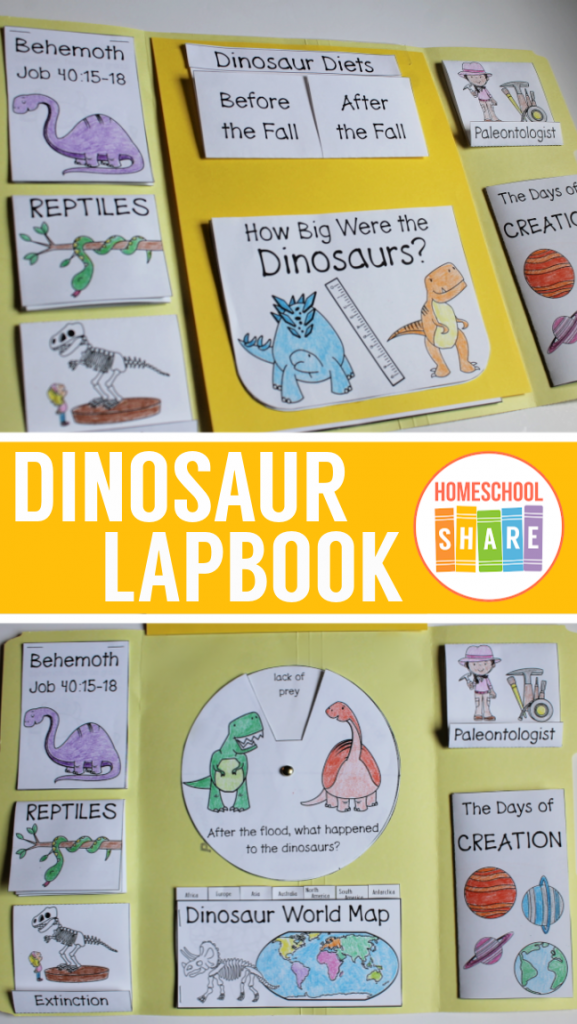
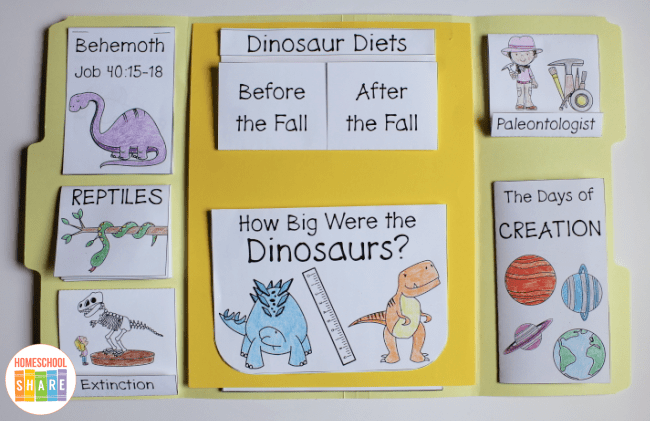
| Books Used If the Dinosaurs Came Back by Bernard Most Bones, Bones, Dinosaur Bones by Byron Barton What Really Happened to the Dinosaurs by John Morris and Ken Ham Raising Dragons by Jerdine Nolen *optional (used on day eight) Dinosaurumpus! by Tony Mitton *optional Library List Edwina, the Dinosaur Who Didn't Know She Was Extinct by Mo Willems Dinosaur! by Peter Sis Dinosaur Train by John Steven Gurney Dinosaurs by Design by Duane T. Gish The Great Dinosaur Mystery and The Bible by Paul S. Taylor I Am an Ankylosaurus by Karen Wallace (please preview first) Add-on Library List (for preschoolers who may be tagging along) How Do Dinosaurs Say Goodnight? by Jane Yolen Dinosaur Roar by Henrietta Stickland and Paul Stickland Oh My Oh My Oh Dinosaurs by Sandra Boynton That's Not My Dinosaur by Fiona Watt Lapbook Pictures contributed by Aimee Guest |
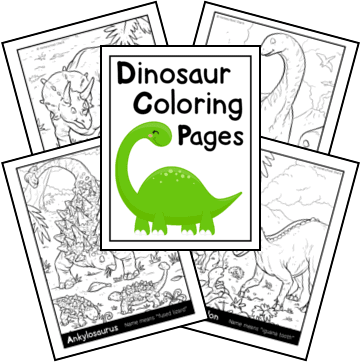
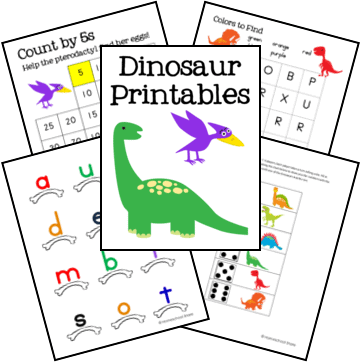
Printables Made For This Unit |
It's important for us to know why we believe what we believe. Here are some links for mom and dad to learn more about creation science:
Dinosaur FAQ Page at
Answers in Genesis
What Happened to the Dinosaurs by Ken Ham
Answers in
Genesis FREE on-line books (you can also order them)
Day One
| What Really Happened to the Dinosaurs? Read pages 8-11 |
| Bible Read the creation account in Genesis 1:1-31. List what God made on each day. Lapbooking component: Use this prepared flip-flap book template to help your student record his answers. Cut out book as one piece. Fold on the dotted line and cut lines between the days. Write answers from your under the appropriate day. After you complete your flip-flap book, determine what day God made dinosaurs. |
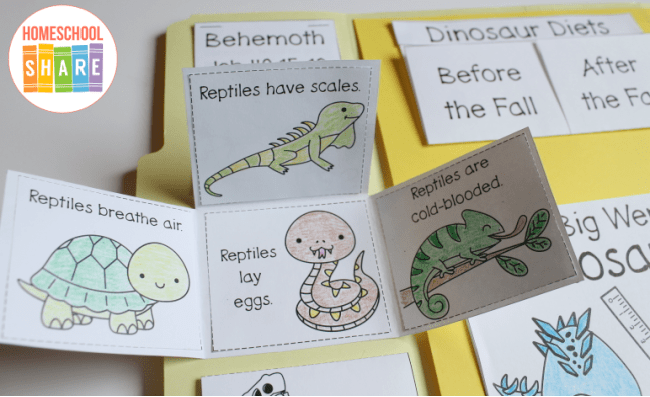
| Science: Animal Classification The book mentions that the word dinosaur means "terrible lizard" Discuss lizards with your student. If your student has already done some work in animal classification, discuss reptiles in detail since dinosaurs most likely fit in this classification. Reptile Characteristics cold-blooded which means that they depend on external sources, such as the sun, to maintain their body temperatures most reptile species are oviparous (lay eggs) thick-skinned with scales or modified scales breathe through lung examples of reptiles: snakes, turtles, crocodiles/alligators, and lizards Lapbooking component: Dinosaur and Paleontologist Matchbooks (complete dino one only today) reptiles t-book |
| Social Studies: Time-line If your student has a time-line, make sure you add two dates Add when dinosaurs were created (on day 6) Also add 150 years ago when scientists first discovered dinosaur bones |
| Just for Fun: Dinosaur Snack Make Jell-O Jiggler eggs with gummy dinosaurs inside! (We've found gummy dinosaurs at Dollar General.) Just for Fun: Dinosaur Song Here's a fun Buddy Davis song to listen to or try and learn this week-- I Know All the Dinosaurs. You deserve your name in a Hall of Fame if you can sing it! |
Day Two
| What Really Happened to the Dinosaurs? Read and review pages 8-11 Review what God made on each day. Ask your student if he remembers what the word dinosaur means. |
| What Really Happens to the Dinosaurs?
mentions that it can be very difficult for a scientist to put dinosaur
bones together. Read the book Bones, Bones, Bones by Byron Barton. |
| Science: Paleontology Paleontology is a science dealing with what lived on planet earth a long time ago; these scientists study fossil remains to learn more about life in past geological periods and are called paleontologists. The scientists in the book Bones, Bones, Bones are definitely this type of scientists. You may want to rabbit trail into a discussion of other types of scientists your student knows about/has already been introduced to (zoologist, naturalist, etc.). Just for Fun activity: Let your paleontologist go searching for dinosaur bones! You can do this just about any way you want, but I thought I'd give you a few suggestions to get your creativity a jump start: 1. Putting the pieces together (from Celia) When I did a science class for our co-op, I used a dinosaur puzzle (whatever's on hand or a cheap one from the dollar store, 32 or 48 piece). I put the box out of sight and took all the pieces and placed them in a large flat container. (I used a plastic storage container that was long and not very deep.) I covered the pieces with sand and mixed it up. Then I had the kids excavate. They gathered pieces and had to try to put together the puzzle. Because they had no picture to follow, it helped them see what scientists do: guess. (Only scientists didn't always have the luxury of being able to see that the pieces fit together correctly!) 2. Digging for Dog Treats Okay, you aren't going to tell your student that they are dog snacks, but some varieties come in little bone shapes. Hide these in sand, and let your junior paleontologist go to work. 3. Last Minute Mom Dino Dig So, you don't have time to get a puzzle or dog treats Make dinosaur bones out of construction paper (your student could help) or heavy cardboard. If you don't have sand, you could hide them around the house and pretend to dig them up (you could even hide them under couch cushions and really make a big deal of the "digging" part). Add this Paleontologist Matchbook to your lapbook, if desired. |
| Science: Dinosaur
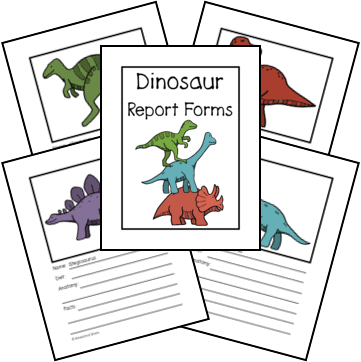
Reports Review the dinosaur names mentioned in this story. They include: Tyrannosaurus, Apatosaurus, Stegosaurus, Ankylosaurus, Parasaurolophus, Gallimimus, Thecondontosaurus, and Triceratops. Help your student do some dinosaur research and complete a dinosaur report form. Continue this project as often as you like. There are reminders in the remainder of the lessons. You don't want your student to get bored with this (or NOT want to do it), so try to make it a gentle introduction to "reports" -- you don't even have to use that word! Also, spice it up by letting your student draw the dinosaur he's reporting on or look for an image for your student to print/cut/paste on the photo page. I plan on allowing my student to dictate his answers to me, and I will record them on the pages for him. He will determine what he wants to do about a picture of the dinosaur. Dinosaur Report Forms
Another option would be to use these prepared
coloring/handwriting pages (you could use them instead of the reports OR
in addition to the reports) |
| Social Studies: Geography- Dinosaur
World Map Where have dinosaur bones been found? All over the world! Review the seven continents on your map and/or globe. The World Map minit book (below) will help your student learn about a small sampling of dinosaurs and where their fossils have been found. Lapbooking Component: Dinosaur World Map Instructions: Cut out each template as one piece. Layer the book so that the tabs are in order and put the cover on the top. Staple the left side of the book. Mention to your student that many of these
dinosaurs have been found on two or three continents (just as we have
some of the same animals on different continents) |
Day Three
| What Really Happened to the Dinosaurs? Read pages 14-15 |
| Bible: Behemoth Read Job 40:15-24 together. Help your student think of the descriptions of the Behemoth (or write them down as you encounter them in your reading). Read over your list and think of what an amazing creature this must have been! Let your student draw a picture of Behemoth based on the descriptions in the Bible. To help your student remember Job 40 and "Could Behometh Be a Dinosaur?", learn this song by Buddy Davis. |
| Read What if the Dinosaurs Came Back
by Bernard Most Discuss how big some of those dinosaurs look in comparison to the buildings, etc. Use this discussion to lead you in to the lesson. Math: Measurement and Graphing |
| Science Choose another dinosaur and continue with My Book of Dinosaurs (dinosaur reports). |
Day Four
| What Really Happened to the Dinosaurs? Read pages 16-19 |
|
Bible: The Fall Read the Genesis 3. Discuss sin and the consequences of sin. Sin is disobedience to God's law and the result of sin is separation from God. |
| Language Arts: Dinosaur Descriptions
(Adjectives) Imagine all the words that you can to describe what you know about dinosaurs Dinosaur Shapes (for adjectives) Have your student write one adjective on each dinosaur. If you are using this unit with an older student, help him learn how to use a thesaurus to find even more words to describe dinosaurs. |
| Science Choose another dinosaur and continue with My Book of Dinosaurs (dinosaur reports). |
| Science: Dinosaur Diets The book mentions that dinosaurs ate plants before the fall. How do we know this? God created the world and said it was "very good!" Everything existed in perfect harmony. We also know that all animals were vegetarians because of what we find in His Word-- Genesis 1:30, 'And to every beast of the earth, and to every bird of the air, and to every thing that creeps upon the earth, which has life, I have given every green herb for food: and it was so.’ Some scientists use the argument that dinosaurs had sharp teeth-- therefore they ate meat. However, today Giant Pandas and many other species of bears have sharp teeth (similar to large meat eating cats like lions), and they are vegetarian. After the fall, everything changed. The world was no longer perfect as God had created it. At this point it is possible that some varieties of dinosaurs became meat eaters. Dinosaur Diets Concept Map |
Day Five
| What Really Happened to the Dinosaurs? Read pages 20-22 |
| Bible: Noah and the Great Flood Read Genesis Chapters 5-8 (you may want to find a condensed version in your Children's Bible or Bible story book). |
| Dinorama (Dinosaur Diorama) Let your student create a dinorama! Make a dinosaur scene using a shoe box and various craft materials you have around the house. If you need templates for dinosaur patterns, try these finger puppets: T-Rex Finger Puppet, Stegosaurus Finger Puppet, Brachiosaurus Finger Puppet, or these dinosaurs made from paper. Material Ideas: Shoe Box Construction Paper Patterns/Cut-outs of dinosaurs (or dinosaur stickers) Play-doh or clay Twigs (for trees) Glue, Tape Markers, Crayons, etc. Scissors Aluminum Foil (for water) Small Rocks or Sand Glitter (for lava if your student wants to make a volcano) Pipe Cleaners |
| Science Choose another dinosaur and continue with My Book of Dinosaurs (dinosaur reports). |
| Just For Fun: Exercise! If you checked out Dinosaurumpus! by Tony Mitton, take some time to read it together. Do the motions and actions described throughout the book. Have fun! You may want to do this activity again tomorrow or on Day Seven (as time and energy permit). |
Day Six
| What Really Happened to the Dinosaurs? Read pages 24-25 You may want to stop and discuss the information on page 24 if your child has questions. |
| Science: Fossils Today the book mentions fossils. What is a fossil? It is a trace or print or the remains of a plant or animal of a past age preserved in earth or rock. Fossils form when animals are buried quickly. How could so many animals have been buried so quickly? Review this quote from the book, if there was a flood, you could expect to find, "billions of dead things buried in rock layers, laid down by water, all over the earth." Discuss this. Memorize it! Help your child to understand how the layers and fossils found today were formed. You may even want to learn this Buddy Davis song together that will help your student memorize the quote. I am including two fossil activities. The first (making a fossil print) uses modeling clay and the second (casting a fossil print) uses plaster of paris. If you have time and energy, and if your student has taken a real interest in fossils, do both! Activity: Make Fossil Prints #1 Collect some small objects to make fossils with. Some ideas include-- bones (you may want to save a chicken bone for this project-- make sure you really boil it before using it), leaves (ferns work well), shells, coins, twigs, etc. You will also need some modeling clay. Start with a lump of clay about the size of your fist. Give your student a lump, too. Take half the clay and press it flat/smooth; instruct your student to do the same. Press an item into the clay. Roll out the other half and place it over the object you put in the clay. Gently push the two pieces together (don't let it break). Make sure the clay molds around the object. After the clay has dried out a little, carefully separate the pieces. Can your student see the print? Can your student explain to you how the flood played a part in the process of making fossils? Activity #2: Making a Cast Fossil Supplies to gather: disposable spoon and cup (for mixing), plaster of paris, measuring cups and spoons, oil, fossil imprint from activity #1, 1 half pint milk container (rinsed and dry) with top cut off, objects used to make imprints (for comparison)
When minerals from the earth or water fills an
imprint (like your student made in activity #1), cast fossils are the
result. The minerals harden into stone which is shaped like
the original object that made the imprint. |
Day Seven
| What Really Happened to the Dinosaurs? Read pages 26-29 |
| Bible: After the Flood Genesis Chapter 9 |
|
Science: Extinction An animal that is extinct is an animal that no longer exists. Discuss what it means to be extinct. How does this happen to animals today? (You may want to discuss the term endangered as well.) What other extinct animals were mentioned in What Really Happened to the Dinosaurs? If you checked out Edwina, the Dinosaur -- this would be a good day to read it. Lapbooking Component: Add these Extinct and Favorite Fact Matchbooks to your lapbook, if desired. |
|
Science: What Happened to the
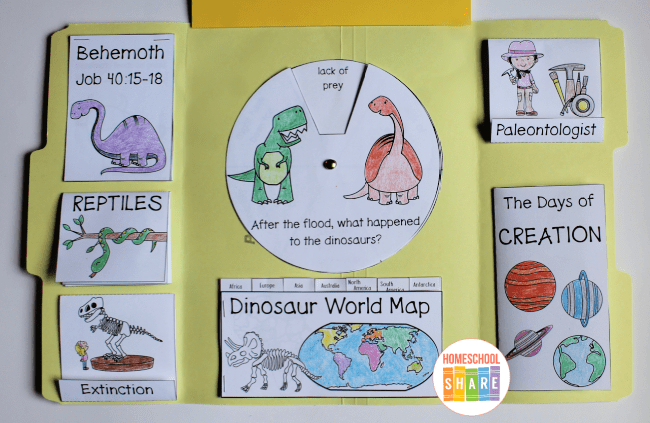
Dinosaurs The book gives many different explanations as to what might have happened to the dinosaurs after the flood. Review these with your student. For extra review, help your student make the wheel in the lapbooking component (you will need a brass fastener). Lapbooking Component: What Happened to the Dinosaurs Wheel Book |
| Language Arts: Creative Writing
Read If the Dinosaurs Came Back by Bernard Most. In the same pattern of Most, help your student write her own, If the Dinosaurs Came Back story. Blank Writing Templates (the first pages has HWOT lines); print as many as you need |
Day Eight
| What Really Happened to the Dinosaurs? Review page 30 where it gives information about knights and dragons. Almost every culture in the world has legends about dragons. Is it possible or probable that dragons were dinosaurs? Remember the passage in Job 40 about Behemoth? Job 43 describes Leviathan like a dragon. Dragons were probably dinosaurs! Learn Buddy Davis' Leviathan song together. |
| Read Raising Dragons by Jerdine
Nolen Discuss more about dragons and dinosaurs. How do the "dragons" in this story seem like dinosaurs? |
|
Since the heroine in our story
(Raising Dragons) was left a wheelbarrow full of eggs to care
for, you can have some art fun making a "dinosaur" egg with your
student!
|
Materials and information on this website belong to the original composers. It may be used for your own personal and school use.
Material may not be used for resale. © 2005-07 HSS