Affiliate Disclaimer
We sometimes use affiliate links in our content. This won’t cost you anything, but it helps us to keep the site running. Thanks for your support.
Grab our free, printable Napping House activities and jump into engaging learning lessons with your preschool student.
The Napping House Activities
This The Napping House unit study contains a variety of ideas, activities, lessons, and printables for your preschool student and covers multiple topics such as literacy, math, science, and art.
Literacy Activities
Phonics: N is for Nap
If you are learning the alphabet and letter sounds, consider introducing N for Napping. For a fun activity, get a box and have an N adventure. Look inside and outside (weather permitting) for things that start with N.
Learn more with our Letter N Lapbook.
Similar Stories
Discuss how the small flea causes such excitement! Many other stories have similar plots where the tiniest character saves the day or a small character has a big job. Suggestions include:
- Berlioz the Bear by Jan Brett
- The Turnip by Pierr Morgan
- The Enormous Carrot by Vladimir Vagin
This story is swarming with repetition which is a great way to help your preschool student learn language patterns. The repetitive, predictable text in The Napping House will give your student a foundation for future reading skills. Try some other repetitive stories (or cumulative tales).
- This Is the House That Jack Built
- There Was an Old Lady Who Swallowed a Fly
- Joseph Had a Little Overcoat
Similar Words
This book has many different words for sleeping (snoring, dreaming, dozing, slumbering). An older student may have fun trying to list as many synonyms as possible for the following words: big, little, happy, and sad.
Fingerplays and Songs About Sleep
You can find lots of different songs and finger plays about sleep to sing and act out with your preschooler. Here are a few that come to mind. You will find some songs in the printable section. You may also want to sing some sleepy time songs (lullabies) with your student this week.
Song Ideas:
- Ten in the Bed
- Are You Sleeping?
- Lazy Mary, Will You Get Up?
- Five Little Monkeys Jumping on the Bed
Inside My House
Discuss what happens in The Napping House. What is in or what is happening in your house? Draw a picture inside the mini-book provided.
Choral Reading
After a few readings, encourage your student to help you read the book as they can. You may even want to pause before “where everyone is sleeping” and let your student chime in with the phras
The Napping House Story Sequencing
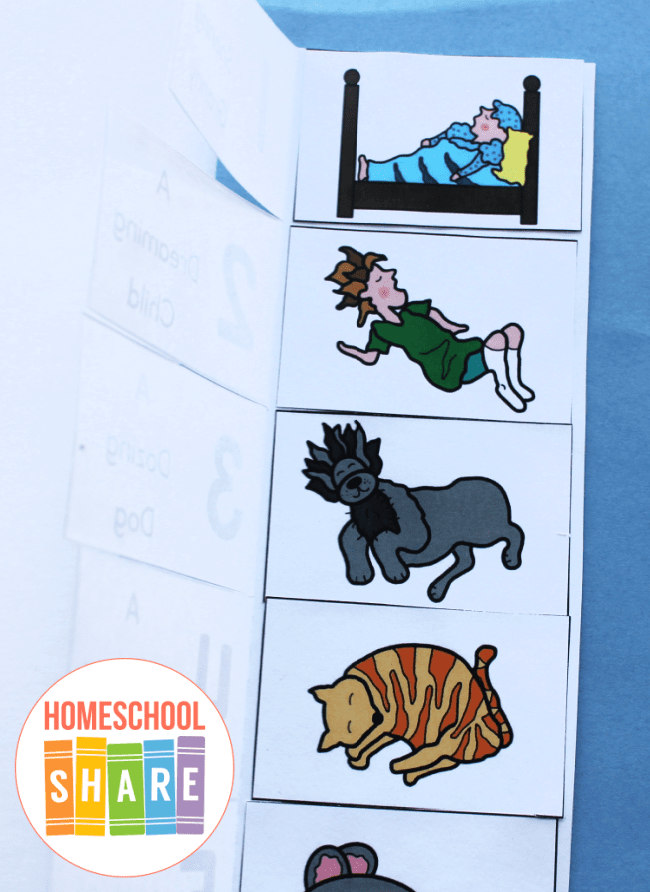
Use the flap book provided to create a story sequence for The Napping House.
Math Activities
Size Sequencing
The story starts with granny in her cozy bed and then the dreaming child joins her followed by a dog, cat, mouse, and a tiny flea! This is a great opportunity to discuss sizes of things with your young student. Get a bucket of multi-sized blocks (or a stack of various sized books or even different sized lids from jars and jugs) and let your student sort them into two groups: small and large. You may want to try small, medium, and large.
Shapes
Look at the shape house in the printables section and discuss different shapes with your student. If your student has already mastered shapes and colors, try having him follow the instructions printed at the top of the page.
Opposites
This book allows you to discuss various opposites. Opposites are two things that directly contrast each other. Some opposites you could discuss as you read the story:
• inside/outside
• day/night
• sun/moon
• big/little
• asleep/awake
• empty/full
• rain/sun
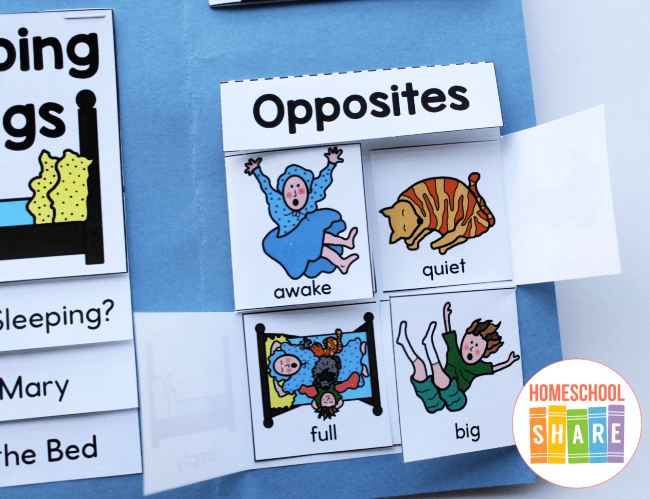
Use the mini-book provided to reinforce and review opposites.
Science Activity
Nocturnal and Diurnal Animals
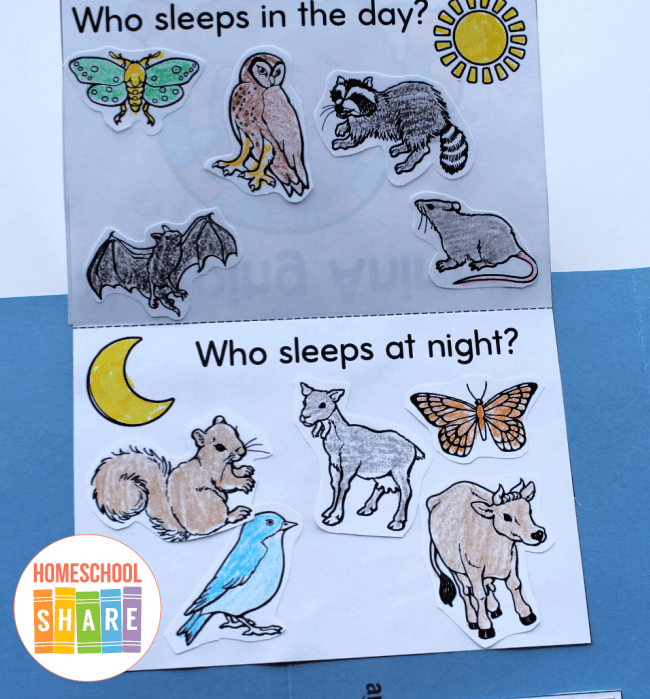
Introduce your student to day and night sleeping animals. Discuss animals that sleep in the day (nocturnal) and animals that sleep at night (diurnal) using the mini-book provided.
Art Activities
Details in the Illustrations
After you’ve read the story once or twice, go back to the first illustration and ask your student if he can spy the other animals. They are there! It may take a little bit to find the mouse and flea, but they were in the room from the beginning of the nap.
Another observation activity would include watching what is happening out the window. The day starts out rainy, but ends with sunshine and a rainbow!
Colors in the Illustrations
Notice the artwork and how it changes as everyone in the house wakes. What color is used the most on the illustrations of everyone sleeping? (blue) What color is used in the art when everyone wakes up (see the page that says “break the bed”)? (yellow) Discuss this with even a small student asking him to point out the blues on the sleeping pages and the yellow on the waking-up pages.
To access all of the lessons in this The Napping House unit study, subscribe to Homeschool Share’s email list using the form in this post.
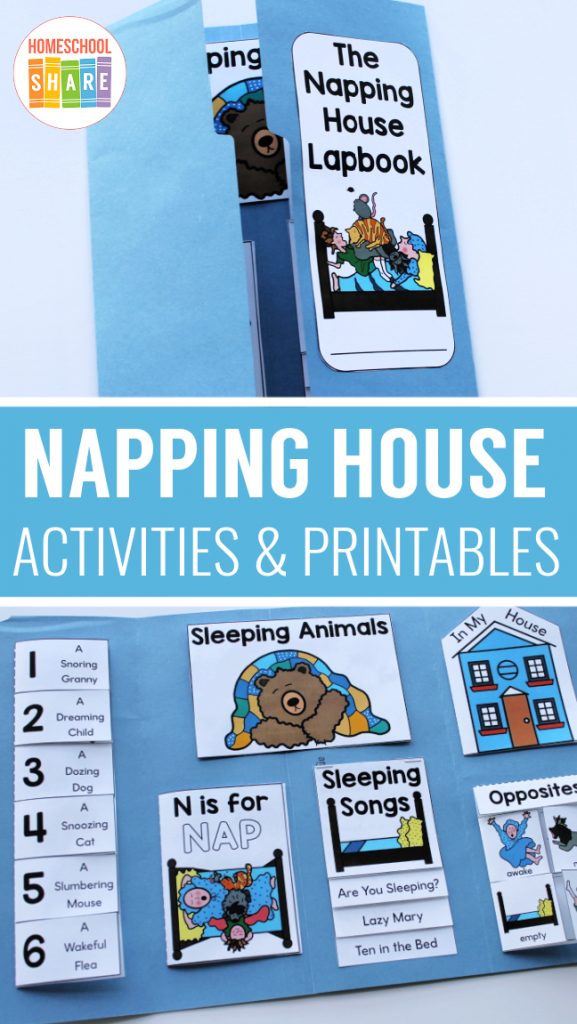
The Napping House Printables
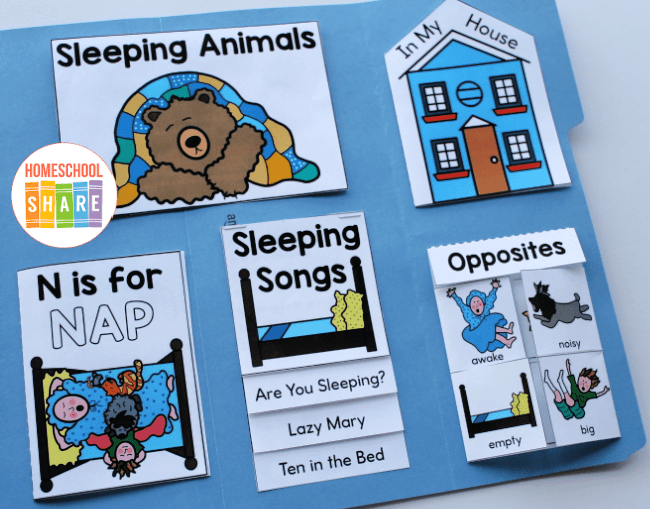
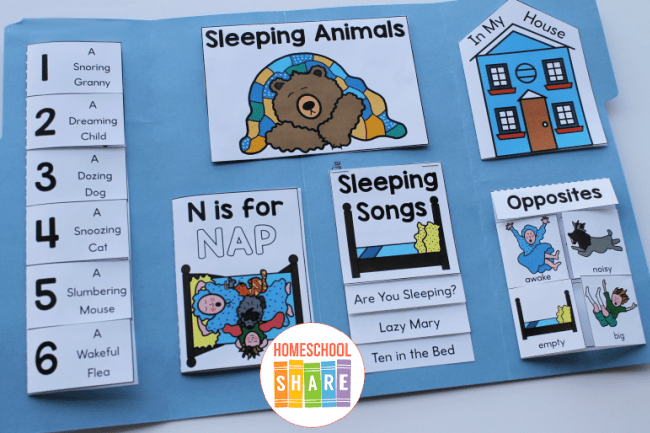
In addition to written lessons, the free download also includes The Napping House printables:
- N Is for Nap Simple Fold
- Sleeping Songs Layer Book
- In My House Shape Book
- Napping House Story Sequencing Flap Book
- Follow the Instructions Shape House
- Nocturnal and Diurnal Animals Sorting Mini-book
- Opposites Shutterflap Book
How to Get Started
Follow these simple instructions to get started with the The Napping House unit study and printables:
- Buy a copy of the book, The Napping House by Audrey Wood, or borrow it from your local library.
- Print the The Napping House unit study and lapbook.
- Choose the lessons you want to use with your student (a highlighter works great for this).
- Choose and prepare the lapbook printables you want to use with your student.
- Enjoy a week of fun-filled The Napping House learning with your preschool student.
Grab Your Free Napping House Printables and Activities
Use the form below to subscribe to the newsletter. Once you confirm, you’ll receive an email with the link to the activities and printables. If you are already confirmed, simply enter your name and email address below, and you will receive an email with the link.
More Bedtime Themed Resources
Homeschool Share is home to hundreds of free resources. If you are looking for more bedtime themed resources, check out these:
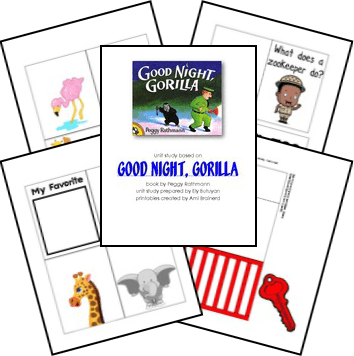
If your student enjoyed the surprises in The Napping House, she will also love Goodnight Gorilla.
Don’t forget this beloved classic bedtime story, Goodnight Moon.