
Affiliate Disclaimer
We sometimes use affiliate links in our content. This won’t cost you anything, but it helps us to keep the site running. Thanks for your support.
Join Curious George and the man in the yellow hat for another mischievous adventure in Curious George Takes a Job.
Our Curious George Takes a Job unit study offers ample lessons to go along with the story. Grab your free copy today, and have fun learning with your students.
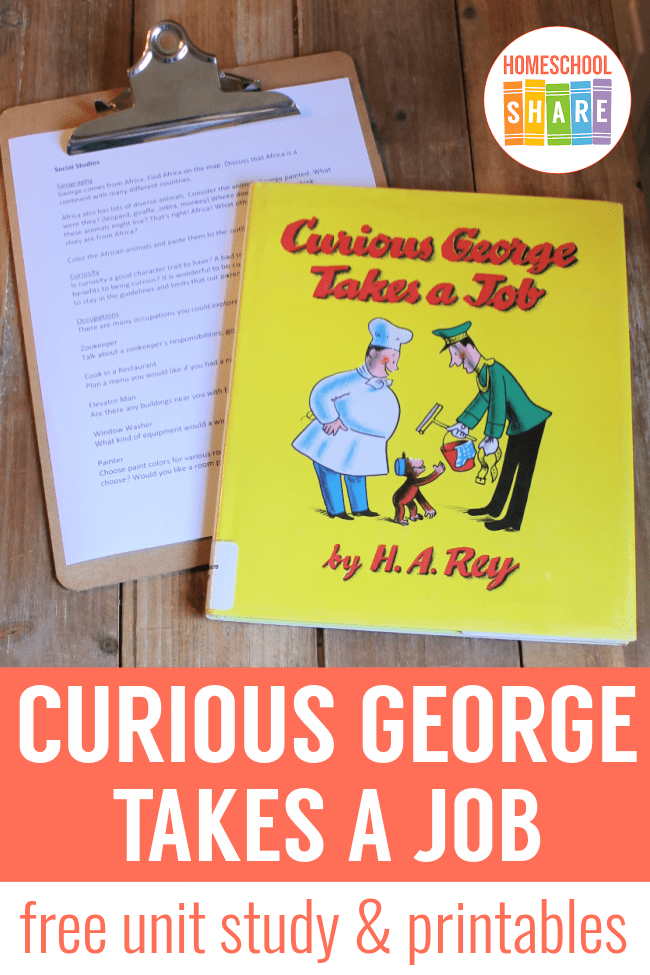
Thanks to Andrea Dean for writing this Curious George Takes a Job unit study for Homeschool Share.
Curious George Takes a Job Unit Study Lessons
Here are some of the lessons you’ll find in the Curious George Takes a Job unit study:
Curiosity
Is curiosity a good character trait to have? A bad trait to have? What are the benefits to being curious? It is wonderful to be curious, but we have to remember to stay in the guidelines and limits that our parents set for us.
Occupations
There are many occupations you could explore with this book:
Zookeeper
Talk about a zookeeper’s responsibilities; go to the zoo and meet a zookeeper
Cook in a Restaurant
Plan a menu you would like if you had a restaurant
Elevator Man
Are there any buildings near you with Elevator men?
Window Washer
What kind of equipment would a window washer use?
Painter
Choose paint colors for various rooms of your house what colors would you choose? Would you like a room painted like a jungle?
Ambulance Driver, Nurse, and Doctor
How do these people help us? You could talk about how to call for an ambulance, and how important it is to be able to tell them your address.
Actor, Director, Camera Man
Talk about how movies are made. The next time you watch a movie look at the credits, and see how many people it took to make that movie.
Classic Story
This story was published in 1947. Place this on a timeline. Compare it to when your child was born, when you were born, when your child’s grandparents were born.
Self Portrait
George is painting himself in the tree in his picture. Paint your own self portrait. Find self Portraits that other artists have done.
Multiply and Divide by 2’s
The cook says George is lucky to have 4 hands because he can do work twice as fast. If it took the cook 10 minutes to do the dishes, and George does them twice as fast- how fast does George get them done? If George can wash 1 window in 3 minutes how long would it take a person to do the same window?
To access all of the lessons in this Curious George Takes a Job unit study, grab a free copy at the end of this post.
Curious George Takes a Job Printable Activities
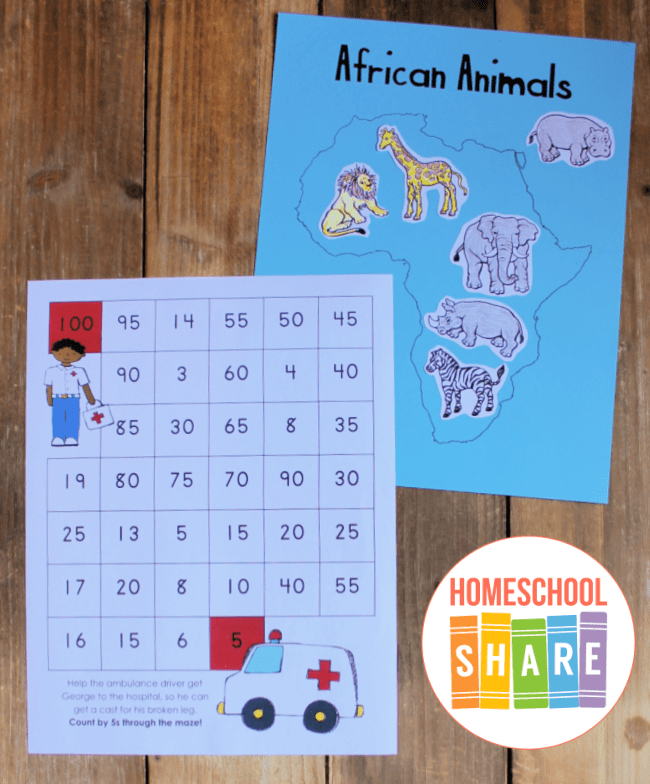
Our Curious George Takes a Job unit study download also includes these printable activities for your student to enjoy:
- Create a Newspaper Frontpage
- African Animals Map
- Places George Might Be Hiding Simple Fold Book
- What I Imagine in the Window
- Facts about Bones Shape Book
- Jobs George Tried & Jobs I Would Like to Try Shutterfold Book
- Word Building Pages
- Using Tally Marks to Count
- Count by 5s Maze
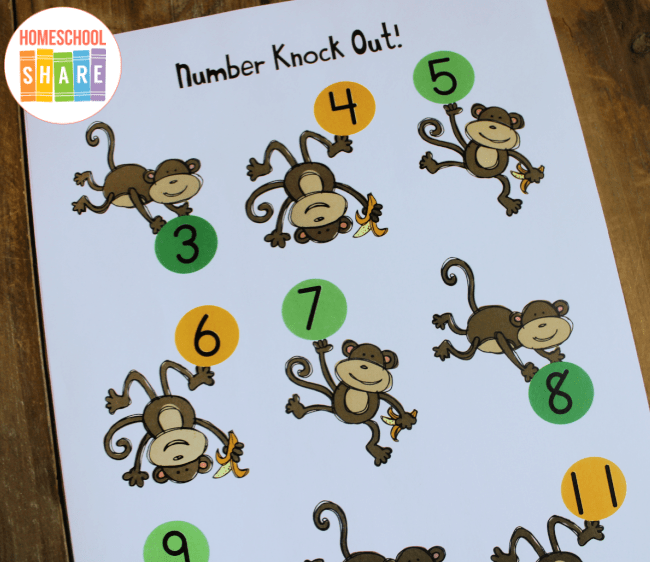
- Monkey Numbers Knock-Out Game
How to Get Started with your Curious George Takes a Job Unit Study
Follow these simple instructions to get started with the Curious George Takes a Job unit study:
- Buy a copy of the book, Curious George Takes a Job, or grab one from your local library.
- Print the Curious George Takes a Job unit study.
- Choose the lessons you want to use with your student (a highlighter works great for this).
- Choose and prepare the printables you want to use with your student.
- Enjoy a week of curious learning with your student.
Download Your Curious George Takes a Job Unit Study and Printables
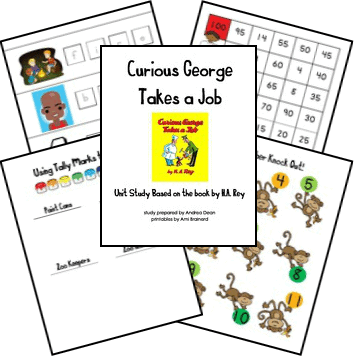
Simply click on the image below to grab a free copy of the Curious George Takes a Job unit study.
More Learning Fun
We have oodles of unit studies, lapbooks, and printables for your student. Try some of these resources based on classic books:

Unit Study & Printables

Unit Study & Printables