Affiliate Disclaimer
We sometimes use affiliate links in our content. This won’t cost you anything, but it helps us to keep the site running. Thanks for your support.
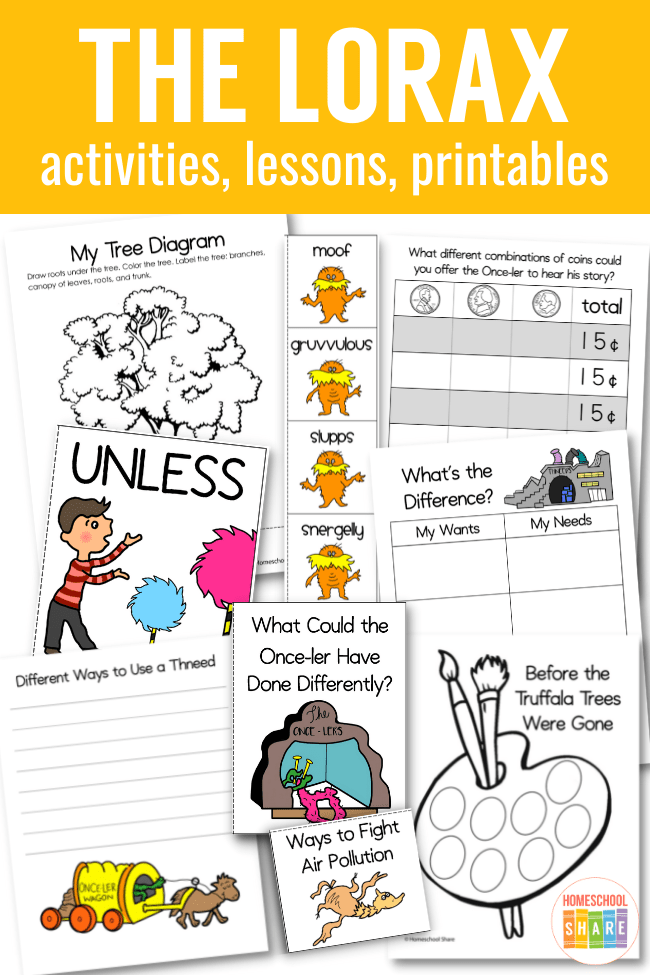
The Lorax is a fantastic book for teaching your children about being good stewards of the earth and its resources, and it is perfect for Earth Day. Grab our free The Lorax activities and printables start learning about greed, being polite, ecology, sensory details, endangered animals, counting change, and so much more!
Unless someone like you cares a whole awful lot, nothing is going to get better. It’s not.
The Lorax Activities and Lessons
This unit study includes lessons, activities, ideas, and printables based on the book The Lorax by Dr. Seuss.
Here are some sample lessons from the The Lorax unit study.
The Lorax Science Lessons
Botany: Trees
Discuss different items in your home made of trees or wood. Trees are important to us. We need to remember that we not only need them for building houses, furniture, kitchen utensils, firewood, and paper; we also need trees in the forest where they provide oxygen, soil protection, beauty, and a place for animals to live.
If you have the opportunity, visit a garden nursery this week and observe the different young trees for sale. You may even wish to buy a tree and plant it. You could also plan sometime outside for a hike through the trees at a state park or nature preserve.
Ecology: Pollution
Discuss what pollution means with your student. It is to make something impure; to spoil a natural resource with waste made by humans. Find examples of pollution in The Lorax with your student.
Water Pollution
One type of pollution we find evidence of is water pollution. “You’re glumping the pond where the Humming-Fish hummed.”
All the Gluppity-Glupp and all the Schloppity-Schlopp made by the machinery chugging is being dumped right into the pond. What is the consequence of putting all this pollution into the water? (The fish can’t live there anymore). Can your student think of any other problems this may cause? (the water wouldn’t be fit to drink).
Air Pollution
Another type of pollution in the story is air pollution. The smogulous smoke being put in the air by the Thneed factory made the Lorax cough, whiff, sneeze, snuffle, snarggle, sniffle, and croak. The Swomee-Swans were no longer able to sing! The Lorax had to send the birds away to find some cleaner air in which to live.
Discuss air pollution with your student. Is it only dangerous for birds? No! It is dangerous for any creature that breathes.
The Lorax Art Activities
Drawing the Once-ler
Throughout this story Dr. Seuss only lets us see parts of the Once-ler (his eyes and hands). Ask your student, what do you imagine the rest of the Once-ler to look like? Help him brainstorm some ideas, and then encourage him to draw a full body picture of this greedy guy.
à Draw the Once-ler on the page provided.
Color Choices
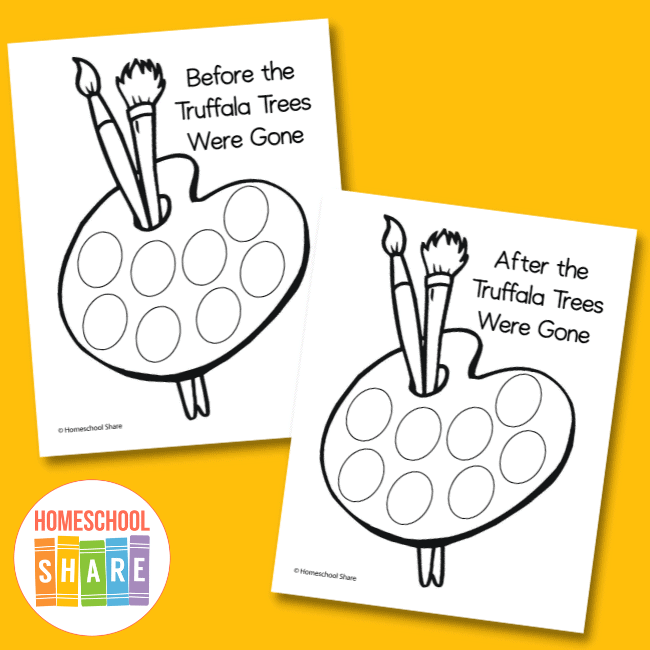
Look at the first few illustrations with your student, what colors are used (grey, purple, blue– cool colors). Then, look at the first illustration with the Truffala Trees. What colors are used? (bright colors). Which place would your student rather live? Why?
What feelings does your student get when he looks at the first illustrations? (sad, gloomy, depressed)
What feelings does your student get when he looks at the Truffala Tree illustration? (happy, cheerful)
The Lorax Math Activities
Counting Change
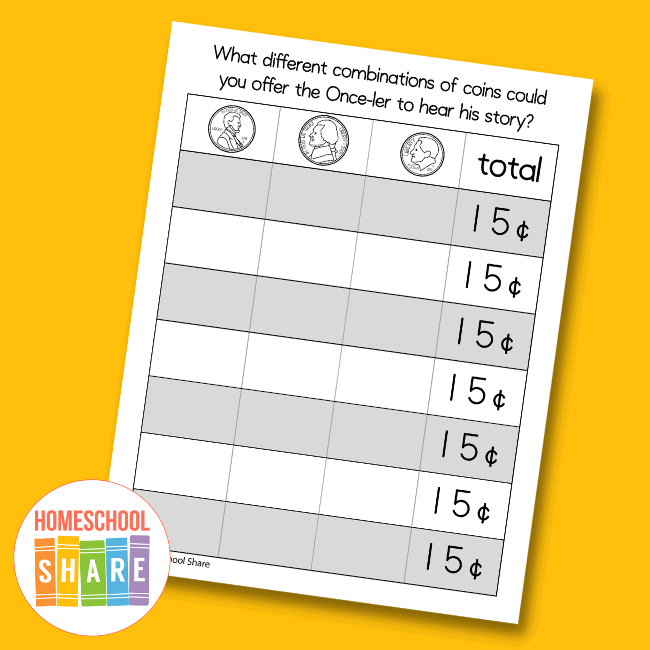
If you want to hear the Once-ler’s story, you have to toss fifteen cents into his tin pail. What change combinations could equal .15? (three nickels; two nickels, five pennies; a dime and a nickel; a dime and five pennies; fifteen pennies, etc.)
Create Your Own Lorax Math Problems
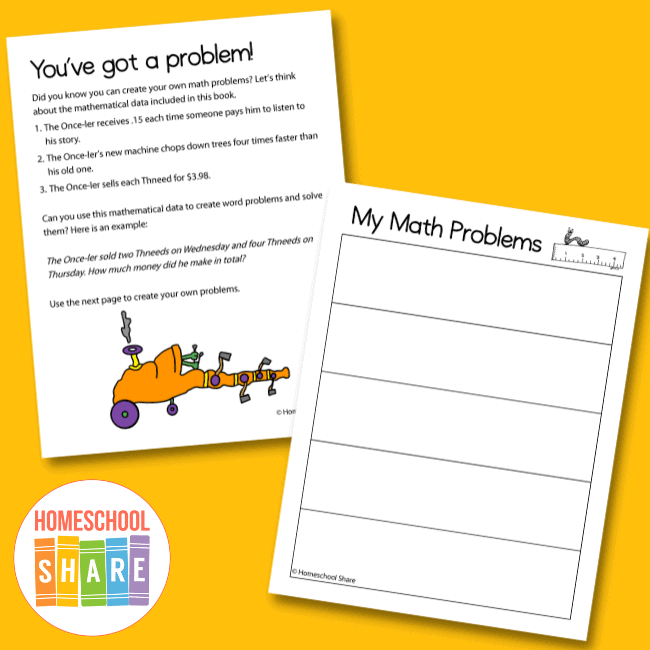
Compile all the mathematical data from the story. Use it (and your imagination) to write (and solve) five math problems. Printable pages are provided to help with this task.
Character Building Lesson
The Lorax says that the Once-ler is greedy. Greed is defined as a selfish desire for food, money, or possessions over and above what one needs.Can your student think of ways that the Once-ler proves his greed?
He says, “I biggered my money which every needs.” Is it true that everyone needs money? How much money do people need? Is it right to make a ton of money while destroying the environment?Discuss these issues with your student.
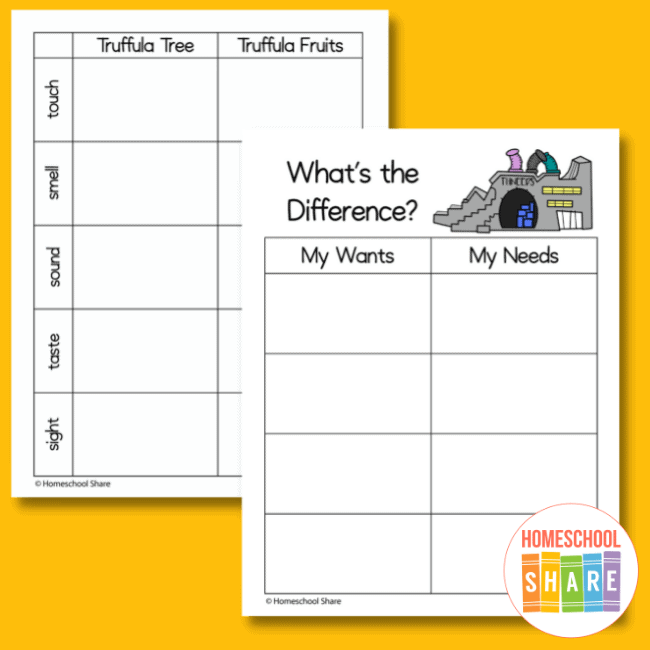
You may also want to discuss the difference between a want and a need. Did people need Thneeds?
To access all of the lessons and printables in this The Lorax unit study, subscribe to Homeschool Share’s email list using the form in this post.
Free The Lorax Printables
In addition to the unit study lessons, this file also includes worksheets and lapbook mini-book for your student to create a The Lorax lapbook or notebook.
If you want to use a variety of the printables, it might be easiest to put them in a three-ring binder and make a notebook (rather than trying to stuff everything into a lapbook).
The Lorax Worksheets
- What’s the Difference? Wants vs. Needs Chart
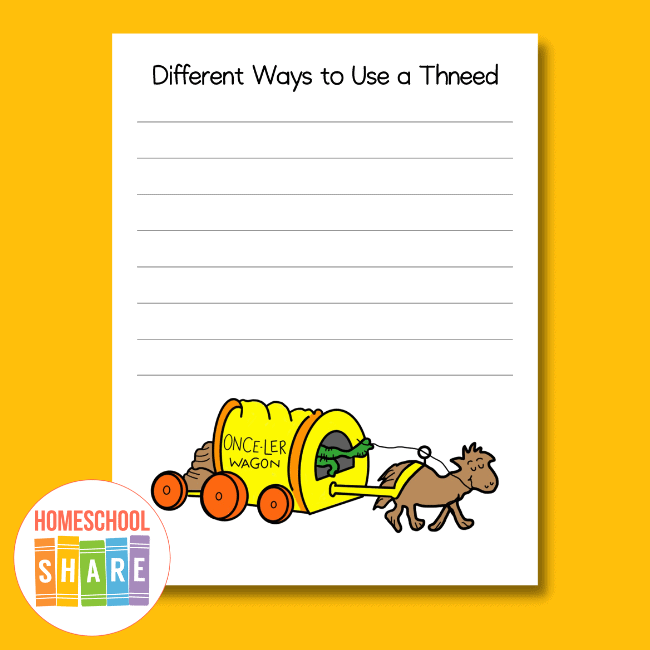
- Different Ways to Use a Thneed Notebook Page
- Sensory Details Chart (Truffula Tree & Truffula Fruits)
- Different Combinations of Coins Chart
- Multiplication Chart
- Make Your Own Story Problems Page
- The Once-ler Art Activity
- Art Palettes
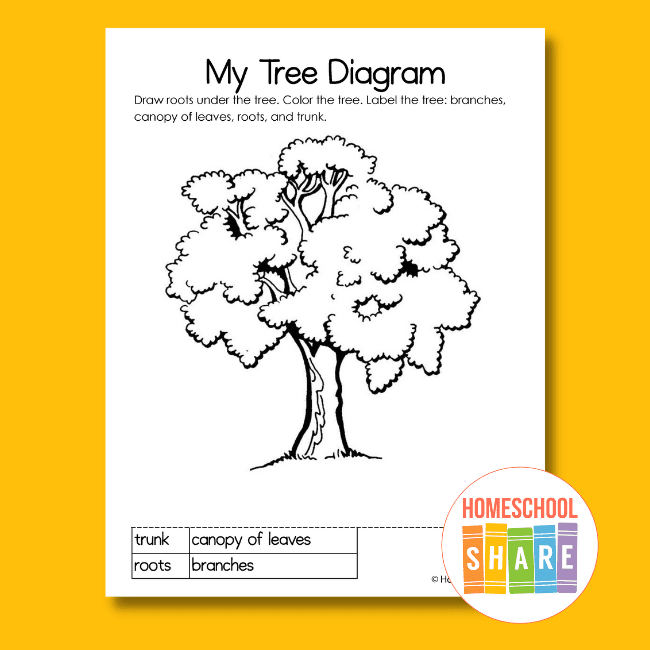
- Diagram a Tree
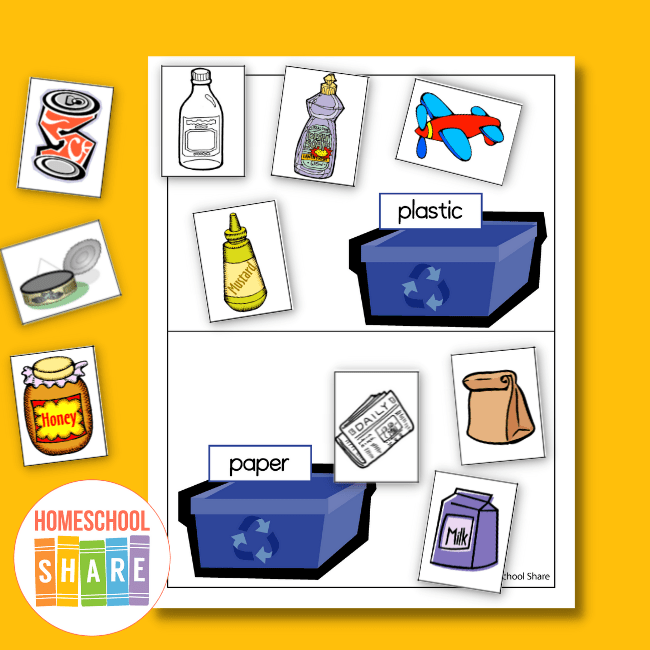
- Recycle Sorting Activity
- The Parable of the Rich Fool Bible Study Pages
The Lorax Lapbook Printables
- What Is Greed? Matchbook
- Extinct Animals Matchbook
- New Words Flap Books
- Making Change for the Once-ler Mini-book
- “Unless” Copywork Book
- Ways to Fight Air Pollution T-book
- What Could the Once-ler Have Done Differently? Simple Fold
How to Get Started with Your The Lorax Activities and Printables
Follow these simple instructions to get started with the The Lorax Unit Study:
- Buy a copy of the book, The Lorax, or borrow one from your local library.
- Print the The Lorax unit study.
- Choose the lessons you want to use with your student (a highlighter works great for this).
- Choose and prepare the lapbook printables you want to use with your student.
- Enjoy a week of learning with The Lorax.
Get Your Free Lorax Activities, Lessons, and Printables
Use the form below to subscribe to the newsletter. Once you confirm, you’ll receive an email with the link to the activities and printables.
If you are already confirmed, simply enter your name and email address below, and you will receive an email with the link.