| about us |
what's new
|
unit studies
|
unit study helps |
fiar resources
|
indexes | lapbooking |
Growing Vegetable Soup
|
Author: Lois
Ehlert |
Printables
~lapbook template ideas by Tammy Maddox
~templates and other printables by Ami
|
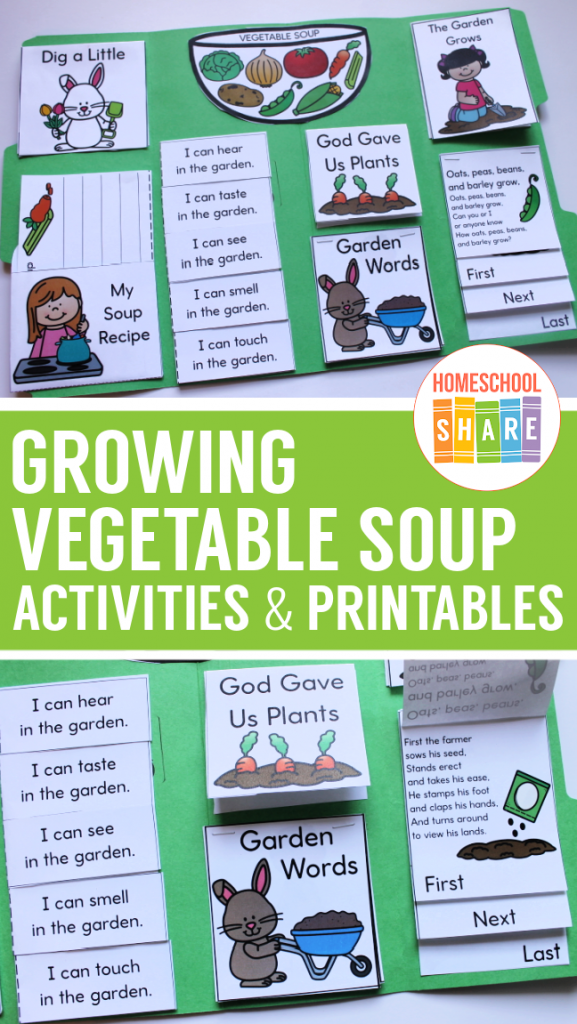
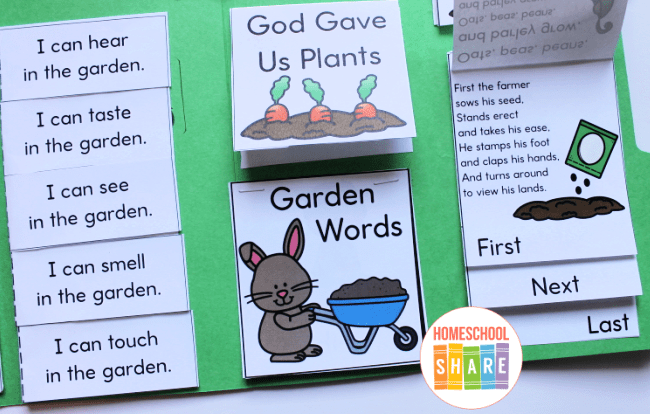
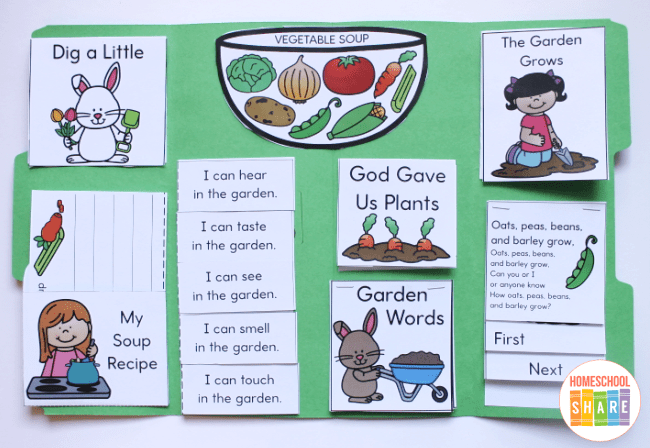
Growing Vegetable Soup Lapbook
Templates |
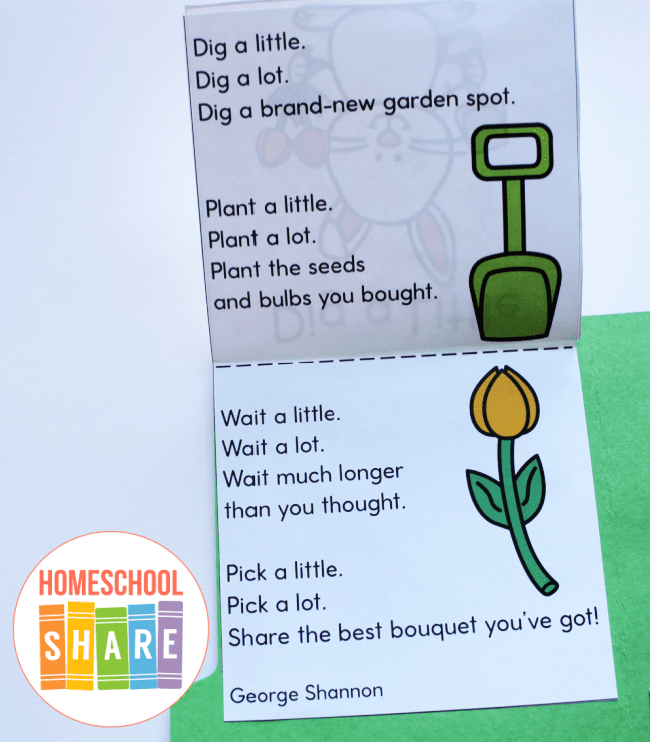
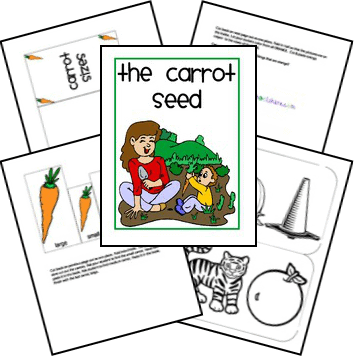
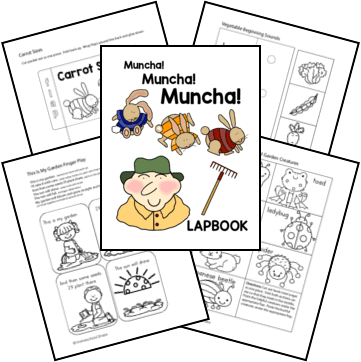
Garden Songs & Poems |
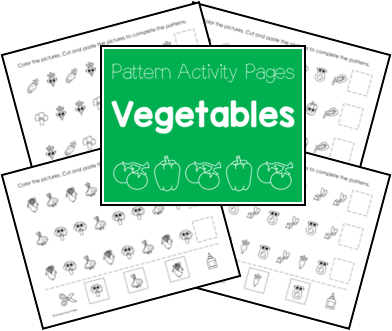
| Vegetable Pattern Match (File Folder Game) | Garden ABC Matching Game |
Bible
Did you realize that vegetable
soup is mentioned all the way back in Genesis, the very first book of the Bible?
Read the story of Jacob and Esau in Genesis 27 with your child. (“Red
stew,” as some versions refer to it, is lentil soup). What did Jacob do wrong?
What should Jacob have done? What about Esau?
Memory
For memory work this week, you could use
Genesis 1:29 (which talks about seeds and plants) or you could focus on
another verse about helping others or showing kindness.
Language
Dictation
After reading
Growing Vegetable Soup, have your child dictate to you how to plant a
garden. Use the “My Garden Journal” minit book for this.
Grow Your Name
Using a fast
growing seed such as radish or grass, have your child use a pencil to write
either his name or initial in a small plot of ground. Fill it in with the
seeds, then cover lightly with soil and keep moist. How special for your child
to see her initial or name “growing”. You will want to add a picture of this to your
“Garden Scrapbook.”
Letter Match
Using vegetable
seed packets (may want to laminate) and alphabet letter cards or refrigerator
magnets, have your child match the alphabet card/magnet to the seed packet.
Note: Some seed packets have very long names for each plant, so you may want to
write the common name (i.e. carrot) on a slip of paper and tape to the front of
packet to make it easier for your child to see.
Wonderful Words
This book is filled
with wonderful illustrations and descriptive words. Spend time going through the
story pointing out how the author/illustrator drew the picture then wrote the
word beside each item. See if your child will “read” some of these words to you.
Using gardening and other magazines, let your child cut out pictures to paste in
the “garden words” minit book be sure to write the word near each picture. Be
creative, the author included soil and weeds, how about worms and bugs and
flowers, too?!
Alphabet Soup
Practice letter
recognition. Use individual letters such as blocks, magnets, or tiles, a cooking
pot and a large stirring spoon. Have your child put the letters in the pot, stir
and scoop one out. Teach or review letter names and sounds. If you are using
colored letters, you can also practice color recognition.
V is for Vegetables
Be sure and check out the printables on the
Alphabet Notebook Page if you are teaching your student the alphabet.
Poetry
Have a garden tea
party, outside if possible. Find a garden poetry book to read aloud as together
you enjoy nature’s interesting and beautiful sights and sounds along with your
tea and a special treat. Afterwards, encourage your older child to write her own garden poem. Remember - a poem does not have to rhyme!
Math
Counting
This book provides
many counting opportunities. Have your child count the garden tools at the
beginning of the book (3), and the seeds on the next page. (Note: there are 10
seeds total, and five of them are carrot seeds). You can count the vegetable
labels on the page with the watering can (11), etc.
Bar Graph
Give your child an
assortment of seeds or beans and the “seed graph”. Ask them to first sort the
seeds, count each type, and then fill in the bar graph. You could also tie in a
lesson on color by encouraging your child to use a different color crayon (on
the graph) for each seed
type.
Sequencing
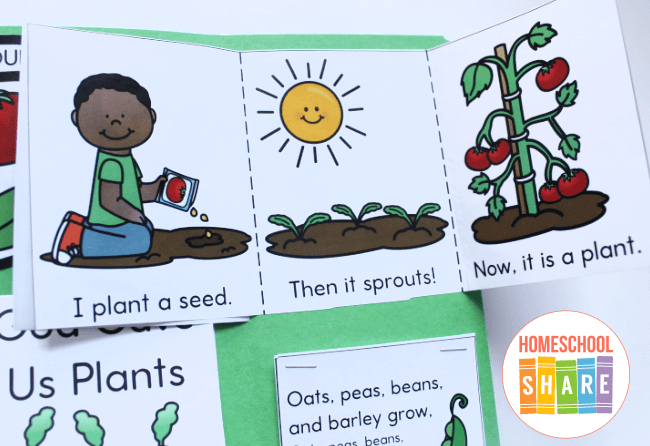
Use the “This is
the way the garden grows!” minit book. Cut out, color, and paste in order. Note:
The life Cycle of the Bean or Life Cycle of the Carrot are great
books to help illustrate this.
Drama/Pretend Play
After reading this story, have your child act out planting a garden or
making vegetable soup. Be sure to use props. Bucket and tools, gloves, seed
packets, even larger seeds such as beans or peas are great planting props. You
could use pots, mixing spoons, an apron and plastic vegetables so your student can cook
some vegetable soup after the "garden" has grown!
Crafts
Garden Apron
Materials: apron
(either for cooking or for carrying tools) and fabric paint
Create your own garden apron
to use while planting and tending your garden. Let your child paint pictures and
letters on the apron or help her “paint” her hand with the fabric paint then
press a handprint onto the apron.
Container Art
Materials: terra
cotta pots, paints, seeds or plants and soil. Optional; decorative beads/gems,
hot glue gun, sealant. Let your child decorate his own planter. You will want
to spray a sealant on it if you are going to use it outdoors.
Creative Containers
Let your child’s
imagine go wild! How about putting a plant or flower in an old boot or hat, or,
how about a coffee mug or goldfish bowl? Or, you could use a plastic toy that
has been outgrown. The possibilities are endless. Note: If possible, drill holes
in the bottom of your container and add a layer of gravel or sand to aid with
watering and draining.
Seed Mosaic
Materials:
cardstock, glue and a large assortment of seeds. Unleash your child’s
imagination go as she creates pictures and artwork out of seeds.
Stepping Stones
Materials:
disposable pie pan, cement, water, assortment of gems, shells, marbles, etc. Mix
the cement with water in the pan using approximately 3 parts cement to 1 part
water, the mix should be fairly thick, like wet sand. Smooth the mixture, have
your child decorate with items (these will need to be pressed well into the
cement as they will rise some as the water comes to the surface), a
handprint, name/initial, or all of the above. The stone will take
2-3 days to dry then you can remove from pan and place in garden. Each summer my
children make a new stone. It is fun to watch our collection grow.
*Be
sure to take pictures of your crafts to place in your gardening scrapbook!
Science
How Plants Drink
All plants use their roots to drink water. Demonstrate this by using a piece
of celery or Queen Anne’s Lace (usually found growing wild on the roadside), or
a white carnation from your local florist. Place in a clear bottle or jar, fill
with water and add a several drops of food coloring. Within a few hours your
plant will begin changing colors from the bottom up. Explain that this is
because the plant drinks through the roots at the bottom and pulls it up into
the plant.
Seed Size
Review the seeds on
the “we are planting the seeds” page. If possible, have those seeds available.
Seeds come in many different sizes from tiny carrot seeds to large bean seeds.
Give your child an assortment of seeds and compare the different sizes. Talk
about (if possible have the real vegetable or fruit on hand) how each seed will
grow into a fruit or vegetable that is much larger than the seed itself. This
will easily lend itself into a discussion on the greatness of God and His
creation.
Seeds, Sets, and Sprouts
Using pages “we are
planting the seed” and “and all the sprouts” talk with your child about how
vegetables are planted from different starts. If possible, have samples on hand
or visit a greenhouse for this lesson. I have found that most greenhouses are
happy to teach about their products. You may want to inquire ahead of time as to
when a good, non-busy time would be for your learning visit. Using the page
“and giving them water” can your child tell you which vegetables are started
from seed (corn, pea, green bean and carrot) from set (potato and onion) and
from sprout (tomato, cabbage, pepper and broccoli)?
Bean Sprout
Materials: clear
jar, yogurt container, paper towel and bean seeds. Wrap strips of paper
towel around the yogurt container so that when placed upside down in the jar the
paper will touch the sides. Push the bean seeds between the jar and the paper so
that they will stay without falling. Wet the paper and place the jar in a sunny
location. Be sure to keep that paper moist. Watch as the beans swell, split, and
sprout both down (roots) and up (shoots). You can take pictures each day
for a two week period of the bean starting as soon as it shoots through the
ground. It is truly amazing to record this process and to go back and look
through your photos.
A similar idea is to Make a Seed Necklace.
Materials: small jeweler's plastic bag, cotton ball, seed, plastic cord (or
yarn, ribbon, etc.). Moisten the cotton ball and put it in the bag
with the seed close by the ball. Poke a hole in the top of the jeweler's
bag and run string through it (enough to make a necklace). Let your
student wear the necklace until the seed sprouts. Transplant it outside
when it's ready!
You may want to read the book, One Bean, by Anne Rockwell, and/or The Life Cycle of a Bean, by Linda Tagliaferro.
Super Bean
How strong is a
bean plant? Find out with this experiment. Plant a bean seed in a Dixie cup and
place a penny on top. When the bean pokes through it will be able to lift the
penny. Poke four toothpicks into the soil around the penny to keep it
level and watch it grow.
Garden Tools
What tools are needed for gardening? Go back through the book and have your child point out the tools used. If you have these tools at home show them to your child and let them experiment using them.
Garden Senses
If you already have a garden, great! If not, just find a lovely spot outdoors
for this or visit a neighbor's garden. Take your “Garden Senses” minit book with
you. Have your child dictate to you an example of each sense or let them draw a
picture of it. Can you hear birds or the wind in the trees? What do you smell?
Touch the ground - is it hot, cold, wet, dry? What do you see? Encourage your
child to really look around, taking a close-up look at the plant stalks
or the grass blades. Are there bugs or worms? Taste (but be careful outside with
this one)-- is there something growing that your student can try, such as berries or
radishes? If not, perhaps you can have a store bought fruit or vegetable handy
that they can taste.
Note: you may want to read the book, Quiet in the Garden, during this lesson. See library list.
Health
You won’t want to
miss this great opportunity to talk about the importance of healthy eating and
why vegetables are so good for you. If your child shows interest, you can
research vegetables of her choice to learn more about that particular veggie.
Use the “healthy soup” bowl to reinforce what you teach about the
different vegetables or for them to enjoy coloring and cutting as you talk about
the importance of vegetables.
Gardening-Growing Vegetable
Soup
Of course, after
reading this book, you are going to want to grow your own vegetable soup! If
possible, create a special spot for your child’s garden. One idea is to use a
plastic kid-sized pool. You will have the shape of a soup pot and you can plant
all the vegetables your child will want and perhaps one or two new ones to try.
Remember to include exciting ones such as potatoes and onions that will need to
be dug up to be harvested. You will need to incorporate a trellis for the
beans, tomatoes and peas. This large “container” will make a wonderful garden
for your child because it is his special spot. Plus, the weeding and
watering will be minimal as long as you use good soil. Be sure to drill holes in
the bottom of the pool so the water can drain just in case your child, like
most, love to water! This will be a long-term project with many benefits. Your
child will learn so much about plants, gardening, responsibility, and pride when
he is able to harvest and cook his own soup! Be sure to revisit this
book once your garden is ready to be harvested. **Save the extra seeds or
harvested seeds from this year because…”we can grow it again next year!”
Cooking
Just as with the gardening, you will want to make vegetable soup after reading this book. Because the garden will take all season, you may want to take a field trip to a farmer’s market (or the grocer) to pick out vegetables for soup. You can make soup now as you are planning your own garden. Have your child dictate to you how to make vegetable soup. Use the “Recipe Card” and pocket for a keepsake in your lapbook.
Just For
Fun
Bean Tent
Materials: several stakes (6 feet long), pole beans, and twine. Place the
stakes in the ground about six inches deep, (be sure to leave a space for an
opening) and gather together at the top with twine. Plant pole beans and watch
them grow. Once the poles are covered you will have a nifty hideaway!
Sunflower Hut
This is the same idea as the bean tent, only you need to mark out a shape in
the ground and plant giant or mammoth sunflower seeds about 12 inches apart,
again leaving a space for a doorway. Once they begin to grow, enjoy your special
spot. You can also plant the giant sunflowers 18 inches apart and plant “kids”
sunflowers in between. (These grow to be about 32 inches tall, providing
“privacy,” yet most children can see over the top by standing).
Cucumber in a Bottle
Once your cucumber plants have small cucumbers coming on, take a plastic
soda bottle and place one of the cucumbers inside. Watch it carefully as it
grows because it can become too hot inside the bottle and you may need to shade
it. Once the cucumber has grown too large to slip back out the top, cut it off
the vine and amaze your friends and family with your cucumber in a bottle!
Digging for Potatoes
Give your child the experience of digging up potatoes! Take a few potatoes
and bury them in a sandbox or even a large container. Give your child a hand
shovel and let them dig away. Watch the excitement as they find the buried,
edible treasure. For added fun, wash and cook the potatoes with your child.
Enjoy! You can also use peanuts if you have a smaller space or just happen to
have a nut lover.
Library
List
The Victory Garden Vegetable Alphabet Book, by Jerry Pallotta and Bob Thomsam. Many unusual vegetables in this book.
I Heard it From Alice Zucchini, by Juanita Havill. Poems about the Garden
Oddhopper Opera, a Bug’s Garden of Verses, by Kurt Cyrus
A Visit to the Gravesin’s Farm, by Alice K Flanagan. Great to use before a trip to the farmer’s market.
Painting and Decorating Clay Pots by Natalie and Annette Kunkel. This book is filled with fun crafts for the garden using clay pots.
Real World Math; Health and Wellness. This would be a great book to use with an older sibling who wants to be involved in this unit.
One Bean by Anne Rockwell
The Life Cycle of a Bean /Carrot by Linda Tagliaferro
Quiet in the Garden by Aliki. Sweet story about what you can see and hear when you sit still, look and listen.