Google
 
The Gingerbread Baby

The Gingerbread Baby

Author/Illustrator:  Jan Brett
ISBN: 0399234446
Summary: Impatient for the gingerbread man to bake the full eight minutes that is specified in the cookbook, Matti opens the oven door prematurely and a doughy baby jumps out instead: "I am the Gingerbread Baby,/ Fresh from the pan./ If you want me,/ Catch me if you can." The cherubic child remains at home while his parents and a smattering of animals lead a cumulative chase through the Swiss countryside, depicted in minutely detailed pictures.

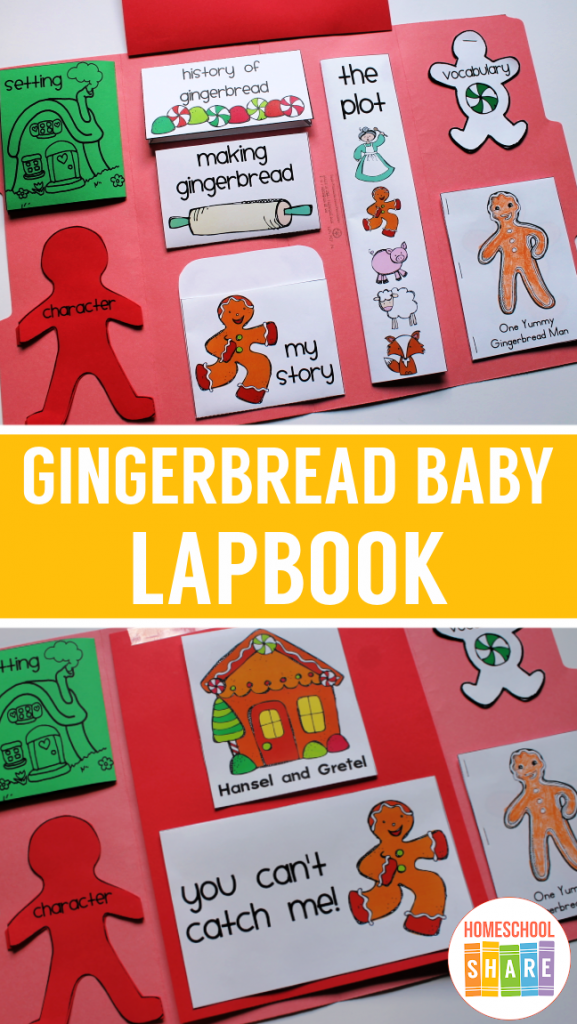
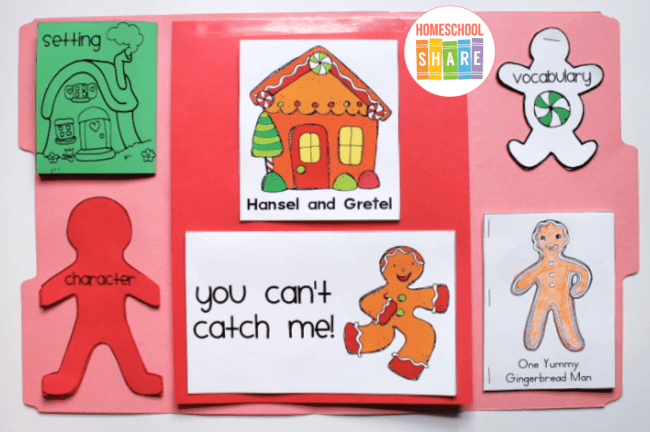
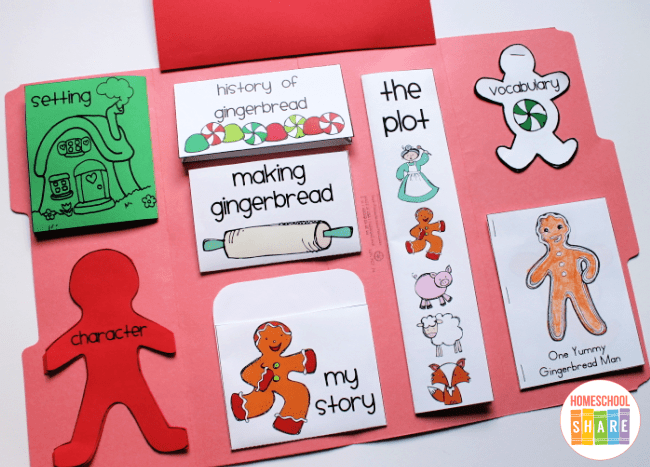
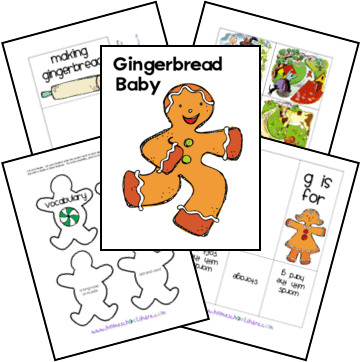
Lapbook

My Gingerbread Family Pocketbook
Gingerbread Patterns (for pocketbook)
 
G is for... Sorting Game
 
My Story Pocket Primary
My Story Pocket HWOT
 
Copywork Simple Fold Primary Font
Copywork Simple Fold HWOT Font
 
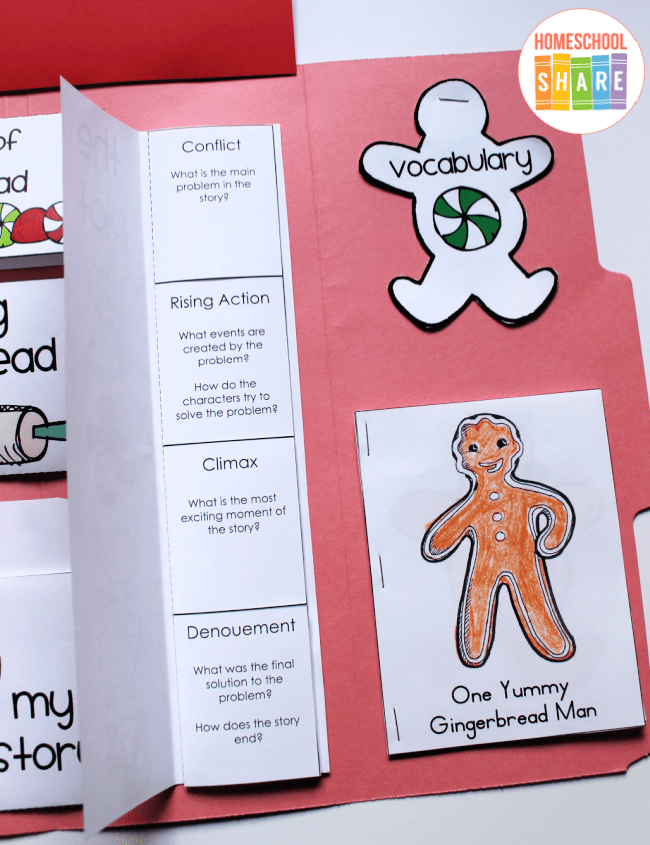
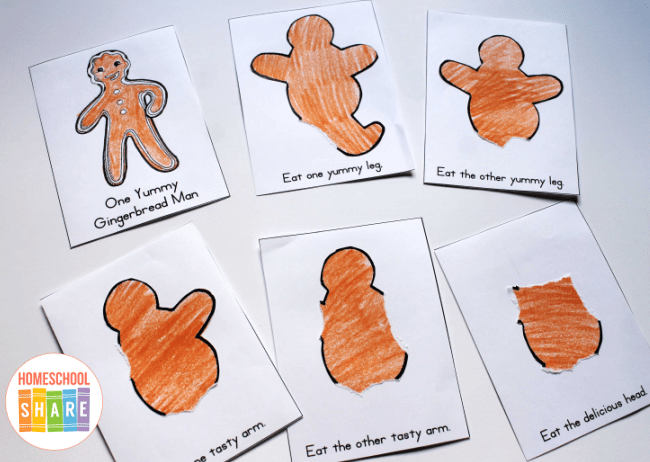
One Yummy Gingerbread Man Book*
 
My Gingerbread Recipe
 
Vocabulary Shape Book
 
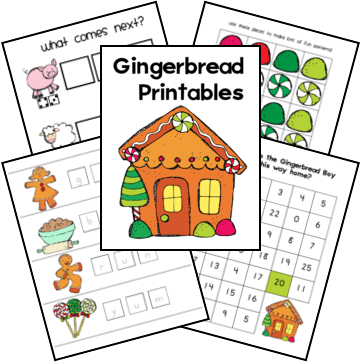
Gingerbread House Word Find
 
Story Sequencing Cards and Pocket
 
Character Comparisons
 
Setting Comparisons
 
Uses for Ginger
 
Venn Diagram Mini Book
 
Plot (4 mini books)
 
Photo Book Accordion
 
What I Know About Ginger
 
Memory Matching Game with Pocket History of Gingerbread Hansel and Gretel Simple Fold  

*This is an idea originally by Kim Lenging; cover art done by Breezy Tulip


Lapbook Notes:
Let your student create his family with the gingerbread patterns.  They can be stored in the pocketbook.

The story sequencing cards do not go with Jan Brett's version.  Instead, they go with the original version of the story. 

The vocabulary book goes with Gingerbread Baby;  you could easily print extras of the blank templates to make words for any gingerbread story you choose. 

For best results for the game cards, print them on cardstock.   You may have to have two pockets for storage (I haven't tested this out yet). 

The Venn diagram is for your student to compare/contrast two different versions of the story (see library list at the end of unit for story suggestions).

Use the "My Gingerbread Recipe" minit book to include a favorite gingerbread recipe or for your student to dictate to you his own how to make gingerbread recipe.

Add-on Ideas (from other websites)
 
Cover Ideas for your Lapbook
 
Jan Brett's Gingerbread Baby Board Game
 
Coloring Page from Jan Brett
 
DLTK Gingerbread Mini Book
 
Design a Gingerbread House (and print it to use for cover)
 
Gingerbread House from Bry-back Manor
 
Use this Gingerbread Christmas Card to decorate the cover
Gingerbread Men from Kizclub
 
 
Gingerbread Puppets/Characters
 
 
Gingerbread Patterns


Additional Resource for purchase:  Evan Moore's Literature Pockets (includes a pocket full of gingerbread themed activities)


Rabbit trails
(ideas for more minit books) for an older student: 

1.  Information about the spice route
~Map of the route
~Timeline of spice trade
~Marco Polo

2.  Learn more about ginger
~ How it grows
~ How it's turned from plant to powder
~ 3 different forms ("fresh"...dried...ground)

3.  Animals
~make a minit book for each animal chasing the gingerbread man/boy/baby


Science

Make Gingerbread Cookies
"They measured and mixed"
Just like Matti and his mom in the book, make some gingerbread cookies with your child.  Let your child do the measuring and mixing (as much as possible).  Let him do the things he can do even if it makes a little more mess or takes a little more of your time.  You may want to discuss with your child the importance of following directions.  What happens if you add to much flour or too much sugar?  What would happen if you decided to leave out the baking soda?  If you have an older child working along-side your preschooler, you may want to allow him to make some predictions on a chart and let him make some cookies that don't follow the directions.  What were the results?  (too hard, too soft, etc.).  What happened to Matti when he didn't follow directions?
Gingerbread Baby Recipe
Gingerbread Baby Icing Recipe


For a math connection, have your student make patterns on his gingerbread cookies (with M&Ms or other candies).  Can he finish a pattern that you start?  Can your older student start a pattern for your younger student?

Ginger
Source

Where does it come from?
All ginger comes from a strange, twisted rhizome called ginger root.

The spice originated in Asia, though now it is grown mostly in Jamaica. The ancient Chinese used it as a medical treatment; the Romans used it extensively to flavor their foods and taxed it heavily—it almost certainly came overland from India—and the Japanese still use pink pickled ginger, called gari, as the familiar condiment for sushi.

Why is it called a hand?
The thick root is sometimes known as the "hand," because it can look like a fat hand with strange fingers. This root is the hot, pungent spice— ginger—that has been known from ancient times.

Was it valuable?  Where was it traded?
The widespread passion for spices in Medieval Europe (partly to cover up the taste of meats preserved through the winter without the benefits of refrigeration) included ginger, and the spice merchants took advantage of this by charging high prices. Ginger was the second most highly traded spice after pepper.


Types of Ginger
Source

Fresh
It's not as fresh as you may think (like an apple or orange).  Ginger gets harvested and dried in the sun for a bit before it is packed for sale.   At its peak, in January and February the pale golden sweet flesh is low in fiber and medium hot.   When you go to the store to choose some ginger, make sure that the "hand" is plump, firm and not too fibrous. The taste is mild and less "spicy" or "hot" than that of the ground spice. To use, fresh ginger is peeled for use in baked goods but left unpeeled if young and moist and used in savory dishes.  Fresh rhizomes are best refrigerated, wrapped in paper towels, in tightly closed plastic bags, where they will keep for several weeks.

Dried
This is the unskinned rhizome which is washed and dried in the sun.

Ground or Powdered
This is ground from gingerroot. It is used in sweet preparations such as cookies, cakes and puddings. Ground should never be substituted in recipes calling for fresh.

Buy a fresh hand of ginger the next time you go grocery shopping.  Let your student grate it.  Find a recipe that calls for fresh ginger and make it together!

Uses for Ginger
Let your student learn more about the two different uses for ginger-- culinary and medicinal. 
Website for Uses for Ginger


Social Studies

Living in a Different Time Era
What are some differences in the way things are in this story vs. the way things are in real life? 
Mom has a real fire under her stove and firewood in the house
There are candles hanging on the wall for light-- no electricity
Horse/Wagon
The Milkman
What other examples can you and your student find?

Geography
Map out where the different ingredients (for gingerbread) come from. 

History of Gingerbread
*I am not sourcing this information at this time; it was found on multiple websites.

Gingerbread has been baked in Europe for centuries. In some places, it was a soft, delicately spiced cake; in others, a crisp, flat cookie, and in others, warm, thick, steamy-dark squares of "bread," sometimes served with a pitcher of lemon sauce or whipped cream. It was sometimes light, sometimes dark, sometimes sweet, sometimes spicy, but it was almost always cut into shapes such as men, women, stars or animals, and colorfully decorated or stamped with a mold and dusted with white sugar to make the impression visible.

The manufacture of gingerbread appears to have spread throughout Western Europe at the end of the eleventh century, possibly introduced by crusaders returning from wars in the Eastern Mediterranean. From its very beginning gingerbread has been a fairground delicacy. Many fairs became known as "gingerbread fairs" and gingerbread items took on the alternative name in England of "fairings" which had the generic meaning of a gift given at, or brought from, a fair. Certain shapes were associated with different seasons: buttons and flowers were found at Easter fairs, and animals and birds were a feature in Autumn. There is also more than one village tradition in England requiring unmarried women to eat gingerbread "husbands" at the fair if they are to stand a good chance of meeting a real husband. Of course, you could always visit Elizabeth Botham & Sons, a family-run craft bakery on the North Yorkshire coast of England, and sample some authentic pastries.

If you lived in London in 1614, your family would have gone to the Bartholomew Fair on August 24. Of the special cakes prepared for holidays and feasts in England, many were gingerbread. If a fair honored a town's patron saint, e.g., St. Bartholomew, the saint's image might have been stamped (and even gilded) into the gingerbread you would buy. If the fair were on a special market day, the cakes would probably be decorated with an edible icing to look like men, animals, valentine hearts or flowers. Sometimes the dough was simply cut into round "snaps."

Gingerbread-making was eventually recognized as a profession in itself. In the seventeenth century, gingerbread bakers had the exclusive right to make it, except at Christmas and Easter. Their street cries could be heard well into the nineteenth century, but by 1951, writer Henry Mayhew sadly recorded that "there are only two men in London who make their own gingerbread nuts for sale in the streets."

Of all the countries in Europe, Germany is the one with the longest and strongest tradition of flat, shaped gingerbreads. At every autumn fair in Germany, and in the surrounding lands where the Germanic influence is strong, there are rows of stalls filled with hundreds of gingerbread hearts, decorated with white and colored icing and tied with ribbons.

If you lived in Nuremberg in 1614, your family would have gone to the Christkindlmarkt in December. You would have bought carved Christmas decorations, special sausages, and the famous Nuremberg Lebkuchen flavored with ginger, which you probably would have thought was the best in the world. Nuremberg gingerbread was not baked in the home, but was the preserve of an exclusive Guild of master bakers, the Lebkuchler.

Nuremberg became known as the "gingerbread capital" of the world and as with any major trading center, many fine craftsmen were attracted to the town. Sculptors, painters, woodcarvers and goldsmiths all contributed to the most beautiful gingerbread cakes in Europe. Gifted craftsmen carved intricate wooden molds, artists assisted with decoration in frosting or gold paint. Incredibly fancy hearts, angels, wreaths and other festive shapes were sold at fairs, carnivals and markets.

Lebkuchen are made throughout Germany and large pieces of lebkuchen are used to build Hexenhaeusle ("witches' houses," from the fairy tale Hansel and Gretel).

Nuremberg merchants, in fact, were so well known for their spices that they had the nickname "pepper sacks." From early on, Nuremberg's Lebkuchen packed into one recipe all the variety of flavorings available to its bakers—cardamom, cloves, cinnamon, white pepper, anise and ginger.

At Christmas, gingerbread makes its most impressive appearance. The German practice of making lebkuchen houses never caught on in Britain in the same way as it did in North America, and it is here still that the most extraordinary creations are found. Elaborate Victorian houses, heavy with candies and sugar icicles, vie in competition with the Hansel and Gretel houses, more richly decorated and ornamented than most children could imagine in their wildest dreams.

Gingerbread making in North America has its origins in the traditions of the many settlers from all parts of Northern Europe who brought with them family recipes and customs. By the nineteenth century, America had been baking gingerbread for decades.  American recipes usually called for fewer spices than their European counterparts, but often made use of ingredients that were only available regionally. Maple syrup gingerbreads were made in New England, and in the South sorghum molasses was used.

Nowhere in the world is there a greater repertoire of gingerbread recipes than in America —there are so many variations in taste, form and presentation. With the rich choice of ingredients, baking aids and decorative items the imaginative cook can create the most spectacular gingerbread houses and centerpieces ever.


Language Arts

Memory Game
After you read the book, close it.  Ask your child who the gingerbread baby got away from and see how many of the people/animals he is able to remember.  With a younger child, you may want to simply ask what animals he remembers from the book.   Do this on a few different days to see if your child's memory improves.

Drama
Print the animal masks at the Jan Brett website and act the story out with your child(ren).  Dad may join in, too!  Another variation of this would be to make puppets and let your children put on a puppet show as they re-enact the story. 

Critical Thinking
Matti was very clever in how he caught the Gingerbread Baby.  Ask your student if he can think of a different way to catch that Gingerbread Baby.   Your younger student may simply narrate it for you while your older student may want to write it in a story form. 

Vocabulary
meddling- to interest oneself in what is not one's concern
snout- a long nose or muzzle
worn- old, used
pranced- danced
tumbled- fell over
tabby- a cat with a striped and spotted coat
twitched- to move with sudden motion
whiff- smell

Vocabulary Set 1
Vocabulary Set 2

Comprehension Questions
Comprehension Questions Set 1
Comprehension Questions Set 2

Fairy Tales
You may want to discuss with your young child that this is a fairy tale (like The Three Little Pigs).  It isn't a true story.  What parts of this story are make-believe?  What parts are like real life?  

If you have an older student, you may want to have him make a list of familiar fairy tales.  Can you go to the library and find many different versions of the same tale?   Your student may also be able to make a list of fairy tale characteristics.
(use this link)

A good fairy tale to add on to this study would be Hansel and Gretel (the candy house connection).  Record your student's narration of Hansel and Gretel in this Simple Fold for your lapbook.

Comparing/Contrasting
Read other versions of this classic tale together and discuss what is the same/what is different.  Your older child may want to make a chart or a Venn diagram.   After you read multiple versions, your student may want to try writing (or narrating) his own version; you could even use it in your Christmas cards.


Just for Fun

Gingerbread Mix In a Jar

This is a wonderful gift to make for friends and family!

Ingredients:
2 cups all-purpose flour
1 teaspoon baking powder
1 teaspoon baking soda
1 1/2 cups all-purpose flour
2 teaspoons ground ginger
1 teaspoon ground cloves
1 teaspoon ground cinnamon
1 teaspoon ground allspice
1 cup packed brown sugar

Directions: Mix 2 cups of the flour with the baking soda and baking powder. Mix the remaining 1 1/2 cups flour with the ginger, cloves, cinnamon, and allspice. In a 1 quart, wide mouth canning jar, layer the ingredients starting with the flour and baking powder mixture, then the brown sugar, and finally the flour and spice mixture. Pack firmly between layers. Attach a directions tag to the jar. 

Make a Gingerbread House
After you make your gingerbread people, you are going to need a place for them to live!  Whether you make it out of real gingerbread or graham crackers, your child will enjoy the time you spend together!  If you absolutely don't have time for this,
let your child design a gingerbread baby house on-line
You can also
make a paper gingerbread house


Recipe for "Gingerbread" Play-doh
This is an easy dough to make.  Your child can have fun helping you.  Maybe he will make a gingerbread baby and gingerbread house to play with! 

1 cup flour
1/2 cup salt
2 tsp. cream of tartar
1 cup water
1 tsp. vegetable oil
Spices-- Cinnamon, Ginger, Allspice, Nutmeg (I add a lot of cinnamon--probably 1/4 cup-- and a tiny bit of ginger and whatever else I have on hand) 

Mix the dry ingredients.  In a separate bowl mix water and oil together then add them to the dry ingredients
and stir.  In a pot, cook the mixture for three to five minutes on low/medium, stirring constantly. The dough will start to pull away from the sides of the pot and stick together in a large ball. Take the dough out of the pan and knead the dough until it becomes soft
and smooth. Allow the dough to cool and then store it in an airtight container.

You can use this dough to make Christmas ornaments
1/2 cup apple sauce
1/2 cup cinnamon
Ziploc baggie
rolling pin
Christmas cookie cutters
Red/Green Yarn or Clear Fishing Line

Pour cinnamon and apple sauce into the bag.  Seal and knead until a dough forms.  Roll the dough out with the cookie cutters.  Remember to cut a hole at the top of your "cookie" before it dries (to thread the yarn through).  Let it dry overnight and give as gifts or hang on your tree.  If you have leftovers, store it in the plastic bag for later. 
 

Play a Gingerbread Baby Board Game!
Printable at Jan Brett's site
Another Gingerbread Baby game
You could also pull out the old classic, Candy Land, and play it together.


More Fun Stuff (Links)
Make Gingerbread Baby Place Mats
Video with Jan Brett
Listen to the Story

Decorate Gingerbread Cookies (on-line!)


Library List

Maisy Makes Gingerbread (for preschoolers)
Gingerbread Man by Karen Lee Schmidt
Gingerbread Boy by Richard Egielski
The Gingerbread Rabbit by Randall Jarrell
The Gingerbread Kid Goes to School by Joan Holub
The Gingerbread Man retold by Jim Aylesworth
You Can’t Catch Me by John and Ann Hassett
The Cajun Gingerbread Boy by Berthe Amoss
The Runaway Tortilla by Eric Kimmel
The Gingerbread Girl by Lisa Campbell Ernst
The Gingerbread Cowboy by Janet Squires
The Pancake Man: An Old Norwegian Folk Tale by Lorinda Cauley
The Gingerbread Rabbit  (short chapter book)


Materials and information on this website belong to the original composers. It may be used for your own personal and school use. 
Material may not be used for resale
© 2005-07 HSS