Google
 
The Day of Ahmed's Secret Free Unit Study
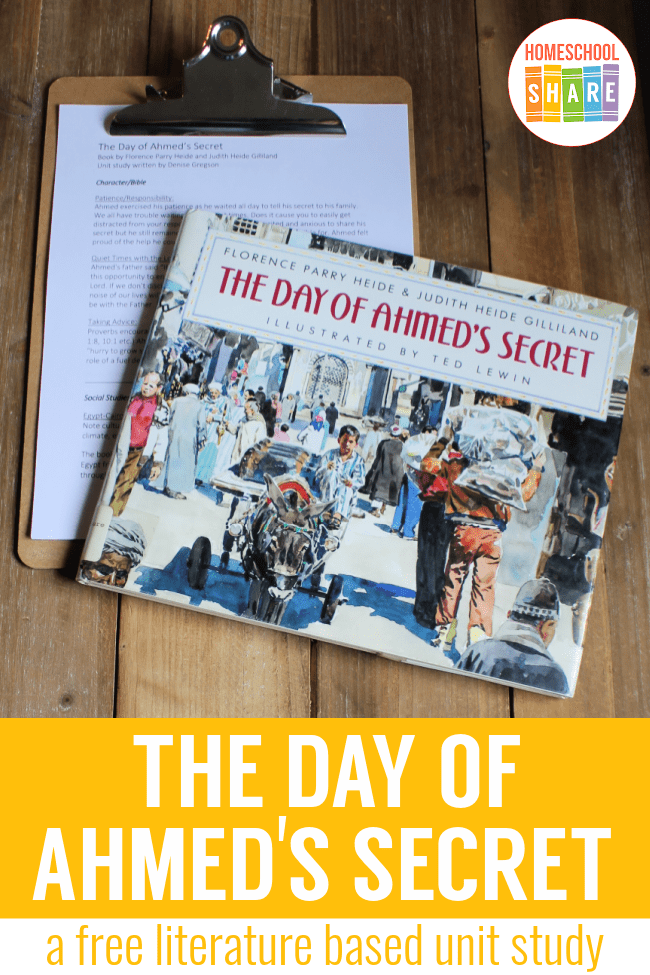
The Day of Ahmed's Secret
 

Author:  Florence Parry Heide and Judith Heide Gililand
Illustrator: Ted Lewin
Summary:  This story takes place on the busy streets of Cairo, where Ahmed is completing his daily duty of delivering cooking gas to customers. On this particular day, Ahmed is patiently waiting for his workday to end so that he can share a secret with his family -- namely that he has learned to write his name.
ISBN: 0688140238

Literature Based Unit written by Denise Gregson
 

Character/Bible

Patience/Responsibility:
Ahmed exercised his patience as he waited all day to tell his secret to his family. We all have trouble waiting for things at times. Does it cause you to easily get distracted from your responsibilities? Ahmed was excited and anxious to share his secret but he still remained faithful to the tasks he was responsible for. Ahmed felt proud of the help he could give his family and his family relied on him.

Quiet Times with the Lord:
Ahmed's father said “If there is no quiet time in your head it fills with noise”. Take this opportunity to encourage your child to begin to spend quiet time with the Lord. If we don't discipline ourselves to put aside the time, then the busyness and noise of our lives will crowd it out. Mark 1:35 says that even Jesus set aside time to be with the Father. How much more should we!?

Taking Advice:
Proverbs encourages us to listen to the advice of our father and mother. (Proverbs 1:8, 10:1 etc) Ahmed's father taught him to set aside time to be quiet and to “hurry to grow strong but not to grow old”. He also taught him how to fulfill the role of a fuel delivery boy. The bible calls one who listens to his father as wise.


Social Studies

Egypt-Cairo:
Note cultural differences in dress, names, language, transportation, architecture, climate etc.

The book refers to the great river – the Nile – which flows all the way through Egypt from the southern border to the Mediterranean Sea. In all the river stretches through nine different countries: Tanzania, Kenya, Zaire, Burundi, Rwanda, Ethiopia, Uganda, the Sudan and Egypt. It is the longest river in the world, flowing for 6650 km (4132 miles).

Also refers to the great desert – namely the Sahara desert which stretches across North Africa. Approximately 95-96% of the land in Egypt is considered to be desert.

Their city, Cairo, is referred to as the great city. Cairo is the capital of Egypt and the biggest city in Africa.

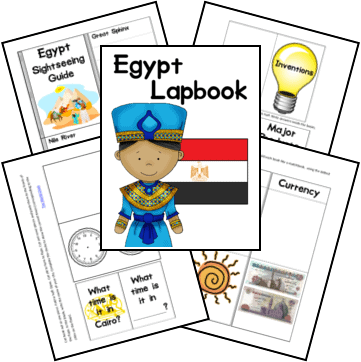
Flag of Egypt Minit Book

Architecture

Notice in the illustration with Ahmed having his time of quiet rest the light colored thick- walled buildings (to reflect the sun and keep cool). Also in this illustration the doorways are typical Islamic design; Notice the mosques in the final illustration as well.

More information and fun facts about Egypt

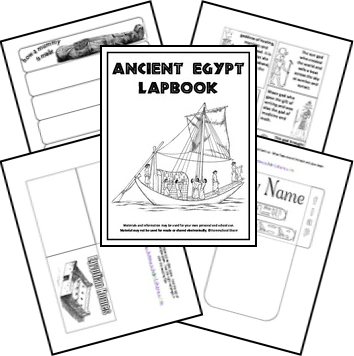
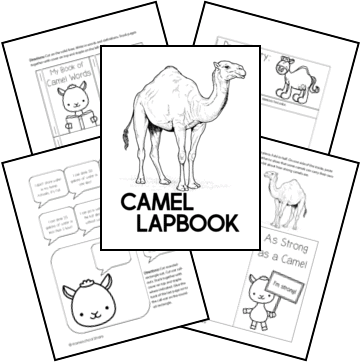
In the Hands of a Child- Africa Lapbook


Language Arts

Book Title:
Before you read the book the first time, ask your child to guess what Ahmed's secret could be. Everyone loves to learn secrets so the title may cause the reader to be curious enough to read the book. Notice how the illustration on the book cover stretches across the front and back.

Comprehension/Discussion Questions
-In what way is a secret like a friend?

-What did Ahmed mean when he said the secret was so loud?

-What did Ahmed's father mean to say “hurry to grow strong but not to grow old”?

-Why did he say that the desert stretches “as far as the wind”?

-Why is the camel called a “ship of the desert”? (Much like a ship passes through the ocean a camel is used for transportation across a vast “sea” of desert). “When walking, the camel moves both feet on one side of its body, then both feet on the other. This gait suggests the rolling motion of a boat, explaining the camel's 'ship of the desert' nickname”. *

Point of View
The story is told in the first person. Help your child find the first person personal pronouns (nominative: I, objective: me, possessive: my) that indicate it is told in the first person point of view.

Vocabulary:
Butagaz - a word used to refer to butane gas canisters used in gas stoves

Rosewater - water in which rose petals have been steeped (see further information on rosewater in science section)

Mingle – to bring together; mix

Caravan – a group of travelers journeying together through a desert

Onomatopoeia-
Review use of onomatopoeia with the use of “karink”

Languages -
Ahmed has written his name in Arabic, the official language of Egypt
Have your student's name translated into Arabic!

List making:
Make a list of all the noises in the city that Ahmed may have heard; if possible, use onomatopoetic words.

Field trip:
Take a trip to a city in your area and listen to the noises; Make a list of all the noises in your city. Remember to close your eyes in order to listen more carefully.  Use all your senses to contrast with the story, e.g. What differences do you see in the city you have visited compared to the things you observed in the story? What about the sense of smell – what smells did you smell? Review the book and determine what smells might Ahmed have smelled?


Science

Simple Machines:
The child delivering bread is using the rope as a pulley to save time and energy/work. Why can't Ahmed use a lever system for the gas canister?

Look for other pulleys in or around your home. Other examples of pulleys include: cranes, flag, sail on boat, curtain rod, mini-blinds.

Fuel:
Ahmed delivers bottled gas that is used for cooking. This is called “fuel”. A definition of fuel would be “something that is consumed in order to produce energy.” What other sources of fuel are used for cooking? Electricity, charcoal, wood, solar cooker. Discuss other things that require fuel – e.g. vehicles, lawn mowers and other motors powered by gasoline; Electric, gas, oil, wood, coal heating systems.

Does your student know what fuels our bodies?

Health:
Rosewater is believed to have numerous therapeutic uses, including healing of insect bites, eczema, dermatitis and eye irritation, or gargling. It is sometimes taken internally to cleanse the body.   You may want to discuss wellness in depth with your student (herbs vs. medicine, things you can do to prevent sickness, etc.).

Animal Kingdom-Camels:
Camels are specially designed (by God) for desert life

“Camels do not pant, and they perspire very little. Humans start to sweat when the outside temperature rises above the normal body temperature of 37¡C, but the camel has a unique body thermostat. It can raise its body temperature tolerance level as much as 6¡C before perspiring, thereby conserving body fluids and avoiding unnecessary water loss. No other mammal can do this. Because the camel's body temperature is often lower than air temperature, a group of resting camels will even avoid excessive heat by pressing against each other.

A camel's eyes are large, with a soft, doe-like expression. They are protected by a double row of long curly eyelashes that also help keep out sand and dust, while thick bushy eyebrows shield the eyes from the desert sun

Camels have broad, flat, leathery pads with two toes on each foot. When the camel places its foot on the ground the pads spread, preventing the foot from sinking into the sand.

A camel can go 5-7 days with little or no food and water, and can lose a quarter of its body weight without impairing its normal functions. These days, camels rely on man for their preferred food of dates, grass and grains such as wheat and oats, but a working camel traveling across an area where food is scarce can easily survive on thorny scrub or whatever it can find - bones, seeds, dried leaves, or even its owner's tent

Contrary to popular belief, a camel does not store water in its hump. It is in fact a mound of fatty tissue from which the animal draws energy when food is hard to find. When a camel uses its hump fat for sustenance, the mound becomes flabby and shrinks. If a camel draws too much fat, the small remaining lump will flop from it's upright position and hang down the camel's side. Food and a few days' rest will return the hump to its normal firm condition”

Why is the camel called a “ship of the desert”?
Much like a ship passes through the ocean a camel is used for transportation across a vast “sea” of desert.

“When walking, the camel moves both feet on one side of its body, then both feet on the other. This gait suggests the rolling motion of a boat, explaining the camel's 'ship of the desert' nickname”

On the page with the camel caravan, notice the height of the camels in contrast to the woman standing next to them.

* camel facts taken from: http://www.arab.net/camels/


Math

Counting:
Count the animals

Time:
For your older child, help them to understand what 1,000 years means - how many generations would comprise 1,000 years?

Estimation:
With your older student estimate how tall the camels might be by viewing the woman standing next to the camels in the illustration; you may want them to measure you then to guess about how much taller the camels are and add both numbers together.


Art

Medium:
Note that illustrator has used water colors

Contrasts/Details:
In the illustration on the page where Ahmed takes some quiet time, contrast the illustration on the left page with that on the right. The left-hand illustration shows the bustling city through the doorway, and the right-hand illustration shows Ahmed's peaceful reprieve.

Consider the contrast of the ancient architecture of the city now bustling with many sights and sounds.

Also in contrast the vigor of youth of Ahmed contrasted with the weariness of his dad who has no doubt worked hard and is passing the baton of hard work to his young son.

In the photo where he reveals his name on paper, Ahmed appears to be looking right at the reader who gets to share in excitement which is very apparent on his face. You, the reader, have been drawn in as you anticipate and finally observe the revealing of Ahmed's secret!

The illustrator has used a variety of viewpoints in her illustrations. Some have the subject on the left, some center, some right; some are bird's eye view, some close up etc.

Light:
In the illustration where Ahmed is sharing his secret with his family, what is the light source and where in the room is the light situated?


Materials and information on this website belong to the original composers. It may be used for your own personal and school use. 

Material may not be used for resale© 2005-07 HSS