Affiliate Disclaimer
We sometimes use affiliate links in our content. This won’t cost you anything, but it helps us to keep the site running. Thanks for your support.
A lonely bunny goes searching for Easter, where he hopes to find other bunnies. His quest takes him through the seasons, and once he finds spring, he finds the meaning of Easter.
This sweet story is worthy of a week of study, and we hope you will enjoy the lessons you find in The Bunny Who Found Easter unit study.
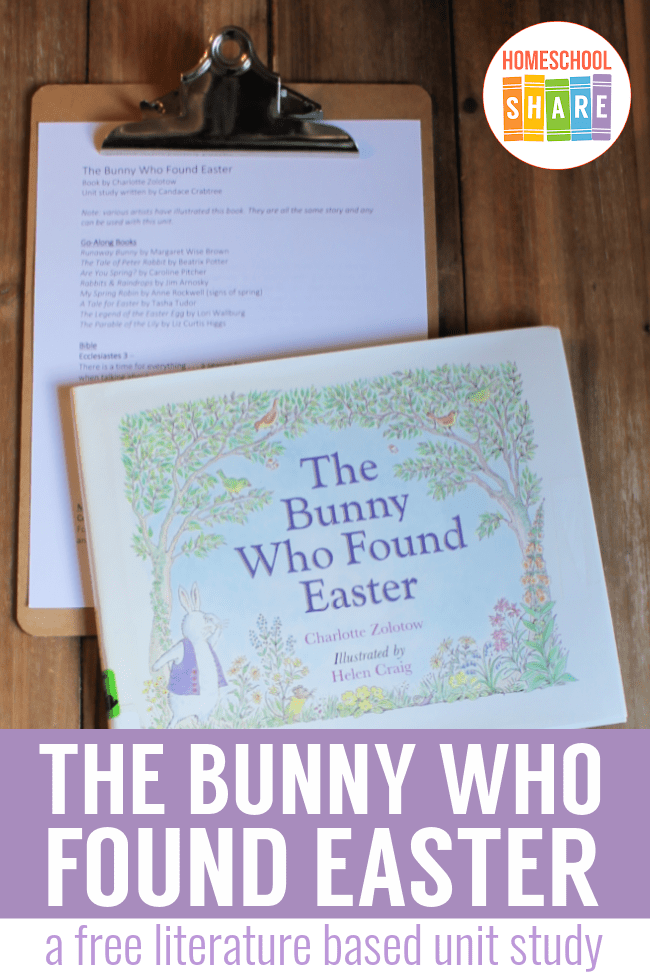
Thanks to Candace Crabtree for contributing this The Bunny Who Found Easter unit study to Homeschool Share.
The Bunny Who Found Easter Unit Study Lessons
Bible
Ecclesiastes 3
There is a time for everything . . . a season for everything. I like to use this verse when talking about seasons. You could use some (or as much as you wish) of this chapter for copywork and/or memorization.
Spring
Often times we hear spring compared to Jesus resurrection – things coming to life again after death! Discuss how Jesus resurrection gives us HOPE and makes us think of all things NEW. Read the Easter story from your Bible or from a children’s book. Discuss with your child how when Jesus died, all hope was lost. The people were weeping, the disciples did not know what to think about their beloved Jesus being gone. But, just like spring always comes, Jesus rose from the grave!
Math
Counting
For counting fun, look through the book and count all the different types of animals you see in this story.
Springtime Math
For springtime math, I always enjoy doing jellybean math! There are lots of things you can do with jellybeans, depending on your kids’ ages! Here are a few ideas: put in a jar and estimate how many jelly beans there are, count and see who was closest, line up by 5’s, 10’s and practice skip counting, sort by color, see which color has the most, see which color has the least, graph the sorted jellybeans.
Science
Animal Tracks
Look through this book and see if you can find animal tracks on any of the pages! What animal do you think made these tracks?
If you have an opportunity, go outside and pretend to be animal track detectives! Can you find any tracks? Can you determine who they belong to?
Seasons
First, see if your child can name the four seasons. Make a chart of the four seasons then flip through the book again and list on your chart every reference you see to each season. (Unit study download includes a craft idea for this lesson.)
Elm Tree
The bunny wakes up under an elm tree – look up what an elm tree looks like and learn a few of its characteristics. Do a search for an elm tree, and look at a picture of it. Maybe you can draw an elm tree in your nature journal!
Animals
There are many animals mentioned in this book – you could choose to study any of them more in depth. (Rabbit, trout, owl, bumblebee, sparrows, brown squirrels) In particular, with this book, you may wish to take a “rabbit trail” down the rabbit trail and learn more about rabbits!
Plants
There are also several plants named in this book. Maybe you can make a list of each plant named and try to find a picture of each for your nature journal.
Language Arts
Poetry
Here is a poem by Tom Robinson called Rabbit. I found this poem in the book, Favorite Poems Old and New. You can use this poem to memorize, for copywork or to have your child illustrate.
I’d like to run like a rabbit in hops
With occasional intermediate stops.
He is so cute when he lifts his ears
And looks around to see what he hears.
List Making
Make a list of all the animals from the story. An older student could put the list in alphabetical order.
Arts and Crafts
Drawing
The illustrator, Betty Peterson, has really neat illustrations in this book! See if you can use only black on white paper to draw a bunny like she has! You will only be drawing the outline and features, instead of coloring it in.
Crafts and Fun ideas
Make some bunny ears together and practice your hopping! Don’t forget to paint on a pink nose and possibly some whiskers!
Baking
To finish up your bunny unit, bake some bunny cupcakes together! There are lots of ideas online for these.
How to Get Started with The Bunny Who Found Easter Unit Study
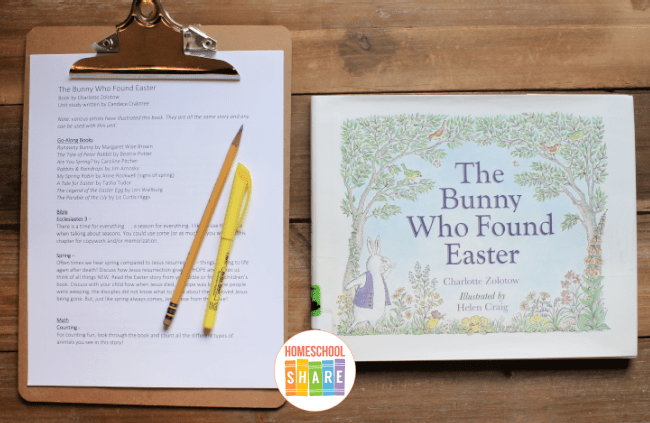
Follow these simple instructions to get started with the The Bunny Who Found Easter unit study.
- Buy a copy of the book, The Bunny Who Found Easter, or grab one from your local library.
- Print the The Bunny Who Found Easter unit study.
- Choose the lessons you want to use with your student (a highlighter works great for this).
- Enjoy a week of hopping-fun learning with your student.
Download Your The Bunny Who Found Easter Unit Study
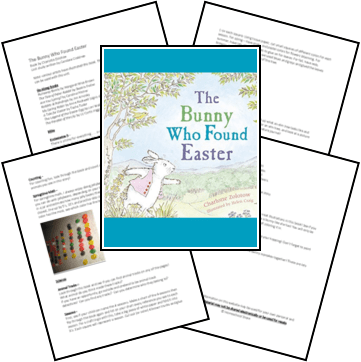
Simply click the image below to grab your free The Bunny Who Found Easter unit study.
More Rabbit Themed Resources
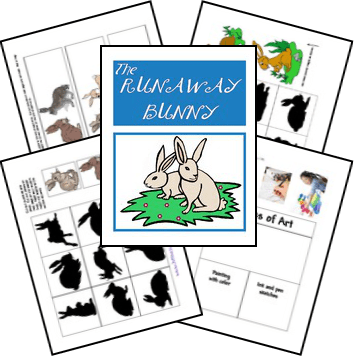
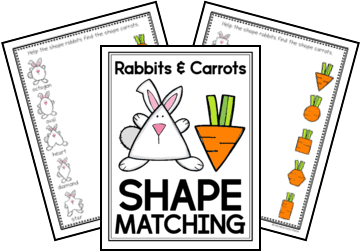
Find even more rabbit preschool activities!
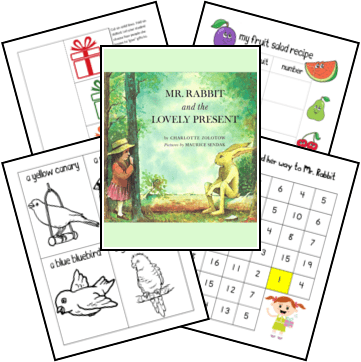
Unit Study & Printables