Affiliate Disclaimer
We sometimes use affiliate links in our content. This won’t cost you anything, but it helps us to keep the site running. Thanks for your support.
Read this class book and grab our free The Very Hungry Caterpillar printables to engage and delight your preschool or kindergarten student.
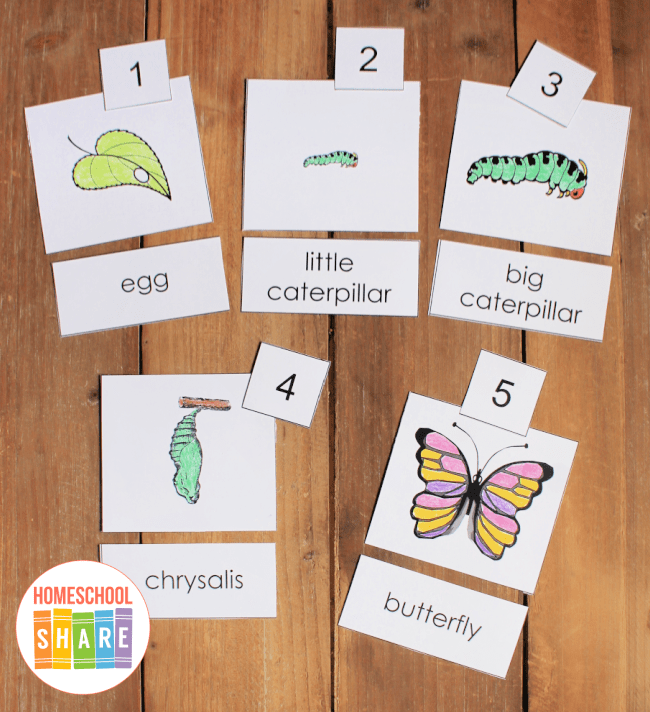
A small caterpillar emerges from an egg and begins eating everything in sight. Finally, it is no longer hungry and no longer small. The big, fat caterpillar builds a chrysalis around himself and finally emerges as a beautiful butterfly.
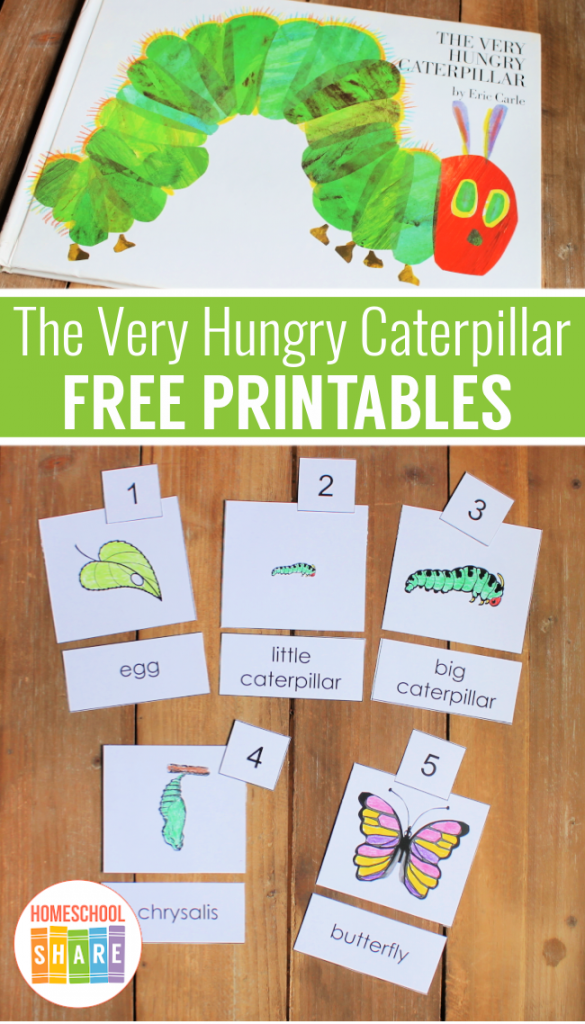
Thanks to This Reading Mama for creating this The Very Hungry Caterpillar Printable Activity Pack for Homeschool Share.
The Very Hungry Caterpillar Printables and Activities
In this printable pack, you’ll find these lessons and activities for The Very Hungry Caterpillar:
Days of the Week
This book lends itself as the perfect opportunity for teaching days of the week! You can use Eric Carle’s Today is Monday book to sing the days of
the week. You can also use this fun song:
Days of the Week
to the tune of the Adams Family theme song
Days of the week (snap, snap)
Days of the week (snap, snap)
Days of the week, days of the week, days of the week (snap, snap)
There’s Sunday and there’s Monday
There’s Tuesday and there’s Wednesday
There’s Thursday and there’s Friday
And then there’s Saturday
Days of the week (snap, snap)
Days of the week (snap, snap)
Days of the week, days of the week, days of the week (snap, snap)
Use the Days of the Week Cards printable to practice putting the days of the week in order. You will also use them in the next lesson.
Sequencing and Counting
After reading the story, discuss the word sequence. Ask your student, what day did the story start? What day did it end? What happened on Monday? Ask your student to put the days of the week cards in order. Then, ask him to match the days of the week with the food that was eaten on that day. (For a younger child, you may just want to put the foods in order). You can also use the food for counting exercises.
If your student is writing, you may want to have him complete this sentence “On________________, he ate______________, but he was still hungry.”
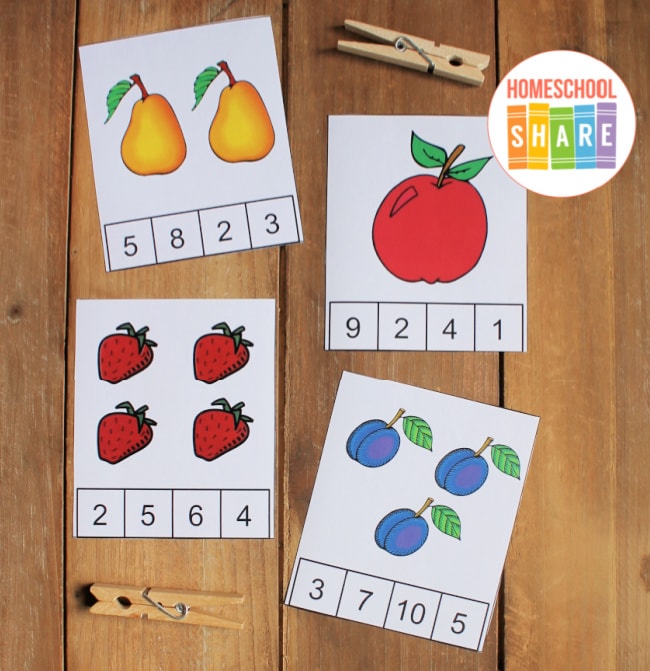
Use The Very Hungry Caterpillar Count and Clip cards for more counting fun!
The Very Hungry Caterpillar Patterns
Make caterpillar patterns with the printables provided.
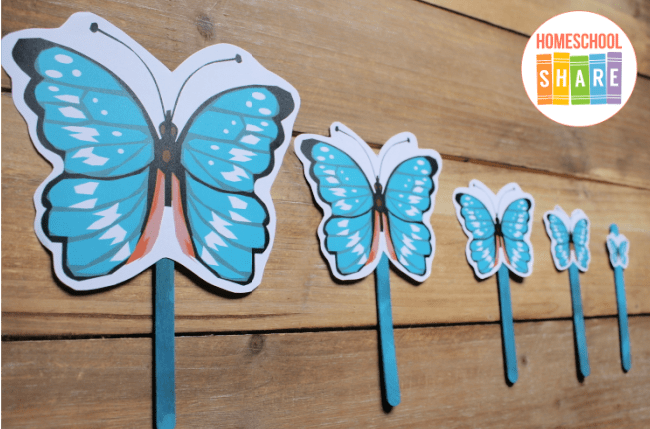
Size Sequencing with The Very Hungry Caterpillar
Ask your student to put the caterpillars and butterflies in order according to size. First: smallest to largest
Second: largest to smallest
Listmaking
Let your student make a list of all the things the caterpillar ate.
If you want, make a picnic lunch out of the same items; just be sure not to get a stomachache!
- Apple
- Pear
- Plums
- Strawberries
- Oranges
- Chocolate Cake
- Ice Cream
- Pickle
- Swiss Cheese
- Salami
- Lollipop
- Cherry Pie
- Sausage
- Cupcake
- Watermelon
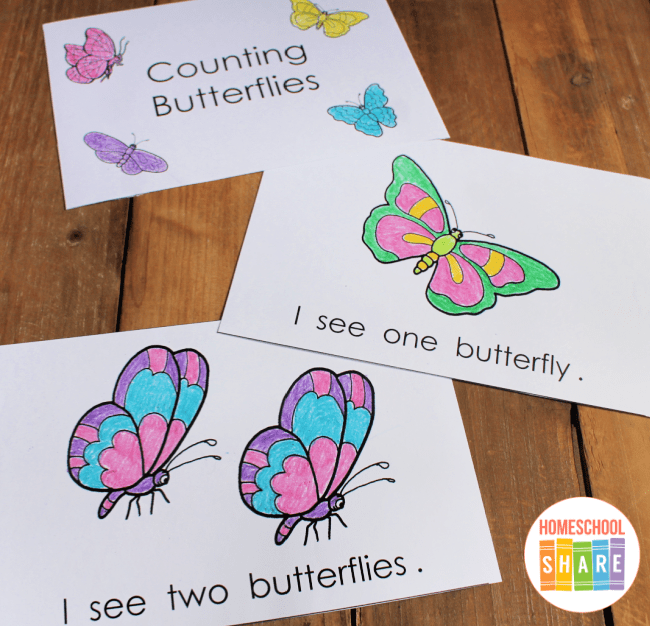
Counting Butterflies Emergent Reader
Your student can make and read her own count and color book with the printable Counting Butterflies Emergent Reader.
Enjoy coloring and counting together!
Healthy and Unhealthy Foods
Ask your student if she thinks the hungry caterpillar ate healthy foods or unhealthy foods. What makes foods healthy or unhealthy?
Fruits and vegetables are loaded with vitamins and other good stuff for us! We should make sure to eat plenty of fruit and plenty of vegetables!
Nutritionists all agree that refined sweeteners (sugar) and refined grains (white flour) are not good for us, so things like pies, cakes, and candies should be limited or avoided.
Sort the hungry caterpillar printable food cards into two groups: healthy and unhealthy.
The Life Cycle of the Butterfly Sequencing Cards
The Very Hungry Caterpillar is a great book for teaching the life cycle of the butterfly.
Using the cards provided, discuss the life cycle of the butterfly with your student.
Caterpillar Bug Jug
Prepare a caterpillar home using a small fish tank, a shoebox or milk carton with a hole cut for viewing. Cover the hole with hosiery. Place a small twig or two in the home for it to use during the pupation phase of its life. Take your student for a caterpillar hunt. Look for caterpillars on the leaves and stems of plants. For food, take a supply of leaves from the plant on which you found the caterpillar. Sprinkle the leaves with a little water and keep them in airtight containers in the refrigerator. Or take several small branches of the leaves and place them in water.
Drama: Life Cycle of the Butterfly
Act out the life cycle of a butterfly. My kids especially liked acting it out (their idea) with blankets for cocoons and wings.
To access all of the free The Very Hungry Caterpillar printables, lessons, and activities, subscribe to Homeschool Share’s email list using the form in this post.
How to Get Started with The Very Hungry Caterpillar Free Printables
Follow these simple instructions to get started with the free printables.
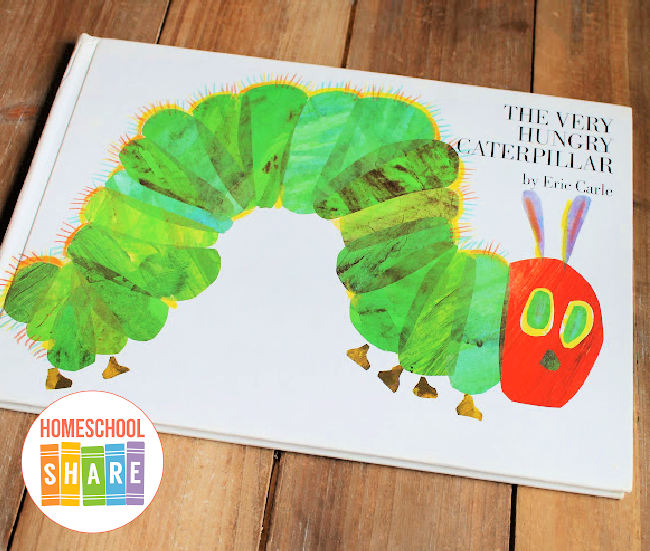
- Buy or borrow The Very Hungry Caterpillar by Eric Carle.
- Choose and prepare the lessons and printables you want to use with your student.
- Enjoy a week of reading and learning with The Very Hungry Caterpillar!
Get Your The Very Hungry Caterpillar Free Printables
Use the form below to subscribe to Homeschool Share’s newsletter in order to receive your free set of printables. If you are already subscribed, just enter your email address again and the printables will be delivered to your inbox.
More Eric Carle Insect Unit Studies, Lapbooks, and Printables
Are you looking for more printables for Eric Carle’s insect themed books?
Try this Very Hungry Caterpillar Lapbook.
We have even more! Try these (and yes, we know a spider is not technically an insect, but we still wanted to include him since he is a bug)!