Google
 
Free Houses and Homes Unit Lesson Plans

Houses and Homes

Unit Prepared Kimberly McDaniel, Celia, and Wende


Core Books Need for Unit
Houses and Homes Around the World by Josephine Karavasil
We Were Tired of Living in a House by Liesel Skorpon
A House is a House for Me by Mary Ann Hoberman
Let's Go Home: The Wonderful Things About a House by Cynthia Rylant

Possible Library List
House that Jack Built – any classic version
The House that Mack Built by Susanna Leonard Hill
The Napping House by Audrey Wood
Who's Coming to Our House by Ashly State

Animal Homes
Whose House is This  By Elizabeth George
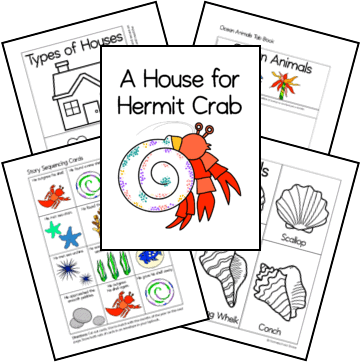
A House for Hermit Crab by Eric Carle
Best Nest by P.D. Eastman
Magic School Bus Hops Home: Animal Habitats
Animals, Animals
by Eric Carle

Three Little Pigs Literature Tie-in
The Three Little Pigs—any classic version of the story
The Three Pigs by Dave Wiesner
The Three Javilinas (desert, coyote, tumbleweed, sticks, adobe)
The Three Little Cajun Pigs
The Three Hawaiian Pigs and Magic Shark
The Three Little Wolves and the Big Bad Pig
True Story of the Three Little Pigs

Other Literature Tie-In
Alice in Wonderland
The Story of Ferdinand


Lessons Specific to the Core Books


Houses and Homes Around the World
by Josephine Karavasil

Summary:   Brief text and photographs introduce many different types of homes of people around the world.

Social Studies

Geography –
In this book you will find houses from all over the world. Look at the world map in the back of the book and locate each country and name the continent each is in. Name the seven continents – Asia, Africa, Australia, Antarctica, North America, South America, and Europe. Japan, Hong Kong, Singapore, and India are all located in Asia.  Brazil and Peru are located in South America. Charleston, USA is located in North America. Germany is located in Europe. Tunisia and Somalia are part of Africa. And Brisbane is in Australia. Did you notice what continent there are no houses shown from? There are no houses featured from Antarctica, because it is so cold there that nobody lives there permanently!

Science

Building Materials –
When people are building their houses they use materials that are native to their areas. You won’t find bamboo houses in Charleston because bamboo is not grown there. As you read about each of the houses, identify the building materials for each one and where they come from.

Coloring page at First School

Language Arts

Comprehension –

1.    Why wouldn’t it be a good idea to build a house of bricks in Japan? (Because of earthquakes)

2.    What is a houseboat in Hong Kong called? (Junk or sampan)

3.    What are homes in tall high-rises called? (Apartments)

4.    What do people in poor countries such as India build their houses out of? (Mud and sticks)

5.    What is a poor, dirty section of a city called? (Slum)

6.    What are the tall green grasses used to build houses near water called? (Rushes)

7.    Why won’t the houses in Australia get flooded? (Because they are built high off the ground)

8.    Which people in the book moved their houses from place to place? (Somali)

Thought Questions –
Which house in this book do you think you would most enjoy living in? Why? Which house do you think you would least enjoy living in? Why?

Art
Build a model of a house with materials like the ones shown in the book. 


We Were Tired of Living in a House
by Liesel Skorpon

Summary:  Tired of living in a house, four children, a cat, and a dog pack and move to a tree, a raft, a cave, and finally the seashore, enjoying the advantages of each abode until they discover its disadvantages.
Social Studies

Character (Contentment) –
The children in the story were not content living in their house. They thought it would be better living somewhere else. What did they find out? They found that while a tree is a good place for birds to live, a pond is perfect for frogs, and a cave is just right for bears, the place best for children is in their house. It is important to be happy where we are. 

Science

Animal Homes –
An animal needs a home that will give it shelter and is close to its food and water. Where did the speckled bird live? It lived in a tree, which provided shade and cover, a sturdy nesting spot, and most likely some bugs to eat. Where did the dragonfly and frog live? These animals are best suited to live at a pond, where they will find everything they need to survive. And who lived in the cave? The bears did, where they were close to yummy blackberries and a brook to drink from. Can you look at the pictures of the sea to see who lives there? There are starfish and shellfish living at the sea. Each of the animals in the story live in a home that is perfect for them. 

Language Arts

Comprehension –
Looking at the first two-page spread of the story, describe what is going on. Do the children look happy, or do they look like they have bad attitudes? What do you think the parents are upset about? Could it be the messes and drawing on the wall? Now look at the last two-page spread and compare the beginning of the story to the end. The children have happy faces, and it even looks like the dog is smiling. The parents are waiting with open arms. Why do you think the parents are so happy? What do you think happens after the children and their parents go back inside the house?

Thought Question –
What do you like about your house? What don’t you like about your house? Where would you live if you were tired of living in a house?

Memory Game –
Each time the children left a home they took something with them and added it to their collection. Can you remember everything they collected? Play a game like “Pack Your Bags”, going around and saying, “In my bag I packed…” Each person has to remember what was packed, and then adds one more thing. See how many items you can remember to pack before somebody forgets!

Math

Counting -
How many children were there in the story? (4)
How many homes did they visit? (5, including their own)

Art

Color Names -
The children packed up leaves of scarlet and gold. Do you know what color scarlet is? Look for scarlet in your crayon box, as well as gold. Draw or trace some leaves and color them shades of scarlet and gold.


A House is a House for Me
by Mary Ann Hoberman

Summary:  A warm, rollicking rhyme about houses—some familiar, some surprising—with colorfully detailed pictures. 

Prior to reading the book, ask your student what kind of homes can he think of?

Science -- Animal Homes
Discuss the different types of homes that animals make for themselves.  Discuss why animals need homes.   Use clip art or pictures cut from magazines to create a memory (matching) game.  Have your child match the animal to its kind of home.   (Look for pictures that feature a web, tree, barn, kennel, hive, cave, ocean, forest, river, rain forest, shells, underground, etc)

Some possible vocabulary words to introduce while discussing animal homes: hibernation, burrow, dam, predator

Here is an Animal Homes mini book from DLTK

Kinds of Homes:   Now that your student has learned about many different kinds of homes, ask him where he might find homes like a tents  (Afgan nomads),  igloo (cold climate),  castle, tepee, wigwam, tree house, mobile house, house boats, apartments, etc

First School has several coloring pages of various kinds of homes

Language Arts – Literature Tie-in:  Alice in Wonderland
Near the middle of the book is a scene from Alice in Wonderland.  Serve some tea and read the story aloud to your child. 

Language Arts – Literature Tie-in:   The Story of Ferdinand
Near the end of the book is an illustration of a boy reading The Story of Ferdinand.  This classic story has delighted many children.  Read the story aloud to your child. 


Let's Go Home: The Wonderful Things About a House
by Cynthia Rylant

Summary:   There are many kinds of houses in the world, from little cottages to big mansions, from farmhouses to bungalows.  But no matter the kind of house, it is the living inside that makes it wonderful.

Social Studies
Talk about the different parts of the house.   The house in the book shows a porch, a living room, kitchen, bathroom, bedroom, and an attic.

Thought Questions --
Are all houses alike?

What is different about your home than the home in this book?

Are there any rooms that you have a different name for?  (e.g., Some people call their main living room area a family room,  a keeping room, or a den.)

What is your favorite part of your house?  What do you like to do there?

Art – Marionettes / Jumping Jacks
Turn to the page that shows the living room with the two ladies sewing.   What are they making?  Look around the the living room...what do you see on the walls and sitting around the room?   It looks like they are making another toy, this time a zebra.  Notice the ones on the wall, are hanging by strings.  Do you think the toy needs that many strings to hold it up there?   No, the dolls are marionettes!

A marionette is a doll whose arms and legs can be individually controlled through the use of strings.   (If you have The Sound of Music  movie, find the spot where they put on the play The Lonely Little Goat Herder and let your child watch.)   Perhaps your child would be interested in making a simple marionette called a “Jumping Jack.”   With a jumping jack, you cannot control each individual arm and leg, instead the string raises or lowers all the arms and legs at the same time.  

This link shows you what a jumping jack looks like and if you place your mouse over it, it “jumps” as if someone pulled its strings.

Here are some websites that show you how to make a jumping jack.

Museum of Childhood

Martha Stewart
(this site is excellent!!  It gives the idea of making a puppet theatre and the patterns for the jumping jacks are animal shaped)

Math:   Count the number of rooms in the house in the book.  Count the number of rooms in your own house.   Which has more?

Just for Fun:   There is one particular toy that is shown in almost every picture of the inside of the house.  Study the pictures carefully.  Can your student find it? 

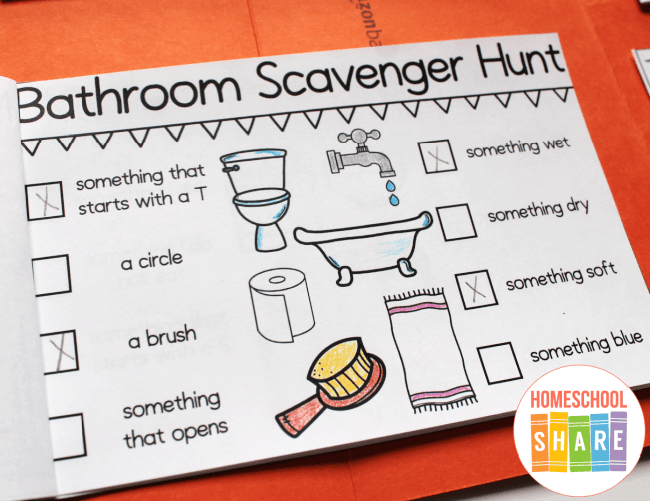
Just for Fun:  Create a scavenger hunt for things in each room of the house

Bunny Trail:  could lead to a unit or discussion of the 5 senses...what do you see, hear, smell, taste, feel in your home?


General Lessons about Houses and Homes


SOCIAL STUDIES

Neighborhoods and Communities
Many people live in a house, next to other houses, with sidewalks and a street out front. A neighborhood is a group of people living within a certain range. The people that live together in a neighborhood are neighbors. Neighbors can do different things together, such as play at the neighborhood park, have block parties, or help each other in a  time of need.

Familiarize your children with your neighborhood. Do they know their street and town names? Take a walk or a drive around your neighborhood, with children noting street signs, pointing out familiar sights, and soaking in the surroundings. Discuss with your child what his neighborhood looks like, and have him draw a picture of it if desired.  Ask if it is similar to any neighborhoods he has read about.

Neighborhoods are part of bigger communities, called towns or cities, where people live and work together. The people of the town will go to the same stores, eat at the same restaurants, and watch the same parades. There are many people that work together to make the community function smoothly, called community helpers, such as the mayor, doctors, police and firefighters, as well as the storeowners, transportation workers, veterinarians, and other workers.

Towns and cities are part of yet bigger communities called counties. If you watch the weather report on the news, you will usually see a map divided by counties. Help your child to point out the county you
live in. Counties are part of the larger state communities. The states are then part of the country of United States of America, which is just a part of the continent of North America, and the large
planet called Earth.

Discuss with your child his place in the large community of planet Earth. Review these facts with your child.

I live in a family. My family name is _________________________.  (Child's last name)
I live in a house. It is at ________________________ (street address, e.g.: 123 Green Street)
I live in a town/city. It is called ____________________________.
I live in a county. It is called __________________________.
I live in a state. It is called ___________________________.
I live in a country. It is called ___________________________.
I live on a continent. It is called ___________________________.
I live on a planet. It is called __________________

More information on Community Helpers

Human Relationships- Working Together in Our Home
Have your student help around the home.  Explain to your student how pleasing it is to have a neat orderly home.  Explain that everyone who lives in a home needs to help with household chores.  Let him make hamburgers, help set table, fold laundry, etc.  Praise him whenever he steps in to help around the home.

LANGUAGE ARTS

Writing
Discuss why it is important that we know our address and our phone number(s).  Practice address and phone number and why we need to know them

Literature Tie-in:  The Three Little Pigs
Look at the different versions and discuss the different homes.  Build the three basic houses on paper....straws, toothpicks and red paper bricks.

Games : Huff, Puff, FREEZE! :  Huff and Puff to blow down kids, then yell freeze.    Pig Toss: Make a pig face on large cardboard, cut out mouth and toss bean bags to “feed” him.
 

SCIENCE

Health

Talk about home safety

            ~hot stove, sharp objects, etc

            ~not opening door to strangers or talking to strangers unless a parent is around

            ~keeping doors locked

            ~staying in your yard

            ~fire safety: fire escape plan

            ~first aid
 

MATH

Shape Hunt:
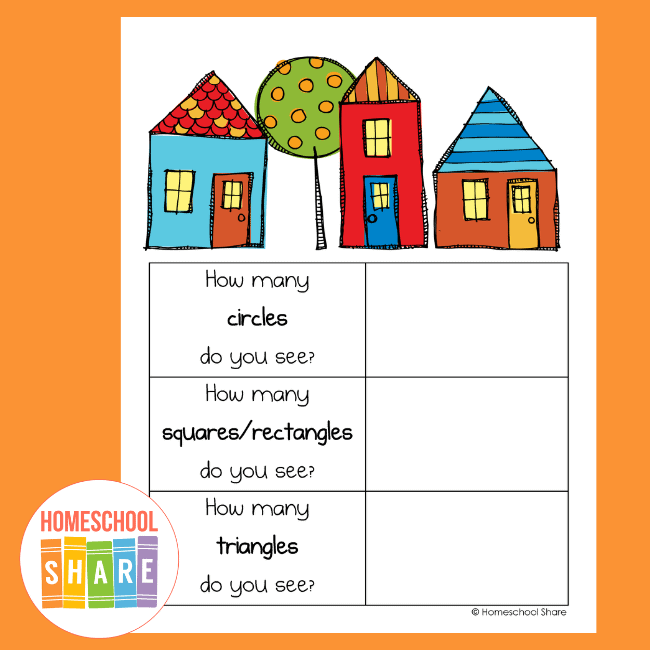
Find squares (pot holder, window panes etc), circles, rectangles, and other shapes in the home      

Counting
Count the items in your home-- doors, windows, sinks (make a chart and compare what you have more of).

ART
Build an igloo out of marshmallows or sugar cubes.   Make a teepee from construction paper.  Make a log home from Lincoln Logs. 


BIBLE

Helping Others
Trace hands and cut out.  Let child put hands on things he helps do (laundry, dishwasher, making up bed, toy box etc).  Also could give to family or friends with as a coupon to help out.

Serving God
Who do we serve?  Should we always do our best?

Memory Verse
Col 3:23-24  “We are helpers.”  Craft: Cover hands with paint and put on paper with verse at bottom and helping hands at the top.

Bible Stories

~Rebbecca tending camels (Genesis 24)

~Jesus (washing disciples feet, healing, teaching...)

~Good Samaritan

~Ruth

Additional Bible Verses
Galatians 5:13b, Philippians 2:4 (read 2:3-15), 1 Peter 4:10-11

PHYSICAL EDUCATION
Hopscotch, hula hoops  (fun that also begins with the letter “H”)

JUST FOR FUN
Set up a tent in your living room or outside.


Materials and information on this website belong to the original composers. It may be used for your own personal and school use. 

Material may not be used for resale © 2005-07 HSS