| about us |
what's new
|
unit studies
|
unit study helps |
hss resources
|
fiar resources | indexes | lapbooking |
A Day's Work
Author: Eve Bunting
Illustrator: Ronald Himler
ISBN:0395845181
Summary:
When his grandfather arrives from Mexico, Francisco helps him find work as a
gardener even though he is really a carpenter. When they mistakenly pull all the
plants but leave the weeds, Abuelo, upset at Francisco's lie, refuses to accept
payment until the job is done correctly.
Unit Study Prepared by Mary Shackleford along with lesson extensions by Ami and
Celia
Bible
Character Study: Honesty
Francisco wants to help his grandfather get a job so badly that he tells a
nursery business owner that his grandfather is a very good gardener even though
his grandfather knows nothing about gardening or plants. This lie leads to them
pulling the wrong plants and his grandfather insisting that they work for free
the next day to pull the weeds and replant the ones they had mistakenly pulled.
Francisco learns the importance of honesty.
Show examples of people in the Bible who lied and the consequences of the lies.
Abraham and Sarah Gen. 12: 10-20 Abraham told Sarah to say she was his sister because he was afraid the Egyptians might kill him and take Sarah because she was so beautiful. Pharaoh takes Sarah into his house and is warned by God to return her to Abraham untouched or he and his family would die. Pharaoh returns Sarah but tells Abraham to leave their land.
Jacob and Esau – Gen 27 Jacob has to leave home to escape Esau's anger after deceiving Isaac into thinking he was Esau and receiving the blessing meant for Esau. He had to live in a foreign land for many years away from his family.
Ananias and Sapphira - Acts
5:1-11 Ananias and Sapphira were struck dead by God for saying they were giving
all they had gotten for selling some of their land and really keeping some back
for themselves. There was nothing wrong with only giving some of the money, it
was theirs to give, but they claimed to be giving the whole amount.
Social Studies
Geography – California: Francisco's
family lives in California. Help your child find California on the map.
California is one of the three Pacific States of the continental US, which also
includes Oregon and Washington. Point out the Pacific Ocean next to it on the
map. It is one of our largest states (only Alaska and Texas are bigger).
Where is California?
State Bird/State Flower Coloring Page
Here are some websites to gather information for your California notebook or lapbook:
Learn more about California, including the state flower, etc
Learn more about the Pacific States, including a map
http://www.50states.com/california.htm
Use the
State Animals site to print out various notebook pages (such as state flower,
state flag, etc.) for your binder-style notebook
Possible Lapbook Cover
In the Hands of a Child California Lapbook
Geography – Mexico: Francisco's grandfather is originally from Mexico and only speaks Spanish. Help your student find Mexico on the map....tell him it is south of California (where Francisco lived) and see if he can find it on his own. Stress that Mexico is a country just the United States is a country. Mexico has 32 states, whereas America has 50. The people that live in Mexico speak Spanish. The country of Spain (in Europe) once owned Mexico. When the Mexican people say the name of their country they say MAY-he-coe. Perhaps your student would like to learn some Spanish this week! (See Language Arts lesson)
You may wish to have your child start/continue a Country Notebook/Binder, adding information as you learn about new countries. You could also do a lapbook for each country.
Here are some websites to gather information for your notebook or lapbook:
http://www.abcteach.com/directory/theme_units/social_studies/mexico/
Learn more about Mexico at Enchanted Learning's Zoom School, including animals, history, and Spanish
http://www.apples4theteacher.com/holidays/cinco-de-mayo/wordfinds/mexico-culture-wordsearch.html – fun work search game to learn Mexican words and meanings.
http://www.yale.edu/ynhti/curriculum/units/1997/1/97.01.04.x.html – neat unit on Mexico with crafts for sombreros, traditional clothing, food, etc.
Occupations: Gardener
A gardener can mean a person who just likes to plant fruit, vegetables, and/or
flowers around his house or a person who does something similar for a living
(for payment). Francisco very much wanted his grandfather to have job, and so
he lies to the owner about his grandfather being a great gardener. Why is this
a problem?
Well, as you saw in the story, they ended up pulling up the wrong plants!
Gardeners need to know the differences between unwanted plants and desired
plants. A gardener needs to know about the different things he wants to
grow....whether the plant needs sunlight or prefers shade to grow, whether it
gets 6 inches tall or 3 feet tall (wouldn't do any good to plant the little
plants behind the tall ones!), etc. They also need to know about the soil:
does it have too much clay, too much sand, not enough nutrients, etc. It is
also important for gardeners to know what insects harm which plants and how to
prevent or get rid of them.
Activities: If you know a
gardener, whether a hobby gardener or a professional gardener, arrange a visit
with him and let him discuss what he does with your child. Give your child an
opportunity to be a gardener! Plant a small vegetable garden or some flowers
(even if only in your windowsill!). Watch an episode of the
Victory Garden
or Smart Gardening
on PBS or a similar program.
For more activities, you might try Kids Garden:
The Anytime, Anyplace Guide to Sowing & Growing Fun (A Williamson Kids
Can! Book) by Avery Hart and Paul Mantell.
Occupations: Carpenter
A carpenter is someone who works with wood to make things like houses,
furniture, etc. A carpenter needs to know what kind wood works best for his
project (some woods are "soft," others "hard"). He needs to be able to draw
plans and read them. They also need to be able to do all kinds of math. There
are also many tools for a carpenter to use.
Activities: If you have the
opportunity, visit a furniture-maker's shop or watch carpenters build a house.
Go through your own house and have your child identify things that carpenter
can make. Watch an episode of the
New Yankee Workshop on PBS or
another similar program. Also, the
Woodwright's Shop is
particularly interesting as he uses no modern tools!
You may wish to also get the book A Carpenter
by Gail Gibbons.
Human Relationships: Grandfathers
Discuss the
special relationship between children and their grandfathers. Francisco's
grandfather lived with him. Would your child like his grandparents to live with
him? Why (or why not)? What lesson did Francisco's grandfather teach him?
What lessons can your student learn from his own grandparents? (maybe
things they have taught them through stories/memories, direct words, or just by
the lives they have lived). (Focus on the positives here as we are to
honor our parents!)
Character Study: Integrity
Integrity is defined as a firm adherence to a code of moral values.
What are moral values? Discuss with your child the morals that are valued
in your own home. Integrity is having the will power to put those values
into practice and to carry them out regardless of one's circumstances!
Can you think of a time that your student demonstrated integrity? Discuss
it. How did Francisco's grandfather demonstrate integrity? Remind
your student of the passage where Abuelo says, "`We do not lie for work,.' He
tells Francisco that they will return the next day to rectify their mistake for
no extra pay. Abuelo had stood strong on a moral he believed in--
honesty-- and that proves his integrity.
Human Relationships: Satisfaction in a Job Well Done
Re-read page 20 with your student and discuss the benefits to doing a job
right. What jobs does your student have to complete each day (get dressed?
make bed? schoolwork? other chores?). We feel better (and
often life becomes easier!) when we do things the right way the first time.
Then, we can be satisfied in a job well done!
Science
Botany: Plants
Francisco and his grandfather get a job weeding
an area of new plants. They must work outside in the hot summer sun and end up
pulling the wrong ones because they didn't know the difference between the
flowers and the weeds.
Plants provide food, clothes, medicine, shelter, and even the oxygen we breathe. Plants produce their own food and in turn become food for people and animals. Each part of a plant has a specific job. Roots and rootlets (tiny root hairs) take in water and minerals from under the solid, up through the roots into the plant stem/tree trunk.
The stem/trunk is like a straw drawing the water and nutrients up from the roots to the leaves.
The leaves are the food factories. They absorb carbon dioxide from the air and trap energy from the sunlight. Through the process of photosynthesis the carbon dioxide and energy are made into sugar. Oxygen is released into the air during this process.
Pull out a small section of grass
with its roots and look at the tiny root hairs, roots, stem and leaves. Make a
minit book about plant parts to include in your lapbook or label picture of parts of a plant.
Put a stalk of celery into a
glass of water and food coloring. Check an hour or so to see the water being
pulled up the stalk.
Botany: Weeds
What is a weed? Here are a few different definitions:
1.
any plant
that crowds out cultivated plants
2. a plant growing in a spot where it is not wanted
3. uninvited and usually unattractive plant that surfaces in gardens
Go outside with your student and see if you can find some weeds. You
may even want to use take this as an opportunity to teach your student what you
consider weeds in your flower bed (or vegetable garden) and have him spend some
time helping you weed the garden (but make sure he knows that he probably won't
be getting $60!). If you don't have a garden or area that needs weeded,
volunteer to weed your neighbor's or relative's garden this week.
Health: Hot Weather
Precautions
Re-read page 14 of the story before preceding with this lesson.
When it is really hot outside people must take extra care. There are three illnesses/injuries that can occur from heat: heat stroke, heat exhaustion, and heat cramps.
Heatstroke occurs when the body's heat
regulating system breaks down under stress and sweating stops. Heat stroke is a
medical emergency! Unless the victim receives quick treatment, death can occur.
Symptoms include: No sweating (or the opposite-- victim may be sweating profusely),
high body
temperature (105 degrees or more), hot, dry, flushed skin, confused, delirious
behavior, loss of consciousness or the victim may fall into a coma.
Heat Exhaustion is a serious disorder that develops
when the body loses more fluid (through sweating) than it is taking in (by
drinking). Symptoms
include-- sweating (more than normal), feeling weak, clammy skin, dizziness,
pale or flushed face, and nausea.
Heat Cramps (or heat stress) tend
to attack the muscles that do the hardest work, especially when it is hot.
Heat stress can alter your coordination, lessen your
concentration, reduce strength and alertness, and make you irritable.
Four Ways to Avoid Heat Stress:
First allow
your body to adjust to the heat naturally. You can do this by gradually
increasing the time you spend in the heat little by little till you are used to
working in the heat. Second,
drink lots of water! Your
body can lose as much as three gallons of fluid a day while working in hot,
humid weather. Third, unless you have a medical condition that prohibits it
(high blood pressure, heart problems or circulatory ailments) add a small amount
of salt to your diet to help your body retain water. Fourth, eat
lightly. Fatty
foods are hard to digest and hot weather makes them even harder to digest.
Light, nutritious meals are easier to digest and therefore easier on your
body in the heat.
Muscular System: Sore Muscles
The story mentions sore muscles
on page 18.
Did your student know that she has about 600 muscles?! All of these
muscles can be classified as either voluntary or
involuntary. Voluntary muscles are muscles you can control allowing you to run,
jump, write, talk, etc. Involuntary muscles that work with out you thinking
about it-- your heart beating, lungs breathing, stomach muscles, etc.
Muscles usually work in pairs – when one stretches out and gets longer the other flexes or bends up and gets shorter.
Muscles can get sore for several reasons overworking muscles that are not used to being used much, not enough water in the body (dehydration), or if one gets a "charley horse"-- muscles are being kept in a flexed position too long and they get stiff.
Additional Websites for Muscles
Muscle Vocabulary
Prepared Sheet
Magic School Bus activity “Bones, Joints, and Muscles”
Language Arts
Point of View: First Person
The story is told from Francisco's point of view, with his thoughts and
feelings. Discuss how the story would be different from the grandfather's point
of view. For older students have them write the story from the grandfather's
point of view.
Foreign Language: Bilingualism
Francisco's grandfather only speaks Spanish, but Francisco speaks Spanish
and English. When a person can speak two languages, we say that they are
bilingual. Does your student know anyone who speaks more than one
language? Is your student working towards becoming bilingual?
If you want to introduce the idea of foreign language, here are some simple
Spanish words for your student to learn this week:
Colors
blue- azul
brown- marrón
green- verde
purple- morado
pink- rosa
yellow- amarillo
red- rojo
white- blanco
black- negro
Count to ten
uno
dos
tres
cuatro
cinco
seis
siete
ocho
nueve
diez
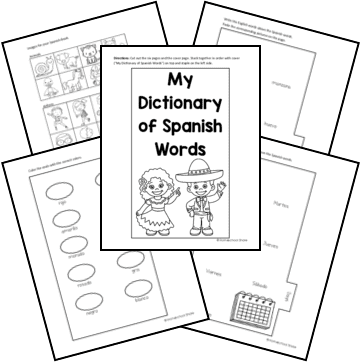
Spanish Word
Book #1
Spanish Word
Book #2
English/Spanish
Body Coloring Book
The
Family in Spanish (Print-Out)
Spanish
Color Word Dominoes
Spanish Number
Dominoes
Spanish
Shape Dominoes
Match
Spanish Words and Pictures
If you are lapbooking, make a minit book of Spanish words with small
illustrations done by your student. The links and word lists noted above
should be helpful.
Listmaking
Have your student make a list of all the gardening terms he can think of
including plants, tools, vegetables, etc.!
Quotation Marks
This story includes a lot of dialogue. Point out the quotation marks
to your student and mention that quotation marks let us know that someone is
speaking. Can your student find more examples of quotation marks
throughout the text? Let your student practice using quotation marks--
tell him to think of two characters (he could even use Francisco and Abuelo if
he wanted) and to write up a conversation inserting quotation marks where
appropriate.
Author Study: Eve Bunting
Eve Bunting is the author of more than 200
children's books! She says that words are very important to her and
storytelling is very important where she came from (she grew up in Ireland
before immigrating to the United States). She is disciplined in her
work and spends time writing every day! If you want to spend more time
getting to know Eve Bunting's writing, check out some of her books at the
library to read as go-alongs this week.
If you have RealPlayer, you might wish to preview these two
clips and share with the student if appropriate:
Eve Bunting knows what it's like to move to California; she relocated there in
1958 with her husband.
50 second video clip of author Eve Bunting explaining a move to California
(talks about having no job lined up)
http://origin.eastbaymedia.com/~weta/ram/bunting/eb1.ram
50 second video clip of author Eve Bunting explaining "I know what you went
through" because she was an immigrant too. (Picks up where the first one left
off; talks about migrant workers of California)
http://origin.eastbaymedia.com/~weta/ram/bunting/eb2.ram
We have more Eve Bunting units here at HSS, too:
St. Patrick's Day in
the Morning
Whales Passing
The Valentine Bears
Art
Medium: Watercolor and Gauche
School Library Journal claims that, "Himler's softly colored illustrations
reflect the feelings of the characters and the setting." Discuss this
quote with your student. How is it true?
The illustrations are rendered in watercolor and gauche. Watercolor pencils will
create the same type of pictures; these pencils are very versatile and easy for
anyone to use. Just draw and color your picture. Then using a slightly wet brush
go over areas to blend for a watercolor look. Get some watercolor pencils
for your student to experiment with this week.
Applied Math
Story Problems
Francisco and his grandfather
agree to work a day for $60. Work out some word problems (addition or
multiplication depending on your student):
How much money would
grandfather make in 2 days
How much money would they make in 3 days?
How much money would they make in one week? (are they going to work the
weekend?)
How much money would they make in one month?
Just For Fun
Cooking – Make Chorizos!
http://homecooking.about.com/library/archive/blpork21.htm
http://www.johnmorrell.com/displayrecipe.asp?RecipeID=22087
Rabbit Trails
Flower Anatomy
Flower Life Cycle Sequence Cards
Flower
Word Search
Common Flowers
If you wish to explore more Mexican history and culture, you
could learn about: Cinco de Mayo, ancient civilizations (Olmec, Teoihuacan, Mayan,
Toltec, Mexica-Aztec), the Spanish Conquest of Mexico, or the Mexican War of
Independence, and oh so much more!
Materials and information on this website belong to the
original composers. It may be used for your own personal and school use.
Material may not be used for resale.
© 2005-07 HSS