Affiliate Disclaimer
We sometimes use affiliate links in our content. This won’t cost you anything, but it helps us to keep the site running. Thanks for your support.
Grab these free Fortunately Unfortunately lesson plans and create a fun learning experience for your kids.
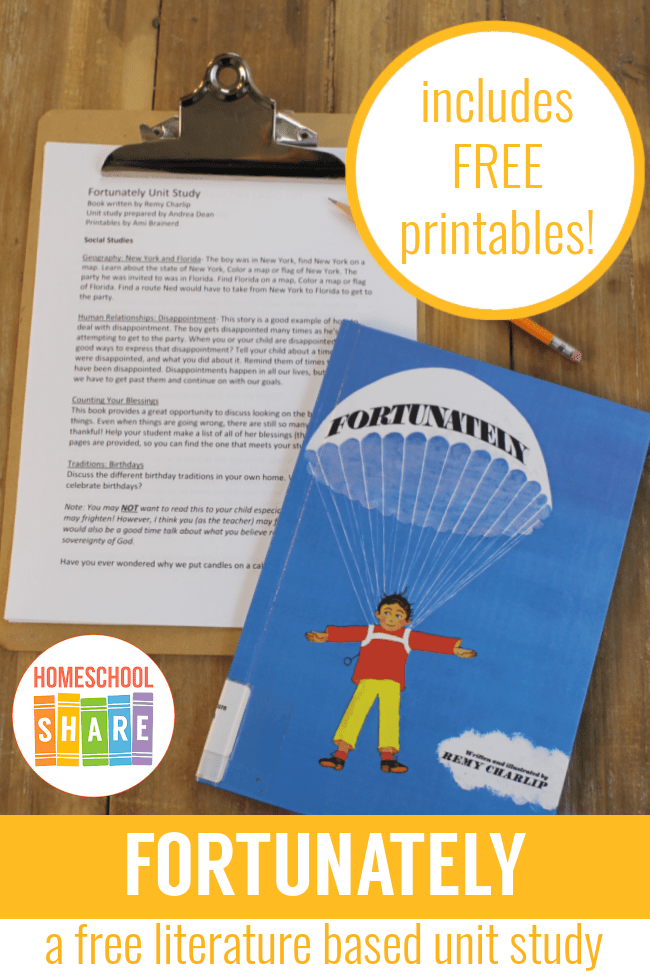
The classic book, Fortunately by Remy Charlip, is simple enough to engage your young learners, and funny enough to keep the entire family wanting more.
Fortunately, Ned was invited to a surprise party.
Unfortunately, the party was a thousand miles away.Fortunately, a friend loaned Ned an airplane.
Unfortunately, the motor exploded.Fortunately, there was a parachute in the airplane.
Unfortunately, there was a hole in the parachute.
And so goes the tale of Ned.
This Fortunately unit study provides a variety of lessons from social studies to science (and everything in between!). Prepare for journey of adventurous learning with Ned.
Thanks to Andrea Dean for writing this Fortunately unit study for Homeschool Share.
Fortunately Unfortunately Lesson Plans & Activities
This unit study includes a variety of lessons and activities. Simply pick and choose what you want to use with your student.
Social Studies
Geography: New York and Florida
The boy was in New York, find New York on a map. Learn about the state of New York, Color a map or flag of New York. The party he was invited to was in Florida. Find Florida on a map, Color a map or flag of Florida. Find a route Ned would have to take from New York to Florida to get to the party,
Human Relationships: Disappointment
This story is a good example of how to deal with disappointment. The boy gets disappointed many times as he’s attempting to get to the party. When you or your child are disappointed, what are good ways to express that disappointment? Tell your child about a time when you were disappointed, and what you did about it. Remind them of times that they have been disappointed. Disappointments happen in all our lives, but somehow we have to get past them and continue on with our goals.
Counting Your Blessings
Fortunately provides a great opportunity to discuss looking on the bright side of things. Even when things are going wrong, there are still reasons to be thankful!
Help your student make a list of all of her blessings.
Traditions: Birthdays
Discuss the different birthday traditions in your own home. Why does your family celebrate birthdays?
Have you ever wondered why we put candles on a cake or play games? Who started birthday parties and why?
Birthday celebrations started for kings in Europe (credit is given to the Germans) when people were very superstitious. Before the rise of Christianity, Pagans used to believe that good and bad spirits appeared when a child was born and that they followed the child throughout their lives. They also believed that it was dangerous for a person to have a change in life, and a birthday was one of those changes. To protect against these spirits and the harm they would cause, friends and family would spend time with the birthday person—they would bring good thoughts and wishes. They believed that bringing gifts would bring even more good cheer to ward off the evil spirits.
Candles on the Cake
The tradition of placing candles on birthday cakes started about 200 years ago in Germany (Germans were known to be excellent candle makers). The candle makers decided that if you could blow out all the candles on your cake in one breath that it meant good luck. (Luck is always a man-made idea– you may want to discuss this with your student. Who decides what gives us luck or what makes us unlucky?).
What are your cake traditions? Does your student receive a decorated cake for his birthday? Do you put candles on it to represent his age?
The Happy Birthday Song
Mildred and Patty Hill (American sisters) wrote this song in 1893, and it was a huge hit all over the world. It is used in many countries and sang in many languages.
Birthday Cards
This tradition started in England about 100 years ago.
Birthday Games
Two popular games played at birthday parties are “Pin the Tail on the Donkey” and piñata breaking.
Pinning the Tail on the Donkey was based in superstition. When a blindfolded player tries to pin the tail, people likened it to being blindfolded for the upcoming year—not really knowing what your future would hold.
Breaking the piñata is a game that came from Mexico about 300 years ago. It was believed that whoever broke the piñata would receive good luck.
Language Arts
Story Pattern
Fortunately is a FUN story to imitate as a writer. Have your child write their own Fortunately story. They could narrate it to you, or they could make it in the form of a book complete with illustrations if that interests them.
Alternatively, a student could predict what happens next and continue writing the story.
Vocabulary
The words fortunately and unfortunately are repeated throughout the story. Does your child know what they mean?
Drama
Fortunately is a fun story to act out. You don’t need a lot of characters. One child can be Ned, and any other children could be tigers or sharks (or both).
Party Invitation
Discuss invitations with your student. What would you write on an invitation? What does invitee need to know? (address, date of event, what the event is, who the event is for, etc.). What does R.S.V.P. mean? (It’s an acronym for this French phrase, “respondez, s’il vous plait.” It means please respond.) You ask guests to R.S.V.P. so you will know how many people to plan for.
Art
Pattern
The pictures in this story have a pattern- can your child figure out the pattern? Why did the author/illustrator choose this pattern?
Chalk
On the page where Ned is flying his airplane, there is a rainbow drawn that looks as though it’s drawn in chalk. You can see the texture in the rainbow. Draw some chalk rainbows with your children– on paper or on the sidewalk outside.
Math
Counting
There are many opportunities for counting in this book: sharks, tigers, clouds, people at the party, etc. Teach your child how to use tally marks and count these various things throughout the book, using the printable provided.
Calendar Skills
Each year we have a birthday. There are 365 days in a year. Does your child know when his birthday is? Count how many days until his birthday. Count the months until his birthday. Count the weeks until his birthday. Consider making a countdown paper chain to represent the number of days until your student’s birthday. Let him take one piece off the chain each day.
Learn the names of the months or the names of the days of the week, if your child doesn’t know them yet.
Science
Sharks
Sharks would be an interesting topic for your older student to study on his own. Sharks are not members of the fish family, and they are not mammals, they are in a family of their own. Sharks have cartilage (like your nose and earlobes!) instead of bones. Sharks come in all sizes from 7 inches to 50 feet! Find one species of shark to read more about.
Tigers
Ned was chased by Tigers. You could study more about tigers. Tigers are members of the cat family. They are carnivores (meat eaters). They are primarily nocturnal (come out at night). Adult tigers range from 4-9 feet long!
Fortunately Printable Activities
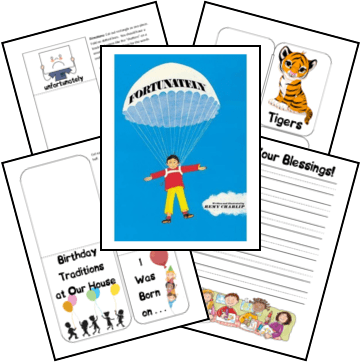
In addition to the lessons above, the Fortunately unit study also includes these lapbook activities and printables:
- Where in the United States is New York? Shutterflap
- Where in the United States is Florida? Shutterflap
- Count Your Blessings Page
- Birthday Traditions Flap Book
- Candles on My Cake Page
- Birthday Traditions at Our House Simple Fold
- I Was Born On . . . Simple Fold
- Copywork Quote Page
- Fortunately & Unfortunately Shutterflap
- Create a Birthday Invitation
- Counting with Tally Marks
- Tigers Bound Book
- Sharks Bound Book
- Month Cards & Envelope
- How Many? (calendar math) Flap
How to Get Started with the Fortunately Unfortunately Lesson Plans
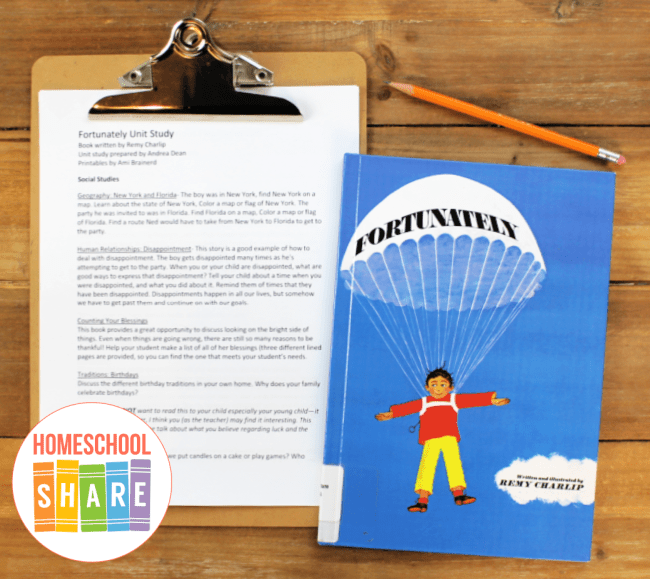
Follow these simple instructions to get started with the Fortunately unit study and printables.
- Buy a copy of the book, Fortunately, or grab one from your local library.
- Print the unit study.
- Choose the lessons you want to use with your student (a highlighter works great for this).
- Choose and prepare the printables you want to use with your student.
- Enjoy a week of fun-filled learning with your student.
Download Your Fortunately Lessons and Printables
If you’d like a copy of this Fortunately unit study plus the printables in an easy-to-print file, simply click on the image below.
More Resources for Your Student
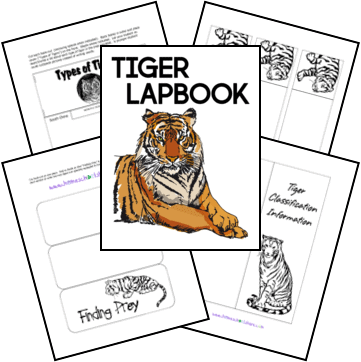
Tigers! If you student wants to learn more about tigers, be sure to check out our Tigers Lapbook.
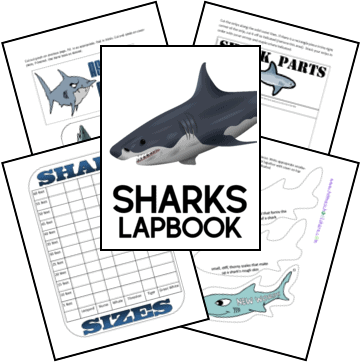
We also have a free Shark Lapbook.